

Your Guide to a Warm and Safe Medford Home
When cold mornings hit Medford, having a dependable gas furnace repair in medford, or service isn’t just about comfort—it’s about keeping your family safe and warm. Whether your furnace is making strange noises, cycling on and off, or blowing cold air, you need prompt, professional help from technicians who understand Southern Oregon’s unique heating demands. The good news? Reliable furnace repair services are available right here in the Rogue Valley.
Quick Answer: Finding Gas Furnace Repair in Medford, OR
- Signs You Need Repair: Strange noises, inconsistent heating, rising energy bills, frequent cycling, yellow pilot light
- What to Expect: Professional inspection, clear diagnosis, expert repair with quality parts, thorough testing
- Response Time: Local providers typically offer same-day or next-day emergency service
- Professional Help: Licensed, experienced HVAC technicians trained in gas furnace safety and repair
For comprehensive HVAC solutions, explore our heating and air conditioning services, or schedulProfessional Inspections of Your Gas Furnacee a furnace inspection today.
Medford’s Mediterranean climate means our winters are wet and chilly—not freezing, but cold enough that a broken furnace can make your home uncomfortable fast. Plus, with wildfire season affecting air quality and occasional winter storms causing power fluctuations, your gas furnace works hard to keep you comfortable. Regular professional attention ensures it’s ready when you need it most, operating safely and efficiently throughout the heating season.
Is Your Furnace Trying to Tell You Something?
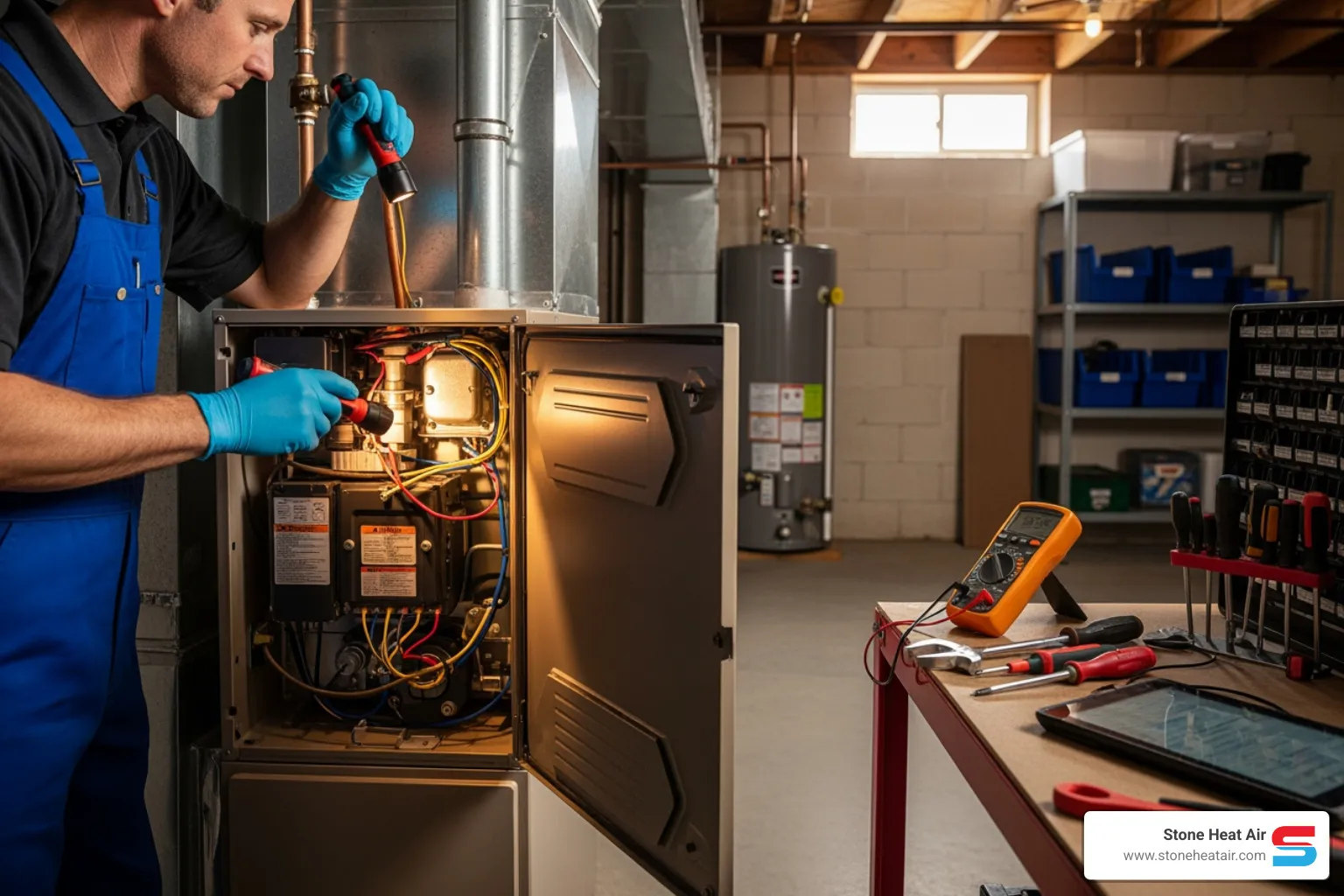
Your gas furnace is a sophisticated piece of equipment, and it usually gives subtle (or not-so-subtle) hints when something is amiss. Ignoring these signs can lead to bigger problems, higher utility bills, and even safety hazards. We often say your home’s comfort shouldn’t be left to guesswork, and neither should the health of your furnace!
One of the most common complaints we hear is about unusual noises. Is your furnace humming along happily, or has it started to sound like a symphony of bangs, squeals, or rattles? These sounds are often the first indicators that a component is worn out or loose, much like a car squealing when it needs new brakes. If you’re dealing with a noisy furnace, it’s definitely trying to tell you something important.
Another red flag is inconsistent heating. Are some rooms toasty while others remain stubbornly chilly? This uneven heating can be a sign of anything from ductwork issues to a malfunctioning blower. We believe you deserve consistent comfort throughout your home, not just in select areas.
Have you noticed your energy bills creeping up, even though your heating habits haven’t changed? An inefficient furnace has to work harder to maintain your desired temperature, consuming more fuel and costing you more money. This often happens with older or clogged systems.
Frequent cycling, where your furnace turns on and off too often, is another common issue. This “short cycling” can be caused by a variety of problems, from a dirty air filter to a faulty thermostat. It reduces efficiency and puts unnecessary wear and tear on your system.
Perhaps the most critical sign to watch for is a yellow pilot light. A healthy gas furnace should have a strong, blue flame. If you see a flickering yellow or orange flame, it indicates incomplete combustion, which can produce dangerous carbon monoxide. This is a serious safety matter that requires immediate professional attention.
Finally, strange smells emanating from your furnace, beyond the initial “burning dust” smell at the start of the heating season, should never be ignored. A rotten egg smell could signal a gas leak, while a metallic or electrical odor might point to overheating components. If your furnace smells unusual, it’s time to investigate.
For more detailed information on these common issues, check out our resources on Dealing with a Noisy Furnace, Why Your Furnace Smells, and What to Do If You Notice Your Furnace Blowing Cold Air.
Common Signs You Need Gas Furnace Repair in Medford, OR
Medford homeowners face specific challenges with their gas furnaces, especially during our cool, wet winters. Beyond the general warning signs, certain issues frequently point to a need for professional gas furnace repair in medford, or:
- Thermostat Issues: Sometimes, the problem isn’t the furnace itself, but the “brain” that controls it. A faulty thermostat can lead to your furnace not turning on, running constantly, or heating erratically. We often find that what seems like a major furnace breakdown is actually a simple thermostat fix.
- Airflow Problems: Restricted airflow can significantly hamper your furnace’s performance. This can be due to dirty air filters, blocked vents, or issues with the blower motor. Poor airflow not only reduces heating efficiency but can also cause your furnace to overheat.
- Ignition Failure: If your furnace isn’t producing heat, an ignition problem is a likely culprit. Modern furnaces use an electronic ignition or a pilot light to ignite the gas. If either of these fails, your furnace simply won’t start. This is a common reason why your furnace might not be turning on at all.
For a deeper dive into why your heating system might be acting up, explore our articles on Reasons Why Your Furnace Isn’t Turning On and What Causes a Furnace Pilot Light to Go Out?. Addressing these common issues promptly can prevent more expensive repairs down the line and keep your Medford home cozy.
Understanding Furnace Error Codes
Just like your car’s check engine light, your furnace often has a diagnostic system that communicates problems through blinking lights. If you’ve ever peered at your furnace and noticed a blinking red light, it’s not just for decoration – it’s a valuable clue!
Most modern gas furnaces are equipped with a control board that monitors the system’s operation. When an issue arises, this board will flash a specific sequence of lights, often red or green, to indicate an error code. These diagnostic codes correspond to specific problems within the furnace, such as a pressure switch malfunction, a flame sensor issue, or an ignition lockout.
While these codes are primarily for technicians to diagnose problems quickly, knowing that your furnace is “blinking” at you means it’s time to call in the experts. Don’t try to interpret complex codes yourself, as misdiagnosis can lead to further damage or safety risks. However, simply observing that there’s a blinking light can help us understand the urgency and nature of the problem even before we arrive.
If you’re curious about what those blinks might mean, our article Why is there a blinking red light on my furnace? provides more insight. This little light is your furnace’s way of saying, “Hey, I need some attention!”
The Professional Process for Gas Furnace Repair in Medford, OR
When your gas furnace decides to take an unscheduled vacation, especially during a chilly Medford morning, you need a repair process that’s efficient, transparent, and gets your heat back on fast. We understand that furnace issues don’t wait, and neither do we. Our approach to gas furnace repair in medford, or is designed to provide you with peace of mind and lasting comfort.
Our efficient gas furnace repair process works by ensuring that from the moment you call us, you’re in capable hands. We pride ourselves on a no-pressure approach, focusing on listening to your concerns, thoroughly inspecting your system, and recommending cost-effective solutions. We’re not here to replace something that can be fixed, or fix something that’s better replaced – our goal is always to make things right for you.
The process typically involves several key steps: an initial inspection to understand the symptoms, a thorough diagnosis to pinpoint the root cause, presenting clear options for repair, providing expert service with quality parts, conducting rigorous system testing, and offering ongoing support to keep your system running smoothly.
Step 1: Thorough Diagnosis
The first and most critical step in any successful gas furnace repair is a thorough diagnosis. When we arrive at your Medford home, our licensed technicians don’t just guess; they carefully inspect your system to identify the root cause of the problem. This involves a series of safety checks to ensure there are no immediate hazards, followed by component testing to pinpoint the exact malfunction.
We understand that you’re relying on us to get your heat back on safely. That’s why our professional inspections of your gas furnace are comprehensive, covering everything from the thermostat and electrical connections to the gas line, burners, and heat exchanger. We use our expertise and specialized tools to accurately diagnose the issue, providing you with a clear understanding of what’s wrong. Professional, safe, and prompt heating solutions are crucial, and it all starts with an accurate diagnosis. You can learn more about what goes into these detailed checks in our guide to Professional Inspections of Your Gas Furnace.
Step 2: Expert Repair and Testing
Once we’ve identified the problem, our expert technicians get to work. We believe in using only quality parts for all repairs, ensuring the longevity and reliability of your furnace. Our licensed and experienced technicians apply time-tested methods, combining their deep understanding of HVAC systems with the latest repair techniques.
Safety is paramount, especially with gas furnaces. After any repair, we don’t just flip a switch and call it a day. We perform rigorous system calibration and performance testing to ensure everything is working optimally and safely. This includes checking gas pressure, carbon monoxide levels, and airflow to guarantee your furnace operates efficiently and without risk. We also ensure all safety controls are functioning correctly, providing you with an introduction to furnace safety features and peace of mind. Thorough testing and setup after repair or installation ensure proper function, so you can trust that your Medford home will stay warm and safe.
Repair or Replace? Making the Right Choice for Your Medford Home
One of the toughest decisions a homeowner faces when their furnace acts up is whether to repair it or invest in a new one. It’s like deciding whether to fix up an old car or buy a new model – both have their pros and cons. When it comes to gas furnace repair in medford, or, we’re here to help you weigh your options and make the best choice for your home and budget.
Several key factors come into play: the age of your furnace, how frequently it needs repairs, its energy efficiency (or lack thereof!), and its overall performance. While most furnaces can work properly for 15 to 30 years, their efficiency often declines significantly after 15 years.
Here’s a quick comparison to help you decide:
We’re not here to replace something that can be fixed, or fix something that’s better replaced. Our goal is to provide you with clear options and expert advice custom to your specific situation.
Key Factors to Consider
When facing a furnace dilemma, consider these crucial points:
- Furnace Lifespan: Furnaces generally last 15 to 20 years. If your furnace is approaching or has exceeded this age, and you’re facing a significant repair, replacement often makes more financial sense. An older unit might be like a grandparent – full of wisdom, but maybe not as spry as it once was!
- Rising Energy Bills: As furnaces age, their efficiency naturally declines. This means they consume more fuel to produce the same amount of heat, leading to steadily rising energy bills. If you’ve noticed a significant spike in your heating costs, an aging, inefficient system could be the culprit.
- Obsolete Parts: For very old furnaces, finding replacement parts can become difficult or even impossible. Manufacturers stop producing parts for outdated models, leaving you with a furnace that’s unrepairable even if the issue is minor.
- Safety Concerns: Older gas furnaces can pose safety risks, such as a cracked heat exchanger, which can leak carbon monoxide into your home. While we always prioritize safety in our repairs, sometimes replacement is the only way to ensure your family’s well-being.
Deciding to replace can seem daunting, but it’s often a smart long-term investment. Our article How Stone Comfort Membership ClubLong Does It Usually Take to Replace a Furnace? can give you an idea of what to expect during the installation process.
The Benefits of a Modern Furnace
Opting for a new, high-efficiency gas furnace offers a wealth of advantages that go beyond just getting heat back into your home. It’s an investment in your comfort, your wallet, and even your health.
- Improved Efficiency: Modern furnaces, especially those with high AFUE (Annual Fuel Utilization Efficiency) ratings, convert a much larger percentage of their fuel into usable heat. An AFUE rating of 95, for example, means 95% of the energy consumed is converted to heat, significantly reducing wasted energy. This is a huge leap from older models, which might only be 60-70% efficient.
- Lower Energy Costs: With improved efficiency comes a pleasant side effect: lower energy bills. A new, energy-efficient furnace can significantly reduce your monthly heating expenses, providing tangible savings over its lifespan.
- Improved Comfort: Today’s furnaces offer more precise heating. Variable-speed furnaces, for instance, are considered the gold standard. They adjust their speeds to provide precise comfort, eliminating hot and cold spots and maintaining a more consistent temperature throughout your Medford home. They’re like having a thermostat with a doctorate in comfort!
- Better Indoor Air Quality: Many modern furnaces, particularly variable-speed models, are better at maintaining indoor air quality. By continually circulating and filtering air, they can catch harmful particles and eliminate excess moisture, which is especially beneficial given Medford’s occasional wildfire smoke.
- Smart Thermostat Compatibility: New furnaces are designed to integrate seamlessly with smart thermostats, allowing you to control your home’s heating from anywhere, optimize energy usage, and even learn your preferences.
Choosing the right size furnace for your home is also crucial for maximizing these benefits. Our guide on How We Estimate the Right Size Furnace for Your Home explains how we ensure your new system is perfectly matched to your needs.
Proactive Care: The Key to Furnace Longevity and Safety
Think of your gas furnace as a loyal companion that works tirelessly through the cold months. Just like any good friend, it benefits from a little TLC! Proactive care is not just about preventing breakdowns; it’s about maximizing efficiency, ensuring safety, extending the lifespan of your system, and even improving your indoor air quality. A well-maintained furnace is a happy furnace, and a happy furnace means a comfortable home.
Regular maintenance, especially a pre-winter inspection, is your best defense against unexpected breakdowns. It allows us to catch small issues before they become major, costly repairs. It’s the difference between a quick pit stop and being stranded on the side of the road! Our article How Pre-Winter Furnace Inspections Can Benefit Your Home dives deeper into why these checks are so important.
What a Professional Tune-Up Includes
A professional furnace tune-up is a comprehensive service designed to keep your system running safely and efficiently. It’s much more than just a quick glance! Here’s what we typically do during a tune-up:
- Cleaning Components: We clean the burners, flame sensor, and other critical parts to ensure proper combustion and prevent buildup that can hinder performance.
- Inspecting Heat Exchanger: This is a crucial safety check. We carefully inspect the heat exchanger for any cracks or damage that could lead to dangerous carbon monoxide leaks.
- Checking Electrical Connections: Loose or corroded electrical connections can cause your furnace to malfunction or even create fire hazards. We tighten and clean all connections.
- Lubricating Moving Parts: Components like the blower motor require lubrication to operate smoothly, reducing wear and tear and preventing noisy operation.
- Testing Safety Controls: We test all safety mechanisms, including the limit switch and rollout switch, to ensure they will properly shut down the furnace if a problem occurs.
- Checking Thermostat Calibration: We verify that your thermostat is accurately reading and controlling your furnace.
- Inspecting Ductwork: We look for any obvious leaks or blockages in your duct system that could be impacting airflow and efficiency.
These tasks ensure your furnace is ready to tackle the chill, operating at peak performance. For a more in-depth look, see What Happens During a Furnace Tune-Up?.
Why Regular Maintenance Matters in the Rogue Valley
Living in Medford and the broader Rogue Valley means our furnaces work hard, and the local climate impacts their performance and repair needs. Our Mediterranean climate brings hot, dry summers and cool, wet winters. While we don’t always get extreme freezes, consistent cold snaps demand reliable heating.
Beyond the cold, our region experiences seasonal wildfires, which can significantly impact indoor air quality. A well-maintained furnace, with clean filters, plays a vital role in keeping your home’s air cleaner during these smoky periods. Regular maintenance ensures your furnace’s air filtration system is working effectively.
Furthermore, these climatic factors contribute to common causes of winter furnace repairs. Everything from clogged filters (due to dust and wildfire particulates) to ignition problems (from fluctuating temperatures) can be exacerbated by local conditions. Proactive maintenance helps to mitigate these issues, ensuring your furnace is robust enough to handle anything the Rogue Valley throws at it. Our article on Common Causes of Winter Furnace Repairs offers more insights specific to our area.
Frequently Asked Questions about Gas Furnace Repair
We know you have questions, and we’re here to provide clear, helpful answers about gas furnace repair in medford, or. Our goal is to empower you with knowledge so you can make informed decisions about your home comfort.
How often should my gas furnace be inspected?
We strongly recommend having your gas furnace inspected annually, ideally before the cold weather truly sets in during the fall. Think of it as a yearly check-up for your home’s most important comfort system.
Annual inspections offer multiple benefits: they ensure your system is operating safely, they catch minor issues before they escalate into costly breakdowns, and they maximize your furnace’s efficiency, which can help keep your energy bills in check. Regular inspections are also key to extending the overall lifespan of your unit. For continuous peace of mind and priority service, consider joining our Stone Comfort Membership Club.
What are the most common furnace problems?
Based on our experience serving Medford and the surrounding areas, several issues pop up more frequently than others:
- Dirty Filters: This is perhaps the most common and easily preventable problem. A clogged filter restricts airflow, forcing your furnace to work harder, decreasing efficiency, and potentially leading to overheating.
- Thermostat Malfunctions: As the “brain” of your heating system, a faulty thermostat can cause a range of problems, from inaccurate temperature readings to your furnace not turning on at all.
- Pilot Light or Ignition Issues: If your furnace isn’t getting hot, the pilot light (in older models) or electronic ignition (in newer ones) is often the culprit.
- Blower Motor Failure: The blower motor is responsible for circulating warm air throughout your home. If it’s malfunctioning, you might experience weak airflow or no heat at all.
- Cracked Heat Exchanger: While less common, this is a serious safety concern that can lead to carbon monoxide leaks.
Many of these issues can be prevented or mitigated with regular maintenance. Our article 6 Ways to Help Your Furnace Work Better offers practical advice to keep your system humming.
Is a yellow furnace flame dangerous?
Yes, a yellow or flickering furnace flame is a significant cause for concern and indicates a potentially dangerous situation. A healthy gas furnace flame should always be blue, steady, and have small, distinct cones at the base.
A yellow or orange flame is a clear sign of incomplete combustion. This means the gas isn’t burning efficiently, and it can produce carbon monoxide (CO). Carbon monoxide is an odorless, colorless gas that is highly toxic and can be deadly. If you notice a yellow or flickering flame, turn off your furnace immediately, open windows for ventilation, and evacuate your home if you feel any symptoms of CO poisoning (headache, dizziness, nausea). Then, call us for emergency service. This is not a problem to ignore or try to fix yourself. For more details on what your furnace flame colors mean, please refer to our article on Furnace Tips: Recognizing Flame Colors.
Trust the Experts for Your Medford Furnace Needs
When it comes to keeping your Medford home warm and safe, you deserve nothing less than reliable, expert service. We understand the unique heating challenges our community faces, from the chilly winter mornings to the importance of clean air during wildfire season. Our commitment is to provide you with honest and fair dealings, ensuring your comfort and safety are always our top priority.
Whether you’re facing an unexpected breakdown, considering an upgrade, or simply want to ensure your furnace is ready for the season, our team is here to help. We’re proud to offer 24/7 emergency service because we know that furnace problems don’t always happen during business hours. For dependable and expert furnace solutions that keep your home warm all winter, trust our team to deliver peace of mind.
Don’t let a faulty furnace leave you in the cold. Contact us today for all your gas furnace repair in medford, or needs. We are your local heating heroes, ready to ensure your home remains a haven of comfort. Learn more about our comprehensive offerings and schedule your service by visiting our Heating Air Conditioning Service Repair page. We’re not comfortable until you are!