

Is Your Current Heating System Ready for the Winter Chill?
Is your heating system ready for the chill of a Central Point winter? Ensure your comfort with fast and reliable heating installation tailored to local climate needs. When a furnace fails or a heat pump stops cycling correctly in the middle of a cold snap, you need an immediate solution, not a sales pitch; contact us at [Phone Number] or apply for financing to restore your home's warmth immediately.
We provide homeowners with reliable, compliant, and efficient heating solutions designed to withstand the wet, cool winters typical of Southern Oregon.
- Same-day installation services available to keep your home warm without delay.
- Expert recommendations for energy-efficient heaters suited for Oregon winters.
- Clear, upfront pricing and financing options to make your decision easier.
Our team is fully licensed and compliant with local codes, offering extended warranties and flexible financing options to secure your investment.
What You Receive With a Professional Heating Upgrade
Investing in a new heating system is about more than just swapping out a metal box; it is about securing consistent comfort and manageable energy bills for the next 15 to 20 years. When you choose Stone Heating and Air for your installation, the focus is on a comprehensive system overhaul that addresses the specific thermal dynamics of your home.
The scope of a professional installation covers every aspect necessary to turn a cold house into a comfortable living space. This includes the safe removal and environmentally responsible disposal of your existing unit. Old furnaces often contain heavy metals or components that require specific handling, and professional disposal ensures you never have to worry about the cleanup.
You also receive a complete assessment of your current infrastructure. A high-efficiency furnace cannot perform at its rated capacity if the ductwork is leaking or if the thermostat is outdated. The service includes inspecting the plenum, checking gas line integrity, and ensuring the electrical load is sufficient for modern, variable-speed equipment. If your home requires modifications to accommodate the physical footprint of a newer, often larger unit, those adjustments are included in the project scope.
Timeline is a critical factor for homeowners in Central Point. Most standard installations are completed within a single day. The goal is to minimize disruption to your daily routine while ensuring the system is running at peak performance before the technicians leave. You receive a fully operational system, calibrated to the manufacturer’s specifications, along with a walkthrough on how to operate your new thermostat for maximum efficiency.
The Installation Process: From Assessment to Heat
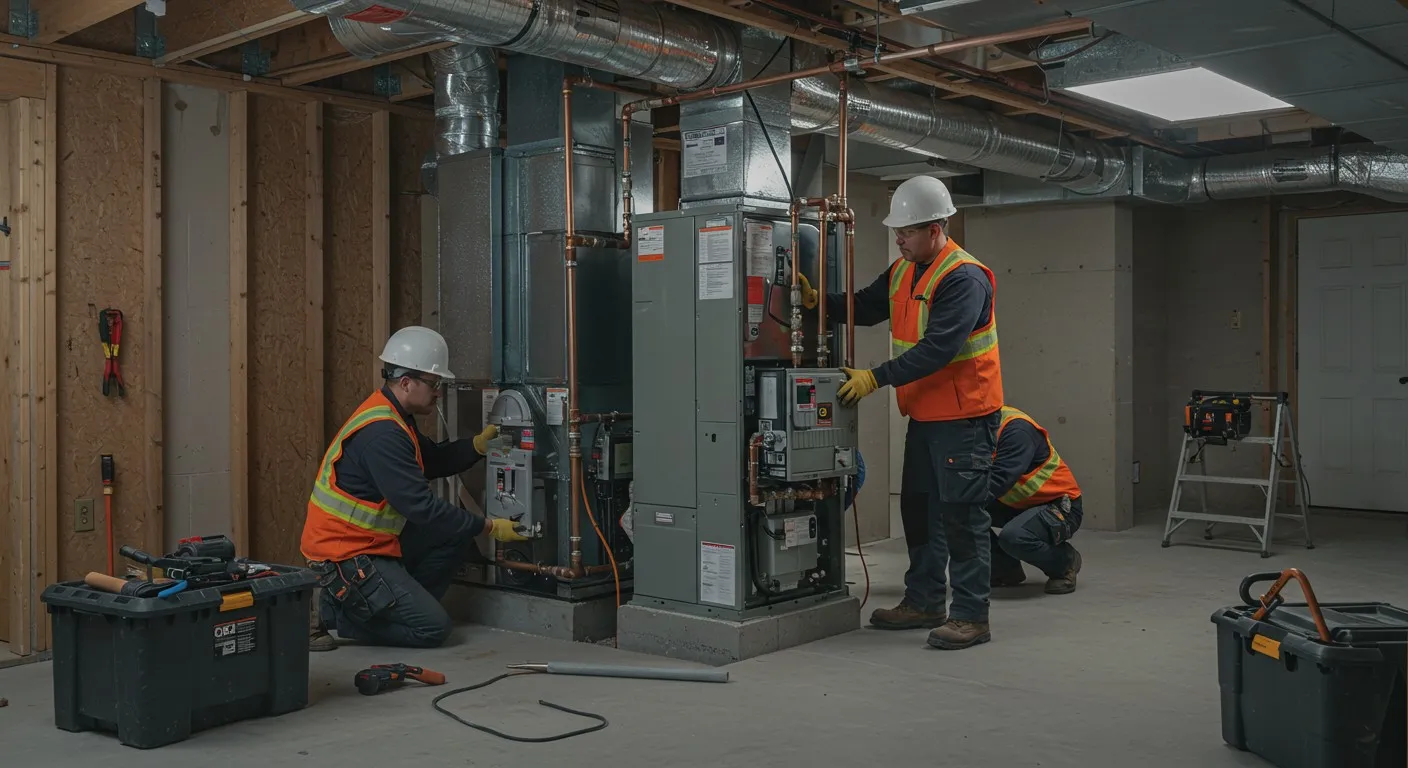
A correct installation follows a rigorous, step-by-step procedure. Shortcuts during installation are the leading cause of premature system failure. We utilize a technical process that adheres to manufacturer guidelines and local building standards — view our project gallery.
- Load Calculation and Sizing: Before any equipment is ordered, a technician performs a Manual J load calculation. This creates a thermal map of your home, factoring in square footage, insulation levels, window types, and directional orientation. This ensures the unit is neither undersized (which causes it to run constantly) nor oversized (which causes short-cycling and humidity issues).
- Site Preparation and Protection: Technicians prepare the workspace to protect your flooring and property. Gas lines are shut off safely, and electrical circuits are disconnected. The area surrounding the indoor and outdoor units is cleared to allow for precise placement and future service access.
- Existing Equipment Removal: The old system is disconnected from the plenum and fuel sources. Technicians carefully remove the unit to avoid damaging door frames or flooring. In many cases, the refrigerant from old heat pumps must be recovered according to EPA regulations before the unit can be moved.
- Equipment Positioning and Connection: The new furnace or air handler is leveled and secured. If it is a gas furnace, the flue pipe is installed or upgraded to ensure dangerous combustion gases like carbon monoxide are vented safely outside. For heat pumps, the outdoor condenser is placed on a composite pad to prevent sinking or vibration.
- Ductwork and Airflow Integration: The supply and return plenums are sealed to the new unit. This is a critical step for efficiency; even a small gap can result in significant heat loss. Technicians apply mastic or foil tape to seal connections, ensuring the air you pay to heat actually reaches your living rooms.
- Final Calibration and Testing: Once physically installed, the system is fired up. Technicians measure static pressure, temperature rise, and gas manifold pressure. They verify that the safety switches are operational and that the thermostat is communicating correctly with the control board.
Determining When to Replace vs. Repair
Deciding between repairing a breakdown or investing in a new system is a financial and logical calculation. While repairs can solve immediate issues, there is a tipping point where replacement becomes the more economical choice.
- The 50% Rule: If the cost of a repair approaches 50% of the value of a new system, replacement is generally the smarter financial move. Dumping money into a compressor or heat exchanger on an aging unit often leads to "throwing good money after bad" as other components begin to fail shortly after.
- System Age: Furnaces typically last 15 to 20 years, while heat pumps have a lifespan of 10 to 15 years. If your equipment is in this age range and requires a major repair, parts may be obsolete or expensive to source. New systems offer warranties that cover parts and labor, eliminating the risk of unexpected repair bills for years.
- Safety Concerns: For gas furnaces, a cracked heat exchanger is a non-negotiable replacement trigger. This defect allows carbon monoxide to leak into the home’s air supply. No amount of repair work can safely patch a heat exchanger; the entire unit must be replaced to ensure the safety of the household.
- Rising Energy Bills: Heating technology has advanced significantly in the last decade. If your energy bills have been steadily climbing despite normal usage, your system’s efficiency (AFUE or HSPF rating) has likely degraded. Replacing an 80% AFUE furnace with a 96% AFUE model can result in immediate monthly savings that help offset the installation cost.
- Comfort Consistency: If some rooms in your house are freezing while others are roasting, or if your system runs constantly without reaching the set temperature, the unit is likely struggling to maintain compression or airflow. Replacement allows you to install zoning or variable-speed technology that balances temperature evenly throughout the home.
Central Point Installation and Local Requirements
Operating in Central Point requires specific attention to local climate patterns and regulations. The Mediterranean climate here brings cool, wet winters where the temperature frequently drops near freezing. This humidity can affect how heat pumps operate, specifically regarding their defrost cycles.
Climate-Specific Considerations
In this region, heating systems must handle high moisture levels. Heat pumps are a popular choice, but they must be equipped with demand-defrost controls to prevent ice buildup on the outdoor coil during damp, cold mornings. For homeowners choosing gas furnaces, the venting must be robust enough to withstand wind and rain without back-drafting.
Permitting and Inspections
Heating installations in this area are subject to building codes enforced by Jackson County or the city municipality. A permit is legally required for the installation of any permanent heating appliance. This process ensures that the gas piping is pressure-tested, the electrical connections meet fire codes, and the venting is safe. We handle the entire permitting process, from application to the final inspection, ensuring your installation is fully legal and documented.
Utility Rebates and Incentives
Local utility providers often offer rebates for upgrading to high-efficiency equipment. Whether you are connected to natural gas or rely on electric power, there are frequently incentives available for installing systems with high SEER2 and HSPF2 ratings. We assist in identifying these opportunities to help lower your net investment cost.
Technical Specifications and System Types
Understanding the hardware is essential for making the right choice. Modern heating comes in several configurations, each with distinct advantages depending on your home’s energy source and insulation.
- Variable-Speed Gas Furnaces: Unlike traditional single-stage furnaces that run at 100% capacity whenever they are on, variable-speed units can adjust their airflow in tiny increments. This results in quieter operation, better humidity control, and precise temperature maintenance. They are ideal for homes with existing ductwork and natural gas access.
- Air Source Heat Pumps: These systems move heat rather than generating it. In the winter, they extract latent heat from the outdoor air and compress it to warm your home. Modern cold-climate heat pumps are effective even when temperatures drop below freezing, making them a viable sole source of heat for many Central Point homes.
- Dual Fuel (Hybrid) Systems: This configuration combines an electric heat pump with a gas furnace. The heat pump handles the heating duties during mild winter days (40°F and above), which is the most efficient method. When the temperature plunges, the system automatically switches to the gas furnace for powerful, consistent heat. This optimizes energy usage across the entire season.
- Ductless Mini-Splits: For additions, garages, or older homes without ductwork, ductless systems provide targeted heating. They are incredibly efficient because there is no energy loss through leaky ducts. Heads are mounted on the wall or ceiling, allowing for individual room temperature control.
Why Professional Execution Matters
The reliability of your heating system depends heavily on the quality of the installation. A top-tier brand unit installed poorly will fail sooner and run less efficiently than a mid-tier unit installed perfectly — read our client reviews.
- Proper Venting: Improperly vented gas furnaces can lead to condensation leaks that rust out the unit or, worse, introduce exhaust gases into the living space. Professionals ensure that flue pipes are pitched correctly to drain condensate and sized correctly to maintain draft.
- Gas Pressure Balancing: Gas valves must be adjusted to match the specific calorific value of the local gas supply. If the pressure is too high, the unit overheats; if it is too low, condensation forms in the heat exchanger. Specialized manometers are used to dial this in to the exact inch of water column required.
- Electrical Safety: Modern heaters contain sophisticated circuit boards. Incorrect wiring can fry control boards or bypass safety limits. Professional installers ensure that the polarity is correct and the ground is solid, preventing electrical glitches that cause nuisance shutdowns.
Secure Your Comfort With Expert Installation
Your home’s heating system is the defense against the damp and cold of the winter months. Delaying a necessary replacement often leads to emergency calls on the coldest night of the year. By choosing a professional installation now, you gain control over your indoor climate, reduce your monthly energy expenditure, and ensure the safety of your home.
We prioritize technical accuracy, code compliance, and long-term reliability in every project we undertake. From the initial load calculation to the final test of the thermostat, every step is executed with precision. Stone Heating and Air is dedicated to providing the highest standard of service for your heating needs. Ensure your home remains a sanctuary of warmth this season. Contact us today to schedule your heating installation estimate.
- Book Expert Service Or Contact Us