

Prevent Costly Breakdowns Before They Happen
Ignoring subtle noises or a gradual increase in your monthly energy bills often leads to a complete system failure right when the weather in Central Point becomes unbearable. Stone Heating and Air provides immediate, data-driven diagnostic services to identify inefficiencies and restore your system’s performance before a minor issue becomes a major expense; contact us today to schedule your service or ask about our financing options.
- Immediate, accurate diagnosis of airflow restrictions and mechanical wear.
- Seasonal maintenance protocols designed to lower utility costs during peak usage.
- Efficient scheduling that prioritizes your time and restores comfort quickly.
Licensed, bonded, and insured professionals are ready to secure your investment with comprehensive care.
Comprehensive HVAC Maintenance Services: What We Cover
Effective maintenance is not a quick visual check; it is a rigorous, multi-point inspection and calibration process designed to return your equipment to factory specifications. In the Rogue Valley, where summer temperatures spike and winter nights drop significantly, your system endures a heavy workload year-round. Our service focuses on the critical components that dictate efficiency, longevity, and safety.
System Safety and Electrical Analysis
The electrical components of your HVAC system are often the first to fail due to vibration and heat. Loose connections can cause wires to burn out or damage the compressor.
- Technicians tighten all electrical connections to prevent voltage drops and fire hazards.
- Capacitors are tested to ensure they are holding the correct charge; weak capacitors strain the compressor and fan motors.
- Safety controls are tested to verify they will shut the system down in the event of an emergency, protecting both the equipment and the home.
- Thermostats are calibrated to ensure the temperature reading on your wall matches the actual temperature in the room, preventing the system from over-running.
Airflow and Cooling Efficiency
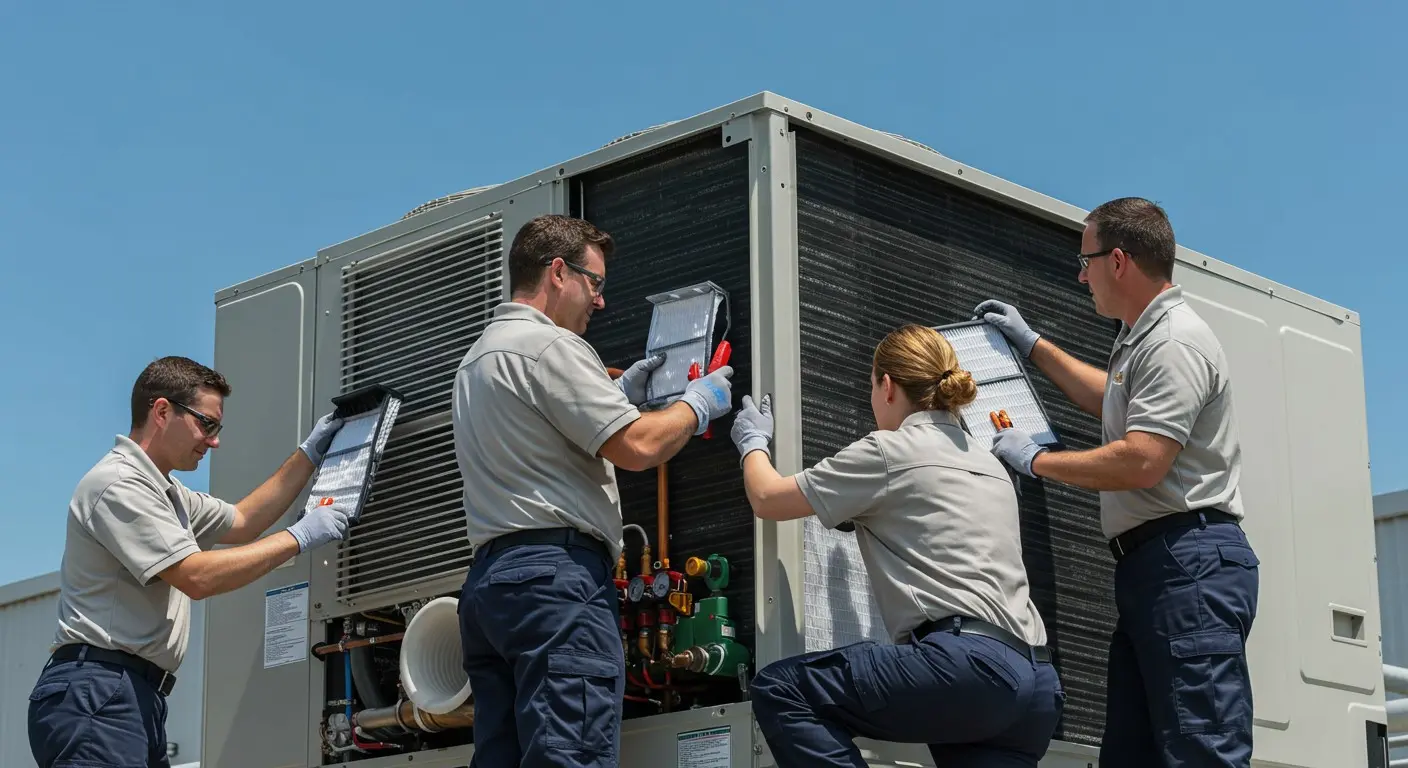
Proper airflow is the lifeblood of any heating and cooling system. Restrictions here cause the blower motor to work harder and the heat exchanger or evaporator coil to overheat or freeze.
- Filters are inspected and replaced if necessary to maintain proper static pressure.
- Blower components are cleaned and adjusted to ensure consistent air distribution throughout the building.
- Evaporator and condenser coils are chemically cleaned to remove dust, pollen, and debris that act as insulators and reduce the system's ability to transfer heat.
- Refrigerant levels are measured with precision tools; even a slight undercharge or overcharge significantly reduces efficiency and cools the compressor poorly.
Heating System Specifics
When the season shifts, the focus turns to the combustion process and heat generation elements.
- Heat exchangers are inspected for cracks using cameras; a cracked heat exchanger is a primary source of carbon monoxide leaks.
- Burner assemblies are cleaned to ensure proper ignition and flame sensing.
- Gas pressure is adjusted to manufacturer specifications to ensure fuel is being burned efficiently without sooting.
- Flue pipes and venting systems are checked for obstructions or corrosion to guarantee safe exhaust of combustion gases.
Understanding the Maintenance Workflow
We utilize a systematic approach to maintenance that leaves nothing to chance. This process ensures that every homeowner receives the same high standard of care and that every potential issue is documented and addressed.
- Scheduling and Arrival: The process begins with a coordinated appointment window. You receive notification when a technician is en route. Upon arrival, the technician reviews any specific concerns you have noted regarding noise, temperature inconsistencies, or recent utility bill spikes.
- Initial System Run-Test: Before opening the unit, the system is operated in both heating and cooling modes (weather permitting) to establish a baseline of performance. This helps identify immediate operational sounds or cycling issues that indicate specific mechanical faults.
- The Deep Clean and Tune-Up: The core of the visit involves the physical labor of cleaning and adjusting. Power is disconnected for safety. Panels are removed to access internal components. Debris is cleared from the outdoor unit to prevent airflow blockage. Moving parts such as bearings and motors are lubricated to reduce friction, which lowers electricity usage and prevents overheating.
- Data Reporting and Recommendations: Once the mechanical work is complete, the technician compiles a report on the system’s health. This is not a sales pitch but a technical assessment. If parts are showing signs of wear—such as a contactor with pitted surfaces or a motor drawing high amps—you are informed immediately. This allows you to decide whether to replace the part proactively or monitor it.
- Final Verification: The system is restarted, and the technician verifies that all pressures, temperatures, and electrical readings are within the manufacturer’s specified range. The workspace is cleaned, and the service is logged for warranty and future reference.
Deciding Between Repair or Replacement
One of the most difficult decisions a homeowner faces is knowing when to stop pouring money into an aging unit and when to invest in a new system. While maintenance extends the life of your equipment, there is a mathematical point where replacement becomes the more financially sound option — visit our FAQs page for insights.
The 50% Rule and Equipment Age
A standard industry benchmark is the "50% Rule." If the cost of a necessary repair approaches 50% of the value of a new system, replacement is generally the wiser choice. This is particularly true if your system is over 10 to 15 years old. In Central Point, where systems run for many months of the year, wear and tear accumulates faster than in milder climates. An older unit, even after a repair, will still run at a lower efficiency rating (SEER) than a modern entry-level unit, costing you more in monthly utilities.
Frequency of Breakdowns
If you find yourself calling for service more than once a year for repairs (outside of standard maintenance), the system has likely become unreliable. Recurring issues often signal that the compressor or heat exchanger—the heart and lungs of the system—are failing. Stone Heating and Air technicians can provide a cost-benefit analysis based on your specific repair history.
Comfort and Efficiency Gaps
Sometimes a unit still runs, but it no longer does the job. If certain rooms are perpetually hot in the summer or cold in the winter despite a tune-up, the system may be undersized or the ductwork compromised. Furthermore, if you notice your humidity levels are uncomfortable, older single-stage systems may not be capable of the dehumidification provided by modern two-stage or variable-speed equipment.
Refrigerant Types
Older air conditioners utilize R-22 refrigerant, which has been phased out due to environmental regulations. If your older R-22 system develops a leak, the cost to recharge it is exorbitant and often exceeds the value of the unit. Modern systems use R-410A or newer alternatives, which are more efficient and readily available.
Seasonal Service Factors and Regional Regulations
Operating HVAC equipment in the Pacific Northwest requires specific attention to environmental factors and local regulations. The specific climate in this region dictates a maintenance schedule that is strictly adhered to for optimal performance.
Managing Wildfire Smoke and Particulates
The Rogue Valley is prone to inversions and wildfire smoke during late summer. This places an immense strain on air filters and indoor air quality components. Standard 1-inch filters may clog rapidly during these events, restricting airflow and causing the system to freeze up.
- Maintenance in this region often involves upgrading filtration systems to handle higher particulate loads.
- Technicians check the integrity of ductwork sealing to ensure smoke and outdoor pollutants are not being drawn into the return air side of the system from attics or crawlspaces.
The Impact of Diurnal Temperature Swings
The region sees significant temperature swings between day and night. This thermal expansion and contraction can loosen fittings and stress metal components over time. Regular tightening of refrigerant fittings and gas connections is crucial to prevent slow leaks that degrade performance over months.
Energy Trust of Oregon and Local Incentives
Local utility providers and organizations like the Energy Trust of Oregon offer incentives for upgrading to high-efficiency equipment. However, to qualify for certain rebates or to maintain the validity of manufacturer warranties, proof of regular professional maintenance is often required. Keeping a documented service history ensures you remain eligible for these financial benefits should you need a replacement.
Permitting and Compliance
While standard maintenance does not typically require a permit, significant repairs involving refrigerant handling or component replacement must be performed by EPA-certified technicians. Compliance with local codes regarding noise placement and electrical disconnects is also verified during routine inspections to ensure the home remains code-compliant for insurance and resale purposes.
Why Professional Maintenance is Non-Negotiable
Attempting to service modern HVAC equipment without proper training is dangerous and often voids warranties. Today’s systems are integrated with complex circuit boards, variable speed motors, and high-pressure refrigerants.
- Diagnostic Precision: Professionals use advanced gauges and multimeters that detect faults invisible to the naked eye. A slight variance in superheat or subcooling readings can indicate a problem that, if ignored, leads to compressor failure.
- Warranty Protection: Most major manufacturers explicitly state in their warranty terms that the equipment must be serviced annually by a licensed HVAC contractor. Failure to provide proof of service can result in a denied claim for expensive parts like compressors or heat exchangers.
- Safety Assurance: Gas furnaces involve combustion, carbon monoxide, and high voltage. A professional inspection ensures that the heat exchanger is intact and that safety switches function correctly. This is not just about comfort; it is about the safety of the occupants.
- Long-Term Savings: A tuned system runs less often to satisfy the thermostat setting. By keeping coils clean and refrigerant levels exact, the system consumes less energy. The cost of a maintenance plan is frequently offset by the savings in monthly utility bills and the avoidance of emergency repair fees.
Secure Your Comfort and Efficiency
Reactive repairs are always more expensive and inconvenient than proactive care. Your heating and cooling system represents a significant financial investment in your home, and its performance directly impacts your daily quality of life. Do not wait for a complete shutdown to address the health of your HVAC unit.
Ensure your system is prepared to handle the demands of the upcoming season with professional, thorough maintenance. Secure your appointment with Stone Heating and Air now to guarantee peak performance, lower energy costs, and reliable operation when you need it most.
Schedule your comprehensive HVAC inspection today.
- Book Expert Service Or Contact Us