

Restore Warmth to Your Home Without Delay
When your heater fails, you can't wait days for a fix, especially in Central Point's chilly, damp winters where temperatures drop into the 20s. You need immediate, reliable repair service that correctly diagnoses the issue and restores your comfort right away. Contact us to schedule a dispatch or inquire about our available financing options to get your system running again.
We provide a streamlined service designed to minimize downtime and eliminate the stress of a cold house.
- Rapid response times with emergency service availability to address urgent breakdowns.
- Transparent, flat-rate pricing is provided upfront so you never face hidden fees or surprise costs.
- Expert technicians trained to troubleshoot and repair all major heating brands and models.
- Licensed, bonded, and insured—plus flexible financing available for major repairs.
Comprehensive Heating Diagnostics and Repair
A heating system breakdown rarely happens at a convenient time. Whether you rely on a gas furnace, an electric furnace, or a heat pump, the mechanical components undergo significant stress during the cooler months. Stone Heating and Air focuses on getting to the root cause of the failure rather than just applying a bandage to the symptom. Our goal is to ensure that once the repair is finished, the system operates reliably for the remainder of the season. — see our reviews for customer stories.
The scope of our repair services covers every component of your HVAC system. We handle electrical failures, fuel supply issues, and airflow restrictions. When a technician arrives at your home in Central Point, they come prepared with a fully stocked truck containing common parts like capacitors, igniters, flame sensors, and blower motors. This preparation often allows us to complete the repair on the very first visit, eliminating the need for follow-up appointments and prolonged discomfort.
We address a wide variety of heating malfunctions:
- Ignition Failures: If your furnace clicks but fails to fire, it often indicates a problem with the pilot light, hot surface igniter, or flame sensor. We clean or replace these components to ensure safe and reliable combustion.
- Airflow Restrictions: A system that runs but produces little heat often suffers from clogged filters, failing blower motors, or ductwork issues. We measure static pressure to ensure air moves freely through the heat exchanger.
- Thermostat Communication Errors: Sometimes the heating unit is functional, but the signal from the thermostat is interrupted. We troubleshoot low-voltage wiring and calibrate thermostats for accurate temperature control.
- Short Cycling: If the heater turns on and off repeatedly in short bursts, it causes wear on the compressor or heat exchanger. We identify the cause, which can range from an oversized unit to a blocked exhaust vent.
- Noisy Operation: Squealing, banging, or rattling sounds are early warning signs of mechanical failure. We tighten loose components and lubricate moving parts to prevent catastrophic breakdown.
The Repair Process: What to Expect
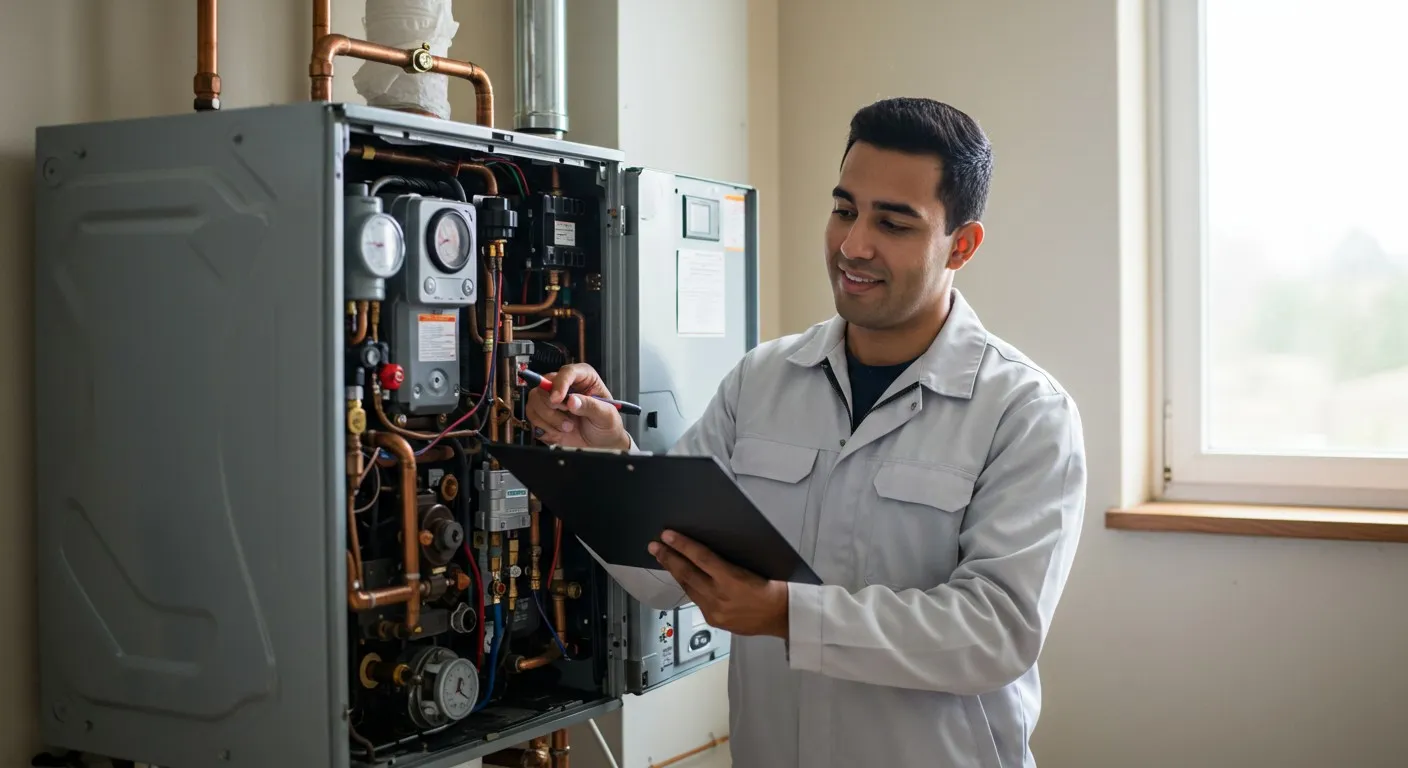
Professional heating repair is about precision and process. We do not rely on guesswork. Our approach follows a strict protocol to ensure safety, efficiency, and transparency. You remain informed at every stage of the service call, ensuring you have full control over the decisions made regarding your home’s heating infrastructure.
The service appointment generally follows this sequence:
- Arrival and Site Protection: The technician arrives within the scheduled window. Before entering your home, they apply shoe covers and use floor mats to protect your property from dirt and debris.
- System Assessment: We listen to your description of the problem and then perform a full system run-through. This involves checking error codes, measuring voltage and amperage, and inspecting safety switches.
- Diagnosis and Upfront Quote: Once the issue is identified, the technician explains exactly what failed and why. You receive a clear, written quote for the repair. No work begins until you approve this price.
- Execution of Repair: The technician proceeds with the approved repair, removing faulty components and installing manufacturer-approved replacement parts. — view our gallery of recent work.
- Safety Inspection and Testing: After the part is installed, we do not simply leave. We cycle the system multiple times to ensure it ignites, runs, and shuts down correctly. We also perform a safety check for gas leaks and carbon monoxide presence to ensure the home is safe.
- Cleanup and Report: The work area is cleaned, and old parts are removed. You receive a digital report of the service performed, which serves as your warranty documentation.
Deciding Between Repair and Replacement
Homeowners often face the difficult choice of sinking money into an aging unit or investing in a new system. This decision should be based on data, not sales pressure. While our primary goal is to repair your existing equipment, there are mathematical and practical limits to when a repair makes financial sense.
We help you evaluate the condition of your heater using the following criteria:
- The 50% Rule: If the cost of the repair approaches or exceeds 50% of the value of a new system, replacement is generally the wiser financial move. Investing heavily in a depreciating asset often leads to diminishing returns.
- System Age: The average lifespan of a gas furnace is 15 to 20 years, while heat pumps typically last 10 to 15 years. If your unit in Central Point is nearing the end of this window and requires a major component like a heat exchanger or compressor, replacement offers better long-term value.
- Frequency of Breakdowns: If you have required multiple repairs in the last two years, the system is likely entering a phase of rapid decline. Continued repairs often cost more in the long run than a monthly payment on a new, warranted unit.
- Energy Efficiency: Older units often operate at 60% to 70% AFUE (Annual Fuel Utilization Efficiency). Modern systems operate at 95% or higher. Replacing an old unit can result in immediate utility bill savings that help offset the installation cost.
- Comfort Consistency: If some rooms are freezing while others are hot, or if the unit struggles to maintain the set temperature on the coldest nights, the system may be undersized or losing compression. A repair cannot fix design or sizing flaws.
Regional Considerations for Heating Systems
Operating a heating system in the Rogue Valley requires attention to specific environmental factors. While we do not face the sub-zero temperatures of the Midwest, the combination of cool temperatures and high humidity in the winter creates unique challenges for HVAC equipment.
Local factors that influence your repair needs include:
- Moisture and Corrosion: The wet winters in Oregon can lead to rust and corrosion on outdoor heat pump units and within furnace exhaust flues. Electrical connections are particularly susceptible to oxidation, which increases resistance and causes component failure. Regular inspection of these connections is vital.
- Utility Providers: Whether your home relies on natural gas, propane, or electricity affects the repair approach. We are familiar with the specific requirements and rebates often associated with local utility providers, ensuring your repairs comply with energy standards.
- Permitting and Code Compliance: Minor repairs generally do not require permits. However, if a repair involves replacing a gas valve, altering gas piping, or modifying the electrical disconnect, local codes must be followed. We handle all necessary code compliance to ensure your home insurance remains valid and your system is safe.
- Heat Pump Defrost Cycles: Due to the dampness, heat pumps in our area frequently enter "defrost mode" to melt ice off the outdoor coil. If a homeowner mistakes this normal operation for a failure—or if the defrost board actually fails—it requires a technician who understands the specific thermal dynamics of our region to tell the difference.
Safety Systems and Carbon Monoxide Checks
Heating repair is not just about comfort; it is a matter of safety. Combustion appliances like gas furnaces create heat by burning fuel, a process that produces exhaust gases including carbon monoxide (CO). A properly functioning system vents these gases safely outdoors. A compromised system can leak these gases into your living space.
During every repair service, we pay special attention to the heat exchanger. This metal component separates the burning fuel from the air you breathe. Over time, the constant expansion and contraction from heating cycles can cause cracks in the metal. If a crack exists, the blower motor can push carbon monoxide into the ductwork.
Our safety protocol includes:
- Visual Inspection: checking for soot buildup, flame rollout, or visible cracks in the heat exchanger.
- Combustion Analysis: Using calibrated tools to measure the oxygen and carbon monoxide levels in the flue gas to ensure the burn is clean and efficient.
- Draft Testing: Verifying that the chimney or vent pipe has sufficient draft to pull exhaust gases out of the home, preventing back-drafting.
- Limit Switch Verification: Ensuring the high-limit switch is functional so the furnace shuts down automatically if it overheats, preventing fire hazards.
Why Professional Diagnosis Matters
In the age of online tutorials, some homeowners attempt DIY heating repairs. While changing a filter is a great maintenance task for a homeowner, venturing into mechanical and electrical repairs carries significant risk. Modern HVAC systems utilize high-voltage electricity and combustible fuels.
Professional diagnosis protects your home and wallet in several ways:
- Warranty Preservation: Most manufacturer warranties are voided if repairs are not performed by a licensed professional. DIY attempts can leave you with no coverage when a major part fails.
- Accurate Troubleshooting: Misdiagnosis is expensive. Replacing a thermostat when the issue is actually a control board wastes money and leaves you cold. We use multimeters and manometers to pinpoint the exact failure.
- Access to Parts: Professional technicians have access to OEM (Original Equipment Manufacturer) parts that fit perfectly and last longer than universal parts often found at big-box stores.
- Liability Coverage: When a licensed contractor performs the work, they carry liability insurance. If a DIY repair causes water damage or a fire, your homeowner's insurance may deny the claim.
Ensuring Long-Term Reliability
Once the immediate repair is complete, the focus shifts to preventing future emergencies. A repaired system is only as good as its maintenance. We provide guidance on how to keep your specific unit running smoothly based on its age and condition. This includes advice on filter selection—balancing filtration quality with airflow requirements—and setting programmable thermostats to reduce strain on the system during peak hours.
We also verify the integrity of the ductwork during our visits. Leaky ducts can cause a heater to run 30% longer than necessary to satisfy the thermostat, leading to premature component failure. By sealing leaks and insulating ducts in unconditioned spaces like attics or crawlspaces, we help reduce the workload on your newly repaired heater.
Restoring Comfort to Your Home
You deserve a warm, safe environment during the winter months. Heating issues create anxiety and discomfort, but the solution is straightforward when you have access to skilled professionals. We focus on delivering technical excellence and clear communication, ensuring you understand exactly what work is being done and why.
From minor electrical glitches to major component replacements, we possess the tools and training to resolve the issue efficiently. Don't let a broken heater compromise your safety or comfort for another night. Contact Stone Heating and Air today to schedule your diagnostic appointment and get your heating system back to peak performance.
- Book Expert Service Or Contact Us