

Facing Unexpected Commercial HVAC Challenges?
Managing the climate in your commercial space in Central Point can be unpredictable, especially when balancing operational costs with tenant comfort. Whether you are dealing with aging infrastructure that needs a complete overhaul or navigating the complexities of a new construction project amidst seasonal extremes, you need reliable, engineered solutions. Stone Heating and Air provides the technical expertise and project management required to streamline your commercial build; contact us today to discuss your project requirements or inquire about financing options.
We understand that commercial projects require precision, speed, and adherence to strict budgets. Our design-build approach ensures that you receive a system tailored specifically to your building's architecture and usage patterns.
- Fast turnaround times with responsive service availability to keep your project on schedule.
- Modern, energy-efficient HVAC systems designed to lower operational overhead and save on long-term utility costs.
- Customized solutions from certified technicians who understand the specific heating and cooling loads required in the Rogue Valley.
- All installations are backed by comprehensive warranties and in compliance with local Oregon building codes.
Integrated Design-Build Solutions for Commercial Facilities
The traditional method of hiring a separate engineer and contractor often leads to communication gaps, change orders, and delayed timelines. A design-build approach unifies these responsibilities under one roof, providing a single point of accountability for your entire HVAC project. This method is particularly effective for commercial entities in the Rogue Valley where specific climate control needs must be met with efficiency and reliability.
By integrating the design and construction phases, we eliminate the friction often found in plan-and-spec projects. This streamlined workflow allows for faster project delivery and more accurate cost estimation early in the process. You receive a system that is not only installed correctly but engineered specifically for your facility’s unique footprint.
Comprehensive system planning and engineering
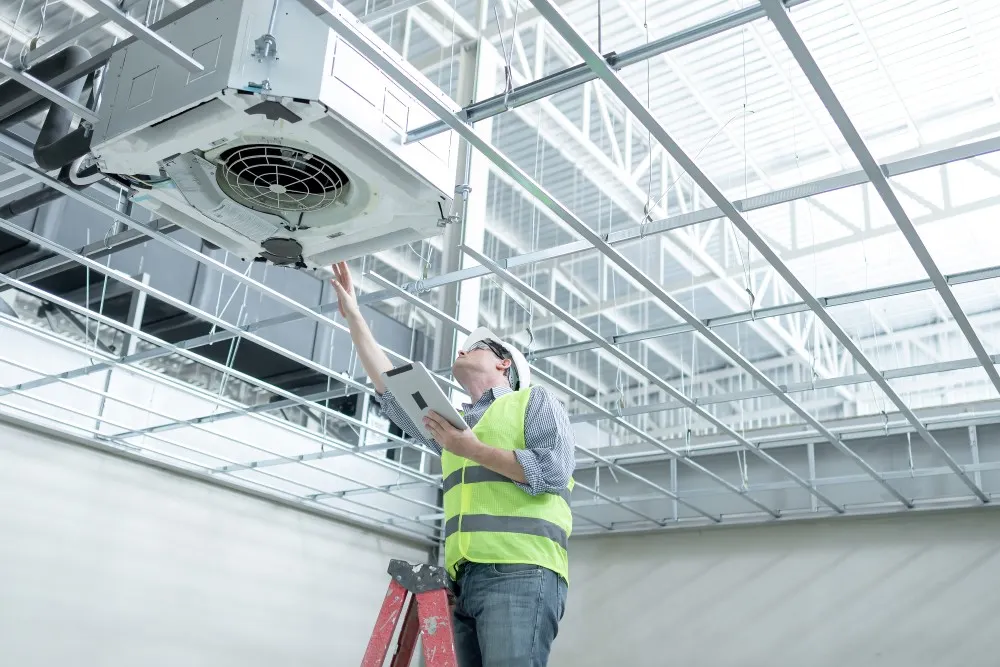
A successful commercial HVAC installation begins long before the equipment arrives at the site. We focus on the engineering required to handle high-occupancy loads and complex zoning requirements.
- Load Calculation and Energy Modeling: We perform rigorous load calculations to determine the exact heating and cooling capacity required. This prevents the common issues of short-cycling (system too big) or inability to maintain temperature (system too small).
- Ductwork Design and Airflow Analysis: Proper airflow is critical for commercial spaces. We design ductwork systems that ensure even air distribution, proper static pressure, and minimal noise interference in office or retail environments.
- Equipment Selection: We source high-performance Rooftop Units (RTUs), Variable Refrigerant Flow (VRF) systems, and split systems that align with your energy goals and budget constraints.
- Zoning and Controls: Modern commercial buildings require distinct climate zones. We design sophisticated control systems that allow for different temperature settings in warehouses, server rooms, and executive offices.
Types of facilities served
Commercial HVAC needs vary wildly depending on the business type. A design-build approach allows for customization across various sectors.
- Retail and Mixed-Use Spaces: Focus on consistent comfort for customers and humidity control for inventory protection.
- Office Buildings: Emphasis on indoor air quality, ventilation rates, and individual zone control to maintain employee productivity.
- Warehouses and Industrial: Solutions often involve high-volume ventilation, radiant heating, and robust cooling for equipment protection.
- Restaurants and Hospitality: Critical attention to kitchen ventilation, makeup air units, and odor control.
The Commercial HVAC Installation and Execution Process
A design-build project moves through distinct phases, each managed to ensure quality control and adherence to safety standards. Unlike residential work, commercial installations often involve heavy machinery, crane lifts, and coordination with other trades — view our project gallery to see our work.
Project initiation and design
- The process begins with a site evaluation or a review of architectural plans for new construction.
- Engineers and project managers collaborate to establish performance criteria, including energy efficiency targets and budget parameters.
- Preliminary designs are created, outlining equipment location, duct pathways, and structural requirements.
Fabrication and logistical planning
- Once the design is approved, fabrication of custom sheet metal and ductwork begins. This ensures that all components fit the specific dimensions of the building structure.
- Equipment is ordered and staged to align with the construction schedule, minimizing downtime or job site congestion.
- A detailed safety plan is developed, particularly for projects requiring roof access or heavy lifting.
Installation and implementation
- Technicians install the mechanical systems, including setting units, hanging ductwork, and running refrigerant piping and electrical connections.
- Control systems and thermostats are wired and integrated into the building management system if applicable.
- Ductwork is sealed and insulated to prevent energy loss and ensure compliance with Oregon energy codes.
Commissioning and handover
- The final step is system commissioning, where the unit is tested under various load conditions to ensure it performs as designed.
- Air balancing is conducted to verify that every register and diffuser delivers the correct volume of air.
- Your facility management team receives training on system operation, maintenance protocols, and warranty details.
Determining When to Upgrade Your Commercial Infrastructure
Deciding between repairing an existing commercial unit or investing in a new design-build retrofit is a financial calculation as much as a mechanical one. Commercial systems take a beating, often running continuously to combat the heat in Central Point or manage ventilation during the wet season. Understanding the lifecycle of your equipment helps in planning capital expenditures rather than reacting to emergency breakdowns — read our blog for maintenance advice.
The cost of operation vs. replacement
Continuing to repair an aging system often costs more in the long run than a modern replacement.
- Energy Efficiency: Older units, especially those over 15 years old, operate with significantly lower SEER and EER ratings than modern equipment. Upgrading can result in immediate utility savings that offset the installation cost over time.
- Repair Frequency: If your business is facing multiple service calls per year, or if a single repair approaches 50% of the cost of a new unit, replacement is generally the prudent financial choice.
- Refrigerant Availability: Many older commercial systems utilize R-22 refrigerant, which has been phased out. Repairs requiring this refrigerant are becoming prohibitively expensive and difficult to source.
- Tenant Comfort and Retention: Inconsistent temperatures and poor air quality can lead to tenant complaints or lost business. A modern system ensures a controlled environment that meets current expectations.
Technological advancements
Newer commercial HVAC systems offer features that were unavailable a decade ago.
- Smart Building Integration: Modern units can communicate with Building Automation Systems (BAS), allowing for remote monitoring, scheduling, and fault detection.
- Variable Speed Technology: Unlike older "on/off" systems, modern compressors and fans can modulate their speed to match the precise load, reducing wear and tear while saving energy.
- Improved Indoor Air Quality (IAQ): New systems are better equipped to handle high-efficiency filtration (MERV 13+) and fresh air intake requirements, which is increasingly important for health and safety.
Navigating Local Climate and Building Requirements
Operating a commercial facility in this region requires specific attention to environmental factors and regulatory compliance. The climate in Central Point presents a dual challenge: intense dry heat in the summer and cool, damp conditions in the winter. Your HVAC design must be robust enough to handle these swings without compromising efficiency.
Climate-specific design considerations
- Cooling Loads: During peak summer months, solar gain on commercial rooftops can be extreme. Equipment must be sized and rated to operate efficiently in high ambient temperatures to prevent thermal overload.
- Humidity and Ventilation: Winters bring rain and moisture. Proper ventilation strategies, including the use of economizers, are essential to introduce fresh air while managing indoor humidity levels to prevent mold growth and "sick building syndrome."
- Economizer Usage: The local climate is often ideal for "free cooling" during shoulder seasons (spring and fall). A properly designed system uses outside air to cool the building when temperatures allow, significantly reducing compressor runtime and energy usage.
Regulatory compliance and incentives
Commercial HVAC projects are subject to strict oversight to ensure safety and energy conservation.
- Building Codes: All designs and installations must adhere to the Oregon Structural Specialty Code and the Oregon Energy Efficiency Specialty Code. This includes requirements for insulation, duct sealing, and equipment efficiency ratings.
- Permitting: We handle the acquisition of all necessary mechanical and electrical permits required by the city and county. This ensures that your project avoids stop-work orders and passes all final inspections.
- Rebates and Incentives: Various programs, such as those offered by the Energy Trust of Oregon, provide financial incentives for installing high-efficiency commercial equipment. Navigating these requirements during the design phase can yield substantial rebates that lower the net cost of the project.
Why Engineering-Led HVAC Solutions Matter
In the commercial sector, an HVAC system is a critical asset that directly impacts the bottom line. It protects inventory, ensures employee productivity, and satisfies customers. Choosing a partner who understands the intersection of engineering, construction, and long-term maintenance is vital for the success of your project.
Stone Heating and Air approaches every commercial engagement with a focus on long-term value and operational reliability. We move beyond simple equipment swapping to provide a holistic analysis of your building’s needs.
Seamless project management
Commercial builds involve many moving parts. Our process is designed to minimize disruption to your business operations.
- Coordination: We coordinate closely with general contractors, electricians, and roofers to ensure a smooth workflow.
- Safety Protocols: Our teams are trained in strict safety protocols, ensuring compliance with OSHA standards on every job site.
- Documentation: We provide complete documentation, from initial load calculations to final air balance reports and warranty certificates.
Expertise in diverse commercial systems
We possess the technical capability to design and build various system types tailored to your specific application.
- Rooftop Units (RTUs): The standard for many retail and light industrial buildings, offering a packaged solution that saves indoor space.
- Split Systems: Ideal for smaller offices or server rooms requiring dedicated cooling.
- Ventilation Systems: Custom-designed makeup air and exhaust systems for kitchens, manufacturing floors, and laboratories.
Improve Efficiency and Protect Your Investment with Design-Build HVAC
Investing in a design-build HVAC solution ensures that your commercial property is equipped for the future. By prioritizing engineering accuracy, energy efficiency, and high-quality installation, you protect your capital investment and ensure a comfortable environment for years to come.
Secure the comfort and efficiency of your commercial facility by scheduling with Stone Heating and Air today. Contact us now to schedule a consultation and start designing a system built for your success.
- Book Expert Service Or Contact Us