

Trusted HVAC Maintenance Services to Restore Indoor Comfort
Facing unexpected HVAC breakdowns creates immediate stress and discomfort, often occurring right when weather conditions are at their most extreme. Ensure your home remains comfortable throughout the year and avoid emergency shutdowns by scheduling service with our expert technicians—contact us today to book an appointment or ask about available financing options. Residents in Trail and the surrounding areas rely on consistent climate control to handle shifting temperatures, and a proactive approach is the only way to guarantee performance when it matters most.
Neglecting your heating and cooling equipment leads to compounding mechanical issues, higher energy consumption, and premature system failure. Instead of waiting for a complete malfunction, opting for professional maintenance secures the longevity and reliability of your investment.
- Quick and efficient service response within 24 hours to address performance concerns before they escalate.
- Regular maintenance designed to enhance system efficiency, lower utility costs, and significantly reduce the likelihood of costly repairs.
- Expert technicians utilize the latest diagnostic technology for thorough inspections and precision adjustments.
All services are backed by full warranties and comprehensive financing options to ensure your home comfort is never compromised by budget constraints. Stone Heating and Air is committed to delivering the rigorous service standards required to keep your system running optimally year-round.
Comprehensive HVAC Maintenance: What to Expect
HVAC maintenance is not merely a quick visual check; it is a deep, technical audit of your system’s mechanical and electrical integrity. When you schedule a tune-up, the goal is to return the unit to factory specifications, ensuring that the energy you pay for is actually converted into heating or cooling rather than wasted due to friction, resistance, or airflow blockages.
A professional maintenance visit covers the entire ecosystem of your HVAC unit. This includes the thermostat, the ductwork, the indoor handling unit, and the outdoor condenser or heat pump. The focus is on identifying "drift"—small deviations in performance that, if left uncorrected, widen into major mechanical failures.
The Tune-Up Checklist
A complete system service involves a rigorous set of protocols. Technicians examine critical components to ensure safety and efficiency.
- Thermostat Calibration: Ensuring the temperature reading on your wall matches the actual temperature in the room prevents the system from over-cycling or running longer than necessary.
- Electrical Connection Tightening: Vibrations from the system can loosen electrical connections over time. Loose connections cause resistance, which generates heat and can lead to burnt wires or component failure.
- Lubrication of Moving Parts: Friction is the enemy of efficiency. Motors and bearings require proper lubrication to operate smoothly; without it, the system draws more amperage and wears out faster.
- Condensate Drain Inspection: A clogged drain can cause water damage to your home and increase humidity levels. Technicians clear these lines to prevent algae growth and overflow.
- System Control Testing: The start-up cycle, operation, and shut-down sequence are tested to ensure the system responds correctly to safety controls.
- Filter Replacement and Airflow Analysis: Dirty filters restrict air, forcing the blower motor to work harder. Technicians check static pressure to ensure air is moving freely through the ducts.
The Impact on Efficiency Ratings
Modern HVAC systems are rated by SEER (Seasonal Energy Efficiency Ratio) for cooling and HSPF (Heating Seasonal Performance Factor) for heating. These ratings represent the potential efficiency of the unit. However, without maintenance, a unit rated at 16 SEER can perform like a 10 SEER unit within a few years. Dirt accumulation on the evaporator and condenser coils acts as an insulator, preventing heat transfer. This forces the compressor to run at higher pressures and temperatures, consuming more electricity to do the same amount of work. A comprehensive tune-up restores the heat transfer capabilities of the coils, bringing the system closer to its original efficiency rating.
The Maintenance Process: From Inspection to Optimization
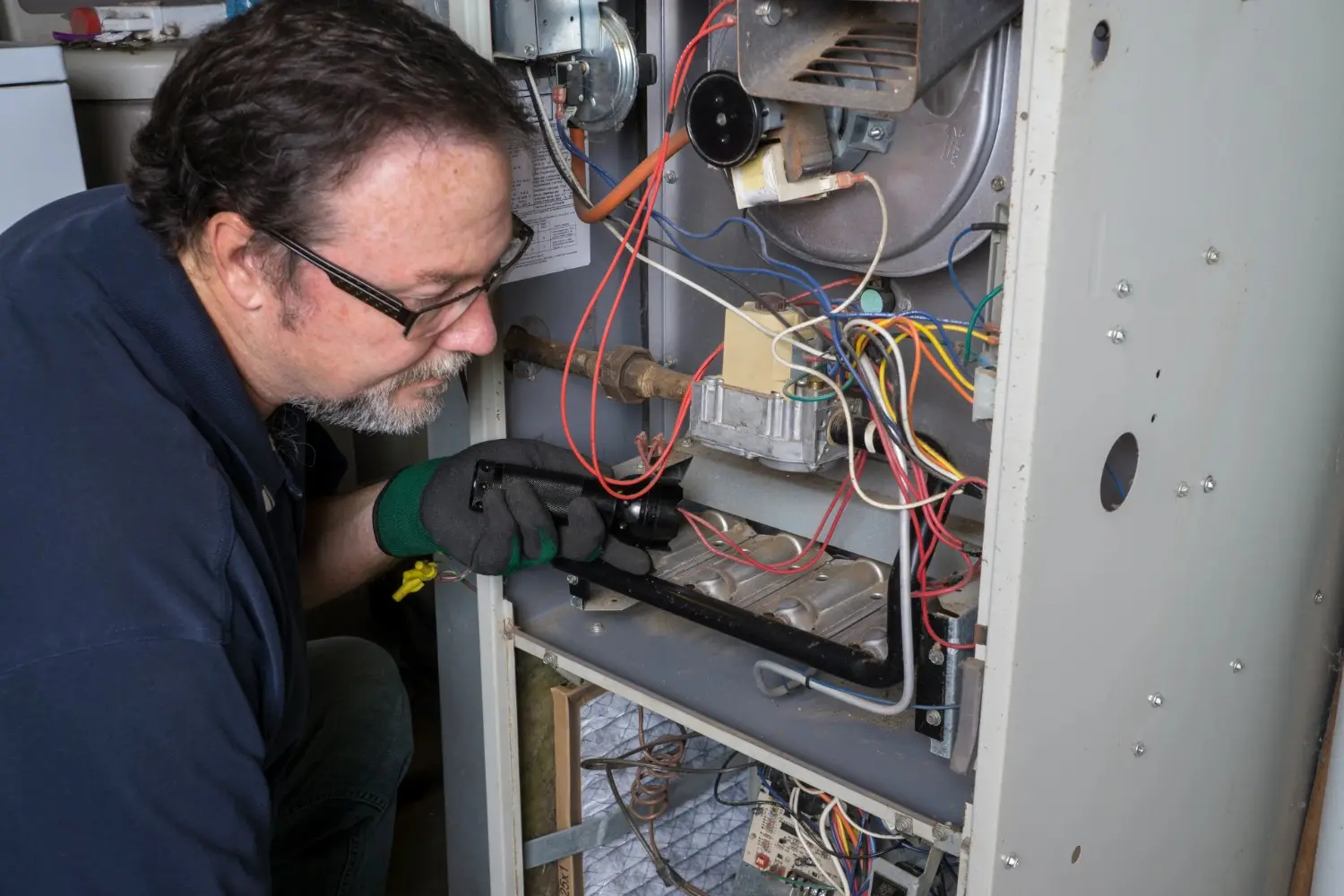
Understanding the workflow of a maintenance visit helps homeowners prepare and highlights the thoroughness of the service. The process is designed to be non-intrusive yet exhaustive, providing a clear picture of the system's health — view our gallery.
- Initial Assessment and Safety Check: The technician arrives and begins by checking the immediate environment of the HVAC unit. This involves ensuring there are no combustible materials near the furnace and that the outdoor unit has sufficient clearance for airflow. A carbon monoxide test is performed for gas furnaces to ensure no dangerous leaks are present.
- Deep Cleaning and Adjustments: Once safety is confirmed, the physical work begins. The blower assembly is inspected and cleaned to remove dust buildup that unbalances the fan. Condenser coils are chemically cleaned to remove grime and debris. Refrigerant levels are checked against the manufacturer’s sub-cooling and super-heat charts. If the refrigerant is low, it indicates a leak that must be located and repaired, as HVAC systems do not consume refrigerant like a car consumes gas.
- Electrical and Mechanical Testing: Capacitors, which help motors start and run, are tested for microfarad ratings. A weak capacitor is a leading cause of compressor and fan motor failure. Contactors are checked for pitting or burning. The heat exchanger in furnaces is inspected for cracks using cameras or dye tests; a cracked heat exchanger is a critical safety failure requiring immediate attention.
- Final Performance Test and Reporting: After all cleaning and adjustments, the system is run through a full cycle. The technician measures the temperature split—the difference between the air going into the return and the air coming out of the vents. This data confirms the system is heating or cooling effectively. Finally, a detailed report is provided, outlining what was done, the current status of the equipment, and any recommendations for future repairs or replacement.
Maintenance vs. Repair: Making the Right Financial Call
One of the most difficult decisions for a homeowner is determining when to continue maintaining a system and when to stop investing in a dying unit. While maintenance extends the life of the equipment, there is a point of diminishing returns. Making the right financial call depends on analyzing the age of the unit, the frequency of breakdowns, and the cost of operation.
When to Stick with Maintenance
If your system is under ten years old and has a history of reliable performance, maintenance is the correct path. Most warranties require proof of annual maintenance to remain valid. In this stage, the cost of a tune-up is a fraction of the cost of a new system, and the efficiency gains pay for the service over time.
- Valid Warranty: If the parts are still under warranty, maintenance ensures you do not void the coverage.
- Minor Issues: If the repairs needed are minor—such as a capacitor replacement or a contactor switch—these are standard wear-and-tear items that do not indicate a systemic failure.
- Consistent Comfort: If the system keeps the home at the desired temperature without running continuously, it likely has many years of life left.
When to Consider Replacement
There are specific triggers that suggest maintenance is no longer the most economical option.
- The 50% Rule: If the cost of a repair approaches 50% of the value of a new system, replacement is generally the wiser financial move.
- Age and Refrigerant Type: Systems over 15 years old, or those using the phased-out R-22 refrigerant, are expensive to repair. The cost of R-22 has skyrocketed, making even minor leaks financially devastating to fix.
- Rising Energy Bills: If your energy usage is increasing despite normal weather patterns, the internal components of the system are likely worn beyond what a tune-up can resolve.
- Safety Concerns: Any breach in a furnace heat exchanger or repeated electrical shorts pose safety risks that warrant immediate replacement.
Local HVAC Considerations in Trail
Operating an HVAC system in Trail requires specific attention to regional climate patterns and local infrastructure. The geography influences how systems are stressed and what maintenance tasks take priority.
Handling Extreme Temperature Swings
The region experiences a dual-climate challenge: hot, dry summers and cold, wet winters. This necessitates an HVAC system that is equally capable of heating and cooling. Heat pumps are popular here for their versatility, but they work year-round and therefore accumulate twice the wear and tear of a system that only runs in one season. This makes bi-annual maintenance—once for cooling in spring and once for heating in fall—critical for residents in this area.
Humidity and Air Quality Factors
While summers can be dry, the transition seasons and winters bring moisture. High humidity levels impact indoor comfort and can force air conditioners to run longer to dehumidify the air before they can cool it. Furthermore, regional factors such as wildfire smoke in the late summer can severely impact indoor air quality.
- Filter Upgrades: Standard filters may not be sufficient during fire season. Maintenance visits in Trail often involve upgrading to higher MERV-rated filters to trap smoke particulates and allergens.
- Coil Cleaning Importance: Dust combined with humidity can create a sludge on evaporator coils. This biology growth restricts airflow and can lead to "Dirty Sock Syndrome," where the system blows musty air into the home.
- Drainage Management: With wet winters, ensuring the condensate drain lines and pumps are functioning prevents basement or attic water damage.
Permits and Utility Rebates
Local codes in Oregon require specific permits for significant HVAC work, though general maintenance usually does not require a permit. However, if maintenance uncovers the need for major component replacement, adherence to local building codes is mandatory. Additionally, local utility providers often offer rebates for high-efficiency upgrades or even for performing verified maintenance tune-ups. Professional providers stay updated on these incentives to help homeowners save money.
Why Professional Care Matters for Your Warranty
Many homeowners are unaware that the manufacturer's warranty on their HVAC equipment is a conditional contract. It is not a guarantee of performance regardless of neglect; it is a promise to cover manufacturing defects provided the equipment is maintained.
Major manufacturers explicitly state in the fine print that annual maintenance by a certified professional is required to keep the warranty active. If a compressor fails five years into a ten-year warranty, the manufacturer may request service records. If those records do not exist, the claim can be denied, leaving the homeowner responsible for the full cost of the part and labor.
Professional maintenance provides the paper trail needed to protect your asset. Every invoice and service report serves as proof that the system was operated within design parameters.
- Documentation: You receive a dated, itemized record of the service, which is essential for warranty claims and can even add value to the home if you decide to sell.
- Certified Expertise: Stone Heating and Air employs technicians who hold the necessary certifications to work on major brands. Using an unlicensed handyman can void warranties immediately.
- Safety Assurance: Beyond financial protection, professional care ensures the safety mechanisms of gas and electric systems are functioning, protecting your home from fire hazards and carbon monoxide.
Investing in professional maintenance is an investment in peace of mind. It transforms a complex, expensive machine into a reliable utility that you don’t have to worry about. Rather than waiting for the inevitable failure that comes with neglect, choose a path of proactive care.
Take Control of Your Comfort with Stone Heating and Air
Don’t leave your home’s comfort to chance—take the proactive step that saves money, reduces stress, and protects your HVAC investment year-round. At Stone Heating and Air, our certified technicians deliver precision maintenance designed to boost efficiency, prevent costly breakdowns, and keep your system running at peak performance no matter the season. Whether you’re preparing for extreme temperatures or simply want reliable indoor comfort, we’re here to help. Schedule your comprehensive HVAC tune-up today, and experience the confidence that comes from knowing your system is optimized, protected, and backed by trusted local experts.
- Book Expert Service Or Contact Us