

Inefficient Commercial Climate Control Impacts Your Bottom Line
Dealing with frequent breakdowns, inconsistent temperatures, or inadequate heating and cooling in your commercial space directly affects productivity and customer satisfaction. You need a tailored, efficient HVAC design that matches your specific business needs and withstands the demands of the local climate. Contact us today at [Insert Phone Number] or inquire about our financing options to secure a system designed for your facility.
- Customized HVAC designs engineered for maximum efficiency and specific building performance requirements.
- Rapid installation and thorough maintenance services that minimize downtime for your operations.
- Energy-efficient systems designed to reduce monthly operational costs and manage high humidity.
All installations are backed by comprehensive warranties and optional financing plans to protect your capital investment.
Get the Right HVAC Design for Your Business Needs
Commercial buildings in Jacksonville require more than a standard heating and cooling unit; they demand a comprehensive strategy that accounts for square footage, occupancy levels, and heat-generating equipment. When an HVAC system is not designed specifically for the unique layout and usage of a facility, businesses often face skyrocketing energy bills and shortened equipment lifespans. The design-build approach streamlines the path from concept to completion, ensuring that the engineering of the system aligns perfectly with the practicalities of installation.
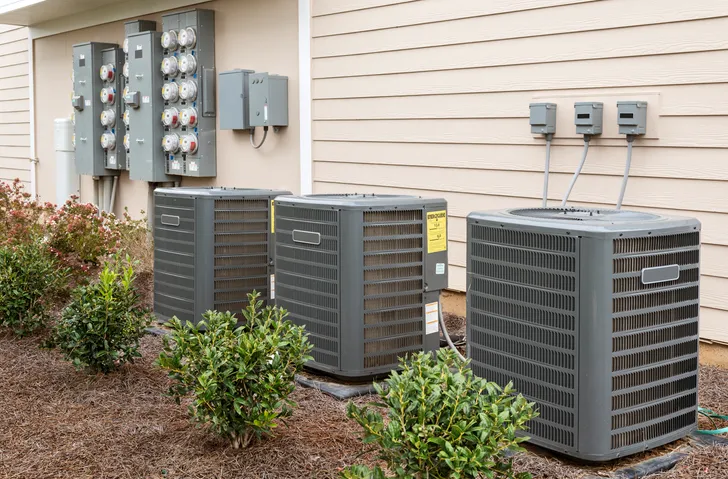
We specialize in creating commercial environments that maintain consistent comfort regardless of the weather outside. By integrating the design and construction phases, we eliminate the communication gaps that often occur between separate engineering firms and installation contractors. This unified workflow results in a system that is not only installed correctly but is also engineered to handle the specific latent and sensible heat loads of your building. Whether you operate a sprawling warehouse, a multi-story office complex, or a retail center, the goal is to provide reliable climate control that fades into the background, allowing you to focus on running your business.
Stone Heating and Air approaches every project with a focus on long-term sustainability and performance. A proper design phase includes detailed load calculations that factor in insulation levels, window placement, and internal workflows. This data-driven approach prevents the common pitfall of "oversizing" units, which leads to short-cycling and poor humidity control—a critical error in humid climates. By right-sizing the equipment and optimizing ductwork layout, we ensure your commercial space achieves optimal air quality and temperature regulation.
Our Services: From Design to Installation
The design-build model offers a single point of responsibility, which simplifies project management and accelerates project timelines. Rather than juggling multiple contracts, you work with one cohesive team dedicated to delivering a turnkey solution. This service covers every aspect of the commercial HVAC lifecycle, from the initial blueprint to the final flip of the switch.
Comprehensive Site Evaluation and Load Calculation
- Engineers conduct a thorough analysis of the building envelope to determine the exact heating and cooling requirements.
- This stage identifies potential energy loss areas and dictates the tonnage and type of equipment needed.
- Calculations include specific considerations for ventilation requirements based on occupancy codes.
Custom Ductwork and Air Distribution Design
- Proper airflow is essential for system efficiency; we design duct systems that minimize static pressure and maximize delivery.
- Fabrication plans are created to fit within the architectural constraints of the building, ensuring aesthetics are not compromised.
- Zoning systems are mapped out to allow different areas of the building to be controlled independently, increasing comfort and efficiency.
System Selection and Engineering
- Selection of appropriate equipment types, such as Rooftop Units (RTUs), Split Systems, or Variable Refrigerant Flow (VRF) systems.
- Integration of building automation systems (BAS) for centralized control and monitoring.
- Focus on high SEER and EER ratings to ensure compliance with modern energy standards and rebate eligibility.
Professional Installation and Project Management
- Coordination with general contractors and other trades to ensure the installation fits the overall construction schedule.
- Rigorous safety protocols and adherence to all OSHA standards during the physical installation.
- Structural support assessment for roof-mounted units to ensure building integrity.
Understanding the HVAC Installation Process
Executing a commercial HVAC installation requires precision, coordination, and a strict adherence to timelines. Unlike residential jobs, commercial projects often involve heavy machinery, complex logistics, and coordination with active business operations. Understanding the sequence of events helps facility managers and business owners prepare for the work ahead, ensuring minimal disruption to their daily activities.
Site Preparation and Safety Setup
- First, the installation team establishes a safety perimeter and creates a logistics plan for equipment delivery.
- If existing units are being replaced, refrigerant is reclaimed according to EPA standards before the old units are disconnected.
- Cranes or lifts are positioned if rooftop access is required, and pathways are cleared for bringing in new machinery and ductwork.
Ductwork and Infrastructure Installation
- Next, the internal infrastructure is addressed, including the hanging of ductwork, installation of VAV (Variable Air Volume) boxes, and running of refrigerant lines.
- Control wiring and high-voltage electrical connections are roughed in by licensed professionals.
- This phase often runs concurrently with other construction activities in new builds or during off-hours for retrofits to avoid disturbing tenants.
Equipment Placement and Connection
- The main heating and cooling units are hoisted into place, leveled, and secured to curbs or concrete pads.
- Once positioned, technicians connect the refrigerant lines, electrical supply, and condensate drains.
- Crucially, Stone Heating and Air ensures that all connections are brazed and sealed to prevent future leaks, which is vital for system longevity.
System Commissioning and Testing
- After physical installation, the system undergoes a rigorous commissioning process where airflow is balanced and refrigerant charges are verified.
- Technicians test all safety controls, thermostats, and automation integrations to ensure they communicate correctly.
- Finally, a walk-through is conducted with the facility manager to demonstrate system operation and hand over all warranty documentation.
Deciding Between HVAC Repair or Replacement
Making the financial decision to repair an aging commercial system or invest in a new design-build solution is a common challenge for property managers. While repairs may offer a short-term fix, they can often become a money pit if the underlying system is nearing the end of its useful life or was poorly designed initially. Understanding the tipping point between restoration and replacement is key to managing capital expenditures effectively.
Age of the Equipment
- Most commercial HVAC systems have a lifespan of 15 to 20 years; if your equipment is approaching this range, replacement is often the smarter financial move.
- Newer units utilize advanced refrigerants and compressors that are significantly more efficient than technology from two decades ago.
- Parts availability for obsolete units can lead to extended downtime, which is unacceptable for most commercial operations.
Frequency and Cost of Repairs
- If you find yourself calling for service multiple times a year, the cumulative cost of repairs likely outweighs the monthly payments on a financed new system.
- Apply the "50% Rule": If the cost of a necessary repair is more than 50% of the value of the equipment (or the cost of a new unit), replacement is recommended.
- Chronic issues often indicate that the compressor or heat exchanger is failing, which are catastrophic failures that warrant full replacement.
Energy Efficiency and Utility Costs
- Monitor your energy bills; a sudden or gradual spike in usage often indicates the system is working harder to maintain the same output.
- New systems meet higher SEER2 standards, which can lower electricity usage by 20% to 40% immediately upon installation.
- Investing in a new system often opens the door to tax incentives and utility rebates that are not available for repairs.
Comfort Complaints and Air Quality
- If employees or customers constantly complain about humidity, hot spots, or drafts, the current design may be fundamentally flawed or undersized.
- Persistent humidity issues in climates like Jacksonville can lead to mold growth and "Sick Building Syndrome," creating liability issues.
- A new design-build project allows for the correction of ductwork flaws and the integration of modern air purification technologies.
Navigating Local HVAC Regulations and Climate Considerations
Operating in Jacksonville and the surrounding southeastern region presents unique challenges that must be addressed during the design and build phase. The climate is characterized by high heat and extreme humidity, meaning that standard "off-the-shelf" solutions often fail to provide adequate comfort. An HVAC system here must do more than just cool the air; it must aggressively remove moisture to prevent the building from feeling clammy and to protect inventory and building materials from moisture damage.
Handling High Humidity Loads
- Systems must be designed with specific sensible-to-latent heat ratios to handle the heavy moisture content in the air.
- Oversized units cool the air too quickly without running long enough to dehumidify, leading to a cold but damp environment.
- We often incorporate reheats or dedicated outdoor air systems (DOAS) to manage humidity independently of temperature.
Permitting and Code Compliance
- Commercial HVAC projects require strict adherence to the Florida Building Code, particularly regarding wind load calculations for rooftop units due to hurricane risks.
- Permits must be pulled for all new installations and major change-outs, requiring detailed engineering drawings and load calculations.
- Compliance with energy codes is mandatory, meaning new systems must meet minimum efficiency requirements to pass inspection.
Utility Coordination and Electrical Upgrades
- Upgrading to larger or more complex commercial systems sometimes requires coordination with local utility providers to ensure the electrical service is adequate.
- We navigate the requirements for three-phase power connections often found in commercial and industrial settings.
- Local utility rebates for high-efficiency upgrades often require specific documentation and proof of installation by licensed contractors.
Why Choose Us: Experience and Expertise in HVAC
Selecting the right partner for your commercial HVAC design and build project is the most critical step in ensuring long-term success. Commercial systems are vastly more complex than residential units, involving intricate control systems, heavy-duty electrical work, and precise airflow engineering. You need a partner who understands the operational demands of your specific industry, whether that is healthcare, hospitality, retail, or industrial manufacturing.
We prioritize transparency and precision in every engagement. From the initial feasibility study to the final commissioning, our process is designed to mitigate risk and deliver predictable outcomes. We understand that in a commercial setting, time is money. Delays in HVAC installation can push back grand openings or halt production lines. Our project management approach is built around strict scheduling and proactive communication to keep your project on track.
Furthermore, we believe in future-proofing your investment. We don't just install for today; we design systems that are serviceable and scalable. By using non-proprietary controls and high-quality components, we ensure that your maintenance costs remain low over the lifecycle of the system. When you choose Stone Heating and Air, you are choosing a partner dedicated to the operational health of your business. Our team is fully licensed, insured, and up-to-date on the latest industry technologies and local regulations.
Contact Us Today!
Secure your commercial facility’s comfort and efficiency today. Contact us now to schedule your design-build consultation.
- Book Expert Service Or Contact Us