

Is Your Indoor Climate Control System Failing When You Need It Most?
Experiencing unbearable heat during a dry summer spike or unexpected chills during a wet winter night can disrupt your entire household or business. When your heating or cooling infrastructure fails, you require immediate, technical intervention rather than generic advice. Contact us now to schedule a diagnostic visit or inquire about our available financing options.
In Ashland, the Mediterranean climate brings distinct challenges—scorching highs in the nineties and damp, chilly lows in the winter—meaning your HVAC system must be versatile and robust. A malfunction is not just an inconvenience; it is a threat to your property's safety and your comfort. You need a solution that addresses the root cause of the inefficiency or breakdown immediately:
- Rapid response times: Technicians are dispatched quickly to diagnose and resolve critical system failures.
- Comprehensive service capabilities: From minor component repairs to full-scale system installations and retrofits.
- Transparent pricing: Clear, upfront cost structures with no hidden fees or surprise charges.
- Guaranteed Quality: All services come with a comprehensive warranty and flexible financing options to ensure your system is restored without financial strain.
Stone Heating and Air provides the technical expertise required to restore balance to your indoor environment, ensuring your equipment operates at peak efficiency regardless of the season.
What You Can Expect From Professional HVAC Diagnostics and Repair
When you request service for a failing HVAC unit, the immediate goal is to stabilize the indoor temperature and identify the mechanical or electrical failure. Modern HVAC systems are complex networks of pressure systems, electrical circuits, and airflow channels. A professional service call involves a systematic evaluation of these components to determine exactly why the system is underperforming or has ceased to function — read our FAQs for common issues.
The service begins with a thorough assessment of the equipment. This is not a cursory glance; it involves testing voltage, amperage, and refrigerant pressures. For air conditioning units struggling in the summer heat, technicians check for frozen evaporator coils, clogged condensate drains, or failing compressors. For heating systems during the colder months, the focus shifts to the heat exchanger, ignition systems, and combustion safety.
The scope of service generally includes:
- Electrical System Testing: Technicians inspect the thermostat, capacitors, relays, and wiring connections. Loose or corroded connections are a common cause of intermittent failures.
- Airflow Analysis: Restricted airflow forces the system to work harder, leading to premature burnout. This step involves checking filters, ductwork integrity, and blower motor performance.
- Refrigerant Level Checks: For cooling systems and heat pumps, maintaining the correct refrigerant charge is critical. Leaks are identified and sealed before recharging the system to manufacturer specifications.
- Safety Inspections: This is particularly vital for gas furnaces, where cracked heat exchangers can pose carbon monoxide risks. Technicians verify that all safety switches and exhaust flues are functioning correctly.
Residents in Ashland rely on their systems to handle rapid temperature shifts. A professional repair restores the unit to factory specifications, ensuring it can handle the load of a 95-degree day or a near-freezing night without cycling off or tripping a breaker.
The Installation and System Replacement Process
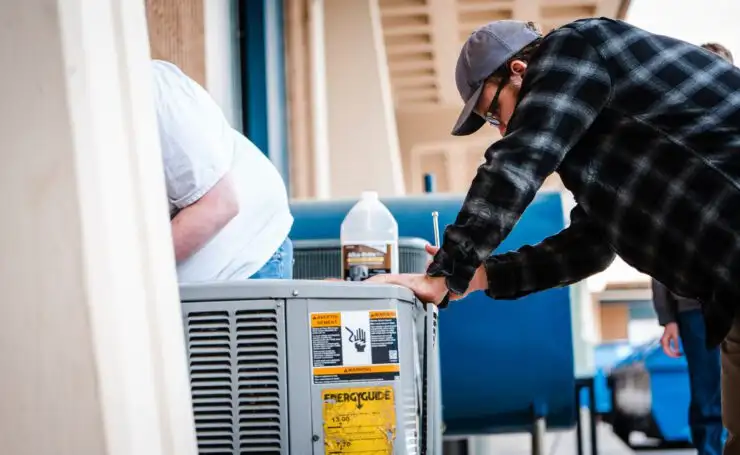
There comes a point where a simple repair is insufficient, and a full system replacement becomes the most viable economic and functional choice. Installing a new HVAC system is a major construction project that requires precise calculation, specialized tools, and strict adherence to safety codes. This process is engineered to ensure the new unit provides consistent comfort for the next 15 to 20 years.
The installation process follows a rigorous technical protocol:
- Load Calculation and Sizing: Before any equipment is ordered, a proper load calculation (often referred to as a Manual J) is performed. This determines the exact heating and cooling capacity required for the specific square footage, insulation levels, and window orientation of the property. An oversized unit will short-cycle, leading to humidity issues, while an undersized unit will run continuously without reaching the set temperature.
- Site Preparation and Removal: The existing equipment is safely disconnected and removed. This includes capturing and recycling old refrigerant according to environmental regulations. The installation area is then prepped, which may involve leveling the ground for an outdoor condenser or modifying the plenum for an indoor air handler.
- Ductwork Modification: Often, new high-efficiency systems require adjustments to the existing ductwork to handle different airflow pressures. Stone Heating and Air technicians ensure the distribution system is sealed and sized correctly to maximize the efficiency of the new equipment.
- Equipment Set-Up: The new furnace, heat pump, or air conditioner is positioned and connected. This involves brazing copper refrigerant lines, connecting high-voltage electrical lines, and installing low-voltage control wiring for the thermostat.
- System Commissioning: Once physically installed, the system is not just turned on; it is commissioned. Technicians adjust blower speeds, check gas pressure, and verify refrigerant sub-cooling and superheat levels to ensure the unit is running exactly as the manufacturer designed.
- Final Walkthrough: The technician explains the operation of the new system, including how to operate the programmable thermostat and how to change filters, ensuring the user is fully equipped to manage their indoor climate.
Deciding Between Repair and System Replacement
One of the most difficult decisions for a property owner is determining whether to pour more money into an aging system or invest in a new one. This decision should not be based on guesswork but on data regarding the unit's age, condition, and performance history — check our blog for maintenance tips.
Consider replacement if the following criteria are met:
- The 50% Rule: If the cost of the repair approaches or exceeds 50% of the value of a new system, replacement is generally the smarter financial move.
- Age of the Equipment: The average lifespan of an AC unit or heat pump is 10 to 15 years, while furnaces may last 15 to 20 years. If your equipment in Ashland is approaching this age range and requires a major repair (like a compressor or heat exchanger), replacement offers better long-term value.
- Frequency of Breakdowns: If you have required multiple service calls in the last two years, the system is likely entering the end of its reliable service life. Continuing to repair it is throwing good money after bad.
- Rising Energy Bills: As components wear out, motors and compressors become less efficient, drawing more electricity to do the same amount of work. A sudden spike in utility costs often signals internal failure.
- Comfort Issues: Uneven heating or cooling, excessive noise, or an inability to maintain humidity control are signs that the system can no longer keep up with the demands of the home.
- Refrigerant Type: Older systems utilizing R-22 refrigerant (Freon) are becoming prohibitively expensive to repair due to the phase-out of this chemical. Upgrading to a system that uses R-410A or newer refrigerants is more environmentally friendly and cost-effective.
Regional Considerations for HVAC in Southern Oregon
Operating an HVAC system in Southern Oregon requires specific attention to local environmental factors and regulations. The geography and climate of the Rogue Valley dictate specific maintenance and installation needs that generic service providers might overlook:
- Permitting and Code Compliance: The City of Ashland has specific building codes and permit requirements for HVAC alterations and replacements. Professional installers handle the administrative burden of pulling permits and scheduling required city inspections to ensure the work is legal and safe.
- Wildfire Smoke Mitigation: In recent years, smoke has become a significant factor during late summer. Standard filters are often insufficient. Many local homeowners are opting for high-efficiency media filters or electronic air cleaners integrated into their HVAC systems to maintain indoor air quality when outdoor air is hazardous.
- Utility Rebates and Incentives: Ashland and the state of Oregon frequently offer tax incentives and cash rebates for upgrading to high-efficiency heat pumps and ductless mini-split systems. A knowledgeable provider can guide you toward equipment that qualifies for these financial benefits, maximizing your return on investment.
- Humidity Management: While summers are dry, winters can be damp. A properly sized HVAC system plays a crucial role in dehumidification during the winter months, preventing mold growth and protecting the structural integrity of the home.
- Historic Home Retrofits: Ashland has a high concentration of historic properties. Retrofitting these homes with modern climate control often requires creative solutions, such as high-velocity systems or ductless mini-splits, to preserve the architectural integrity while providing modern comfort.
Why Technical Expertise Matters for Your HVAC
The efficiency and longevity of your heating and cooling equipment are directly tied to the quality of the installation and maintenance it receives. HVAC systems are not "plug and play" appliances; they are complex mechanical systems that must be integrated into the unique envelope of your building.
Choosing a provider with deep technical knowledge ensures that diagnostics are accurate, preventing unnecessary part replacements. It ensures that installations are performed to code, protecting your warranty and your home insurance validity. It means having access to technicians who understand the thermodynamics of the Rogue Valley climate and can recommend solutions that provide genuine comfort.
When you choose a specialized service, you are investing in:
- Accurate Sizing: Avoiding the common pitfalls of oversized or undersized units.
- Proper Airflow: Ensuring every room in the building receives adequate conditioning.
- Safety Assurance: rigorous testing of gas lines, exhaust venting, and electrical connections.
- Long-Term Support: Access to ongoing maintenance plans that extend the life of your investment.
Your indoor environment is essential to your quality of life and productivity. Do not let a failing system compromise your comfort or safety. Stone Heating and Air is ready to deploy experienced technicians to address your HVAC challenges with precision and speed.
Take Control of Your Comfort Today with Stone Heating and Air
Don’t wait for a small HVAC issue to become a costly emergency. With Stone Heating and Air, you get fast, reliable, and precision-focused service designed to restore your home or business to optimal comfort—no matter the season. Our expert technicians are prepared to diagnose, repair, or replace your system with unmatched professionalism and technical skill. If you're experiencing uneven temperatures, rising energy bills, or frequent breakdowns, now is the time to act. Contact Stone Heating and Air today to schedule your service appointment, request a diagnostic, or explore flexible financing options that fit your budget.
- Book Expert Service Or Contact Us