

Unreliable Commercial Climate Control Impacts Your Bottom Line
Managing a commercial facility requires consistent environmental control, and a failing HVAC system disrupts operations, alienates customers, and lowers employee productivity during the dry summer heat or damp winter chill found in this region. Whether you are facing a sudden breakdown in a retail space or inconsistent temperatures in an office building, immediate professional intervention is necessary to restore business continuity. Contact us to schedule an emergency diagnostic or to discuss financing options for a system retrofit.
Business owners and facility managers in Ashland cannot afford extended downtime or the inefficiency caused by aging equipment. Our approach prioritizes speed and technical accuracy to get your systems running at peak performance:
- Rapid response times with same-day service availability to minimize operational interruptions.
- Certified technicians trained to handle complex commercial load calculations and repairs.
- Upfront pricing structures that provide clear cost visibility before work begins.
- All services are fully licensed, insured, and backed by a warranty for total peace of mind.
Stone Heating and Air delivers commercial-grade solutions designed to handle the specific demands of local businesses, ensuring your infrastructure supports your goals rather than hindering them.
Comprehensive Commercial HVAC Solutions: Installation to Maintenance
Commercial heating and cooling requires a different tier of expertise compared to residential work. The equipment is larger, the electrical demands are higher, and the distribution systems are more complex. Securing a partner who understands the intricacies of commercial rooftop units (RTUs), split systems, and variable refrigerant flow (VRF) technology is essential for maintaining a comfortable environment for your patrons and staff.
Commercial System Installation and Retrofitting
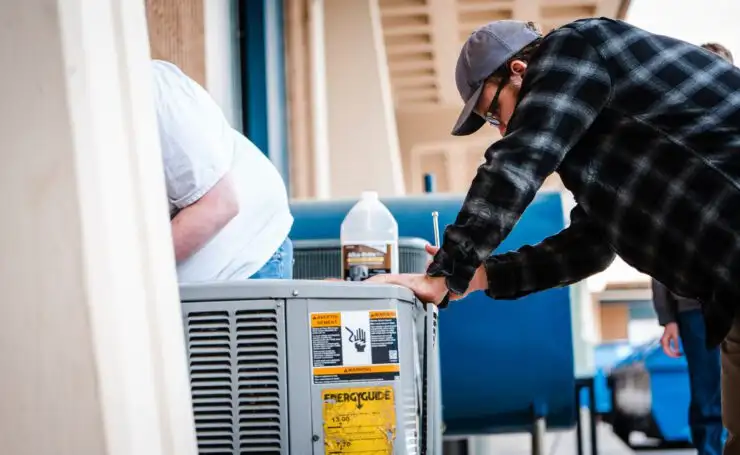
Installing a new commercial system is a significant capital investment that dictates your energy overhead for the next 15 to 20 years. Correct sizing is critical; an oversized unit will short-cycle, leading to humidity issues and premature compressor failure, while an undersized unit will run continuously without ever reaching the setpoint — view our installation gallery for examples:
- Rooftop Units (RTUs): We specialize in the installation and replacement of packaged rooftop units. These systems are efficient and save valuable indoor square footage. Our team handles the logistics of crane lifts and structural support assessments to ensure safe placement.
- Split Systems: For buildings without roof access or those requiring zoned cooling, commercial split systems offer flexibility. We design refrigerant piping runs that maintain pressure and efficiency over long distances.
- VRF Systems: For facilities requiring simultaneous heating and cooling in different zones, VRF technology provides superior energy efficiency. These systems modulate refrigerant flow to match the exact load of each indoor unit.
Preventative Maintenance Plans
Reactive maintenance is the most expensive way to manage a facility. Waiting for a breakdown often results in emergency service rates and lost revenue. A structured maintenance strategy extends the lifespan of your equipment and keeps energy consumption in check:
- Coil Cleaning: Dirty condenser and evaporator coils reduce heat transfer capabilities, forcing the system to work harder. We perform deep cleaning to restore efficiency.
- Belt and Pulley Adjustment: Loose or worn belts on blower motors reduce airflow and can freeze up coils. We inspect, tension, or replace drive belts during every visit.
- Electrical Connection Tightening: Commercial units vibrate significantly. Over time, electrical connections loosen, leading to arcing, voltage drops, and component failure. We torque all connections to factory specifications.
- Condensate Drain Management: In Ashland’s wet winters and dry summers, moisture management is key. We clear drain lines and treat pans to prevent water damage and biological growth.
Our HVAC Installation Process: What to Expect
A successful commercial installation relies on rigorous planning and execution. We adhere to a standardized process that ensures every project meets code requirements and performance expectations without causing unnecessary disruption to your daily operations:
- Load Calculation and Site Assessment: First, we conduct a detailed analysis of your building’s thermal envelope. This involves more than just square footage; we factor in window gain, insulation levels, occupancy rates, and internal heat loads from machinery or computers. This data informs the precise capacity requirements for the new equipment.
- System Design and Selection: Next, we select equipment that aligns with your budget and energy goals. We evaluate SEER (Seasonal Energy Efficiency Ratio) and IEER (Integrated Energy Efficiency Ratio) ratings to maximize return on investment. We also design or modify ductwork to ensure balanced air distribution throughout the facility.
- Logistics and Safety Planning: Before installation day, we coordinate all logistical aspects. If a crane is required for rooftop placement, we manage the permits and traffic control. We create a safety plan to protect your employees, customers, and our technicians during the removal of old equipment and the staging of new units.
- Installation and Commissioning: During the installation phase, technicians connect high-voltage electrical lines, control wiring, and refrigerant piping. Once the physical installation is complete, we do not simply flip a switch. We perform a full commissioning process, measuring static pressure, superheat, and subcooling to verify the system is operating strictly according to manufacturer specifications.
- Final Walkthrough and Handoff: Finally, we train your facility management team on the operation of the new system. We explain how to use the thermostats or building automation system (BAS), how to change filters, and what alert signals to watch for.
Deciding Between HVAC Repair and Replacement: A Quick Guide
Facility managers often face the difficult decision of whether to authorize another repair or invest in a full system replacement. While Stone Heating and Air aims to extend the life of your current assets, there is a financial tipping point where replacement becomes the more prudent business decision.
The 50% Rule
A common metric in commercial HVAC is the 50% rule. If the cost of the repair approaches or exceeds 50% of the value of the system (or the cost of a new unit), replacement is generally the better option — visit our FAQs for advice. This is especially true if the equipment is out of warranty.
Equipment Age and Reliability
Commercial HVAC systems typically last between 15 and 20 years. If your system is nearing the 15-year mark and requires frequent repairs, it is entering the end of its useful life. Continuing to patch an aging system often results in a "money pit" scenario where component failures accelerate.
Energy Efficiency and Operational Costs
Older units often operate at much lower efficiency levels than modern standards require. A system installed 15 years ago likely has a significantly lower SEER rating than what is available today. By upgrading to high-efficiency equipment, businesses often see a drastic reduction in monthly utility bills, which helps offset the installation cost over time.
Refrigerant Phase-Outs
If your current system utilizes R-22 refrigerant, you are operating on borrowed time. The production and import of R-22 have been banned, making repairs involving refrigerant recharge incredibly expensive and increasingly difficult to source. Upgrading to a system that uses R-410A or newer eco-friendly refrigerants ensures long-term serviceability.
Comfort and Air Quality Issues
If your system can no longer maintain consistent temperatures or control humidity levels, it is impacting your business environment. Inconsistent climate control can damage inventory, affect sensitive equipment, and reduce employee morale. Modern systems offer better modulation and humidity control capabilities.
Navigating Ashland’s HVAC Requirements: Permits and Climate Considerations
Operating in Southern Oregon presents specific challenges that influence how commercial HVAC systems should be selected and installed. Understanding local regulations and environmental factors is crucial for a compliant and efficient facility.
Climate-Specific Design
Ashland experiences a distinct climate with hot, dry summers and cool, wet winters. This variation demands versatility from commercial systems:
- Economizer Utilization: The region often benefits from cool summer nights. Commercial systems should be equipped with economizers, which use outdoor air to cool the building when ambient temperatures drop. This "free cooling" significantly reduces compressor runtime and energy usage.
- Humidity Control: While summers are dry, winters bring significant rainfall. Commercial units must be capable of effective dehumidification during the heating season to prevent mold growth and maintain indoor air quality.
- Heat Pump Efficiency: Modern heat pumps are highly effective in this climate zone. They provide efficient heating during the mild winters without the need for natural gas, although dual-fuel systems are available for extremely cold snaps.
Permitting and Code Compliance
Commercial HVAC projects in Ashland require adherence to the Oregon Structural Specialty Code and local municipal amendments:
- Building Permits: Most commercial replacements and new installations require a mechanical permit from the City of Ashland Building Division. This ensures that the installation meets safety standards regarding structural support, electrical connections, and venting.
- Energy Codes: Oregon has stringent commercial energy codes. New installations must meet specific efficiency minimums and often require programmable thermostats or building automation integration to minimize energy waste.
- Noise Ordinances: Commercial units, particularly rooftop systems, must comply with local noise ordinances. Proper location planning and the use of sound-dampening curbs are often necessary to avoid violations and neighbor complaints.
Utility Rebates and Incentives
Local utility providers often offer rebates for upgrading to energy-efficient equipment. These incentives can significantly lower the net cost of a project. Navigating the paperwork for these rebates requires detailed documentation of the old system's inefficiency and the new system's specifications. We assist in gathering the necessary technical data to help you maximize these financial benefits.
Why Choose Us: Our Commitments to Quality and Service
Selecting a service provider for your commercial facility is about trust and technical capability. You need a partner who views your HVAC system as a critical business asset rather than just a piece of machinery — check our client reviews.
Technical Expertise and Certification
Our team consists of technicians who undergo continuous training on the latest commercial technologies. We understand complex control wiring, three-phase power systems, and advanced diagnostic protocols. We do not guess; we measure, verify, and execute based on data.
Minimizing Business Disruption
We understand that your business needs to keep running. Our scheduling is flexible, and our project management is tight. We plan our work to minimize noise and interference with your daily operations. Whether it is an early morning crane lift or an after-hours repair, we work around your schedule.
Safety and Compliance
Commercial worksites present unique safety hazards. We adhere to strict safety protocols to protect your property and our staff. We carry full liability insurance and workers' compensation coverage, ensuring that your business is never at risk during our operations.
Long-Term Partnership
We aim to build long-term relationships with facility managers and business owners. We keep detailed records of your equipment history, allowing us to spot trends and make proactive recommendations. When you call us, you are speaking to a team that knows your building and understands your specific needs.
Your commercial facility depends on a reliable environment to succeed. Do not let HVAC failures compromise your operations or profitability.
Take Command of Your Building’s Comfort and Protect Your Bottom Line
When your commercial environment can’t afford downtime, Stone Heating and Air is the partner you can trust to keep operations running smoothly. Our team delivers fast response times, precision craftsmanship, and long-term system reliability tailored to the demands of Southern Oregon businesses. Whether you need emergency service, a full-scale retrofit, or a strategic maintenance plan, we provide the expertise and transparency your facility deserves. Don’t wait for minor issues to become costly disruptions—secure the performance your building depends on. Contact Stone Heating and Air today to schedule your consultation and experience proven commercial HVAC excellence.
- Book Expert Service Or Contact Us