

Nothing slows business down like heating or cooling system troubles, especially during the peak temperature swings in Oregon. At Stone Heating and Air, we provide rapid, reliable HVAC solutions tailored to commercial needs in Rogue River. Contact us today to secure a priority diagnostic appointment or to discuss financing options for a new system.
Commercial spaces require consistent climate control to protect inventory, maintain employee productivity, and ensure customer comfort. When a system fails, the impact on revenue is immediate.
- Quick Response Times: technicians are deployed rapidly to assess critical system failures, often offering same-day diagnostic availability.
- Commercial Grade Expertise: Services cover complex systems, from rooftop units (RTUs) to industrial split systems, ensuring efficiency and longevity.
- Transparent Cost Structures: Solutions focus on long-term value with clear, upfront pricing to assist with budget allocation.
All services are performed by certified technicians, backed by our satisfaction warranty to ensure your business remains compliant and comfortable.
Immediate Response and Commercial Diagnostics
When a commercial HVAC system malfunctions, the primary goal is restoring functionality with minimal disruption to daily operations. The diagnostic phase is critical in identifying not just the symptom, but the root cause of the failure. Commercial equipment operates under higher loads and for longer durations than residential units, making them susceptible to specific wear and tear.
Upon arrival, a thorough evaluation of the entire mechanical system takes place. This includes analyzing the airflow, checking refrigerant pressures, and inspecting electrical components for fatigue or corrosion. For businesses in Rogue River, where summer highs reach the 90s, a cooling failure can render a building uninhabitable within hours. Conversely, the damp winters require heating systems to function flawlessly to prevent moisture buildup and mold growth.
The diagnostic process covers a wide array of commercial equipment types:
- Rooftop Units (RTUs): These are common in retail and warehouse spaces. Technicians check the economizers, heat exchangers, and blower motors, which are frequent failure points.
- Split Systems: Often used in office buildings, these require careful inspection of both the indoor air handler and the outdoor condensing unit.
- Chillers and Boilers: For larger facilities, the focus shifts to water flow, pumps, and system pressure to ensure the hydronic loops are functioning correctly.
- VAV (Variable Air Volume) Boxes: In zoned commercial spaces, individual dampers and controls are tested to ensure every room receives the correct amount of conditioned air.
Once the issue is identified, a clear report outlines the necessary repairs. The focus remains on durability. Parts are sourced for their reliability to prevent recurring issues. The objective is to extend the lifecycle of the current asset whenever feasible, ensuring that the repair investment yields continued performance.
The Installation and Replacement Process
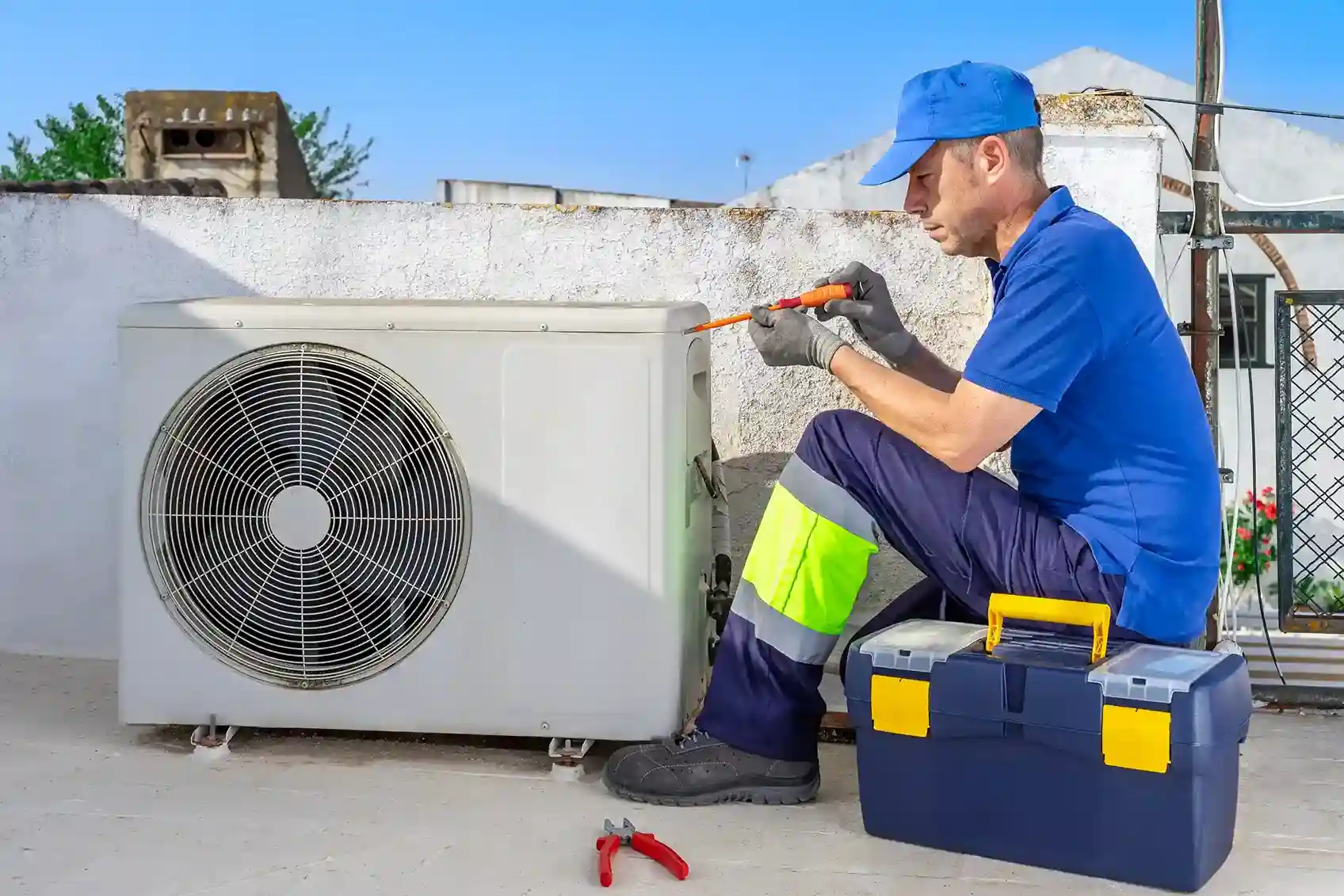
There comes a point where a commercial system is no longer viable to repair. Installing a new commercial HVAC system is a complex engineering task that requires precise planning and execution. It is not merely swapping one box for another; it involves load calculations and ductwork analysis to match the new unit to the building’s current usage.
The installation process follows a strict protocol to ensure compliance and efficiency:
- Site Assessment and Load Calculation: The physical layout of the building, insulation levels, window placement, and occupancy numbers are evaluated. This data determines the required tonnage and BTUs for the new system.
- System Selection: Based on the assessment, equipment is selected that meets the specific energy goals of the business. This includes evaluating SEER (Seasonal Energy Efficiency Ratio) and IEER (Integrated Energy Efficiency Ratio) ratings to maximize operational savings.
- Ductwork and Air Distribution Analysis: Existing ductwork is inspected for leaks, static pressure issues, and proper sizing. Modifications are made to ensure the new high-efficiency unit delivers air effectively to all zones.
- Physical Installation: Old equipment is safely recovered and disposed of according to EPA regulations. The new units are positioned, often requiring crane services for rooftop placements.
- Commissioning and Testing: Once installed, the system is not just turned on; it is commissioned. This involves balancing the airflow, setting the thermostat schedules, and verifying that all safety controls are active.
This methodical approach ensures that the new installation performs at its rated efficiency from day one. Proper sizing is particularly important in Rogue River, where an oversized unit will short-cycle during the mild spring and fall, leading to humidity issues, while an undersized unit will fail to keep up during the July and August heat spikes.
Deciding Between Repair and Replacement
Business owners constantly face the decision of whether to inject more capital into an aging system or to invest in a replacement. This decision should be based on data and financial projections rather than guesswork. Several key factors indicate when replacement becomes the more prudent financial choice.
Consider the "50% Rule." If the cost of a necessary repair approaches 50% of the value of a new system, replacement is generally the better option. However, for commercial entities, other variables weigh heavily:
- Age of the Equipment: Commercial systems typically last 15 to 20 years. If a unit is over 15 years old and requires a major component like a compressor or heat exchanger, the technology is likely obsolete.
- Frequency of Breakdowns: If service calls are becoming a quarterly or monthly expense, the cumulative cost of downtime and repairs will quickly outpace the cost of financing a new unit.
- Energy Efficiency: Older units often operate at significantly lower efficiency levels than modern standards. Upgrading from an old standard unit to a high-efficiency model can reduce monthly energy expenditures by a substantial margin, providing a return on investment over time.
- R-22 Refrigerant: Systems that still utilize R-22 refrigerant are expensive to service due to the phase-out of this chemical. Leaks in these systems often necessitate a full replacement.
Stone Heating and Air assists facility managers in analyzing these metrics. By comparing the projected repair costs against the energy savings and warranty benefits of a new system, businesses can make a capital expenditure decision that aligns with their long-term financial goals.
Navigating Local Climate and Regulations
Operating in the Rogue Valley presents specific challenges for commercial HVAC systems. The local climate is characterized by hot, dry summers and cool, wet winters. This dual nature requires systems that are robust enough to handle high cooling loads but also capable of managing humidity during the rainy season.
- Handling Heat Loads: During summer, ambient temperatures often exceed 90°F. Commercial rooftops can get even hotter, stressing the condenser coils. Systems must be rated for high-ambient operation to prevent high-pressure trips and compressor failures.
- Moisture Management: In the winter months, temperatures dip into the 20s with significant rainfall. Heating systems must maintain indoor comfort while also aiding in dehumidification to prevent "sick building syndrome" and protect building materials.
- Local Codes and Permits: Commercial HVAC work in Oregon is subject to strict building codes. This includes Title 24 compliance in some contexts and adherence to Oregon’s specific energy efficiency mandates.
- Ventilation Requirements: Commercial spaces must meet specific fresh air intake requirements (ASHRAE standards). This is crucial for maintaining indoor air quality in tightly sealed modern buildings.
Ensuring compliance with local regulations avoids fines and ensures the safety of the building’s occupants. Professional service includes handling the permitting process, ensuring that all installations meet or exceed state and local safety codes.
The Value of Preventative Maintenance
Commercial HVAC systems are significant investments. Protecting that investment requires a proactive maintenance strategy. Deferred maintenance is the leading cause of premature system failure and inflated energy bills. A dirty condenser coil alone can increase energy consumption by 30% as the system struggles to reject heat.
A comprehensive maintenance plan covers all critical aspects of the system:
- Filter Management: High-quality commercial filters must be changed regularly to maintain airflow and indoor air quality.
- Coil Cleaning: Evaporator and condenser coils are chemically cleaned to ensure maximum heat transfer.
- Belt and Pulley Inspection: Worn belts are replaced, and tension is adjusted to prevent slippage and blower failure.
- Electrical Tightening: Loose connections cause voltage imbalances that burn out motors and compressors.
- Drain Line Clearance: Condensate drains are cleared to prevent water damage and bacterial growth.
Regular maintenance converts a variable expense (unexpected repairs) into a fixed, predictable operational cost. It documents the history of the equipment, which is vital for warranty claims and property valuation.
Securing Your Business Environment
Maintaining a consistent and comfortable environment is essential for business continuity. Whether dealing with a sudden breakdown in the middle of a heatwave or planning a capital upgrade for an aging facility, the quality of the HVAC service provider directly impacts the bottom line. Professional intervention ensures that systems run efficiently, codes are met, and the lifespan of the equipment is maximized.
Stone Heating and Air delivers the technical precision and reliable service required to keep commercial properties operating smoothly. From diagnostic accuracy to flawless installation, the focus is always on minimizing downtime and maximizing performance.
Don’t let HVAC issues interrupt your business operations—schedule your consultation today to ensure your facility remains comfortable and compliant year-round.
- Book Expert Service Or Contact Us