

Quick Heating Repairs to Restore Comfort and Efficiency
Facing a sudden drop in temperature with a malfunctioning heater creates immediate stress and discomfort for your household. You need a responsive team that understands the urgency of restoring heat to your property in Cave Junction before the cold sets in permanently. Contact us immediately to schedule a diagnostic visit or to discuss financing options for major repairs.
When your furnace or heat pump stops working efficiently, waiting days for a solution is not an option. You require a service provider that arrives equipped to handle the specific mechanical failures common to this region's climate. Stone Heating and Air provides the technical expertise required to diagnose complex heating issues and implement lasting solutions.
- Receive prompt heating repairs from licensed professionals who value your time.
- Benefit from transparent pricing structures with no hidden fees or surprise costs.
- Rely on service guarantees that ensure your heater is fixed correctly on the first visit.
All services are fully licensed, insured, and come with a customer satisfaction guarantee to give you peace of mind during stressful breakdowns.
Restoring Heat and Comfort to Your Property
When a heating system goes offline, the primary goal is rapid stabilization. Modern heating units, whether gas furnaces or electric heat pumps, consist of complex distinct components that must work in unison. A failure in one area, such as the ignition system or the blower motor, often triggers safety switches that shut down the entire unit to prevent damage. We address these specific mechanical interruptions to get your system back online.
Residents in Cave Junction often face specific wear-and-tear issues due to the high precipitation levels and fluctuating freezing temperatures during winter. Moisture accumulation can lead to rust on burners or electrical shorts in outdoor heat pump units. Our technicians are trained to identify these environmental factors immediately. We do not simply swap parts; we analyze the root cause of the failure to prevent a recurrence next season.
Common issues addressed during a service call include:
- Ignition Control Failures: If your furnace clicks but fails to ignite, the issue often lies with a faulty ignitor, pilot light, or flame sensor. We clean or replace these components to ensure safe combustion.
- Airflow Restrictions: A system that runs but produces little heat often suffers from blower motor issues or severe blockage. We assess the blower assembly and ductwork static pressure.
- Thermostat Desynchronization: Sometimes the issue is communication, not mechanics. We recalibrate or replace control units to ensure the temperature you set is the temperature you get.
- Short Cycling: If the unit turns on and off frequently without reaching the target temperature, it may be overheating or suffering from a compromised flame sensor. This requires immediate intervention to prevent heat exchanger damage.
Our Diagnostics and Repair Protocol
Professional heating repair is a systematic process. Guesswork leads to wasted money and repeated breakdowns. We utilize a strict diagnostic protocol to isolate the issue efficiently. This structured approach ensures that we are fixing the actual problem, rather than just treating a symptom.
- Initial System Assessment: The technician begins by inspecting the thermostat settings, electrical connections, and the physical condition of the unit. This visual inspection helps identify obvious signs of wear, such as frayed wires or corrosion.
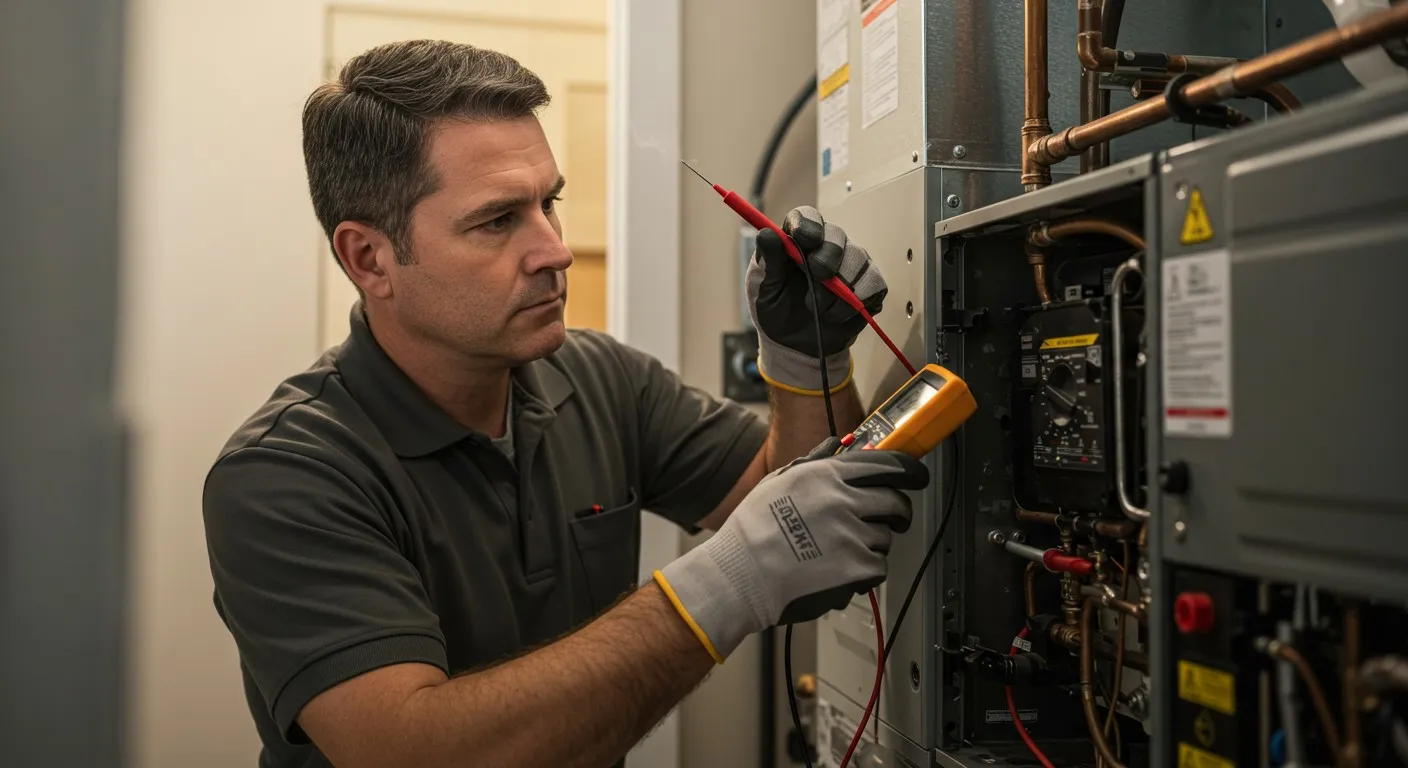
- Component Testing: Using specialized multimeters and diagnostic tools, we test the electrical draw on motors, the resistance in ignitors, and the integrity of safety switches. This data tells us exactly which part is failing to perform within manufacturer specifications.
- Safety Inspection: For gas furnaces, checking the heat exchanger for cracks is non-negotiable. A cracked heat exchanger can leak carbon monoxide into the home. We also verify draft pressure to ensure exhaust gases are venting properly.
- Clear Quotation: Once the problem is isolated, you receive a detailed explanation of the failure and a clear quote for the repair. You are in control of the decision to proceed.
- Execution and Verification: After the repair is made, the technician does not just leave. We cycle the system through a full run time to verify ignition, flame stability, blower operation, and temperature rise.
Deciding Between Heating Repair and System Replacement
One of the most difficult decisions a homeowner faces during a breakdown is whether to invest in a repair or opt for a full system replacement. This decision should be based on data and financial logic, not sales pressure. There are distinct thresholds where repair is the smart choice, and others where it becomes a sunk cost.
The "50% Rule" is a standard industry metric. If the cost of the repair approaches 50% of the cost of a new unit, replacement is generally the better financial move. However, other factors play a significant role.
- Age of the Equipment: The average lifespan of a furnace is 15 to 20 years, while heat pumps typically last 10 to 15 years. If your Stone Heating and Air technician identifies a major component failure in a unit that is nearing the end of its life expectancy, investing in a new system often provides a better return on investment through energy savings and warranties.
- Frequency of Breakdowns: If this is the third time you have called for service in the last two years, the system is likely becoming unreliable. Cumulative repair costs often exceed the monthly financing cost of a modern, high-efficiency unit.
- Energy Efficiency (AFUE/HSPF): Older units operate at lower efficiency levels. A furnace from 15 years ago may operate at 70% AFUE, meaning 30 cents of every dollar spent on gas is wasted. Upgrading to a modern unit with 95% AFUE can significantly lower utility bills, offsetting the installation cost over time.
- Safety Concerns: If a diagnostic reveals a cracked heat exchanger in a gas furnace, the unit must be replaced or the heat exchanger swapped immediately due to carbon monoxide risks. In older units, replacing just the heat exchanger is rarely cost-effective compared to a full system warranty.
Navigating Southern Oregon Climate and Codes
Operating a heating system in Southern Oregon requires specific attention to regional challenges. The climate here is characterized by wet, cold winters where temperatures frequently hover around freezing. This environment places a heavy load on heat pumps, which must frequently enter "defrost mode" to prevent ice buildup on the outdoor coil. If your defrost board fails, your system will freeze over, stopping heat production entirely.
When performing repairs or installations in the Cave Junction area, adherence to local building codes is mandatory. These regulations are designed to ensure the safety of your home and the efficiency of the grid.
- Permitting and Inspections: Major repairs involving gas lines or system replacements typically require permits. This ensures that the work meets safety standards regarding ventilation, electrical grounding, and gas piping. Professional technicians handle the administrative burden of pulling these permits.
- Insulation and Ductwork: The efficiency of your repair depends on the envelope of your home. In our region, damp basements and crawl spaces can compromise ductwork. We inspect for disconnected or deteriorating ducts that might be heating the crawl space instead of your living room.
- Carbon Monoxide Detectors: Oregon law places strict requirements on carbon monoxide detection in homes with combustion appliances. Part of a responsible repair service involves verifying that your detectors are compliant and functional.
Why Professional Diagnostics Matter
Attempting DIY repairs on heating systems is dangerous and often ineffective. Modern HVAC equipment utilizes high-voltage electricity, combustible gases, and high-pressure refrigerants. Without the proper training and tools, a minor issue can easily escalate into a catastrophic failure or a safety hazard.
Professional technicians carry the specific tools required to diagnose intermittent electrical faults that a standard homeowner toolset cannot detect. For example, measuring the microamp reading on a flame sensor requires precision; if the reading is off by a fraction, the furnace will lock out. Similarly, checking refrigerant levels in a heat pump requires calculating superheat and subcooling to ensure the compressor is not being flooded with liquid or starved of vapor.
- Protecting Your Warranty: Most manufacturer warranties require proof of professional service. DIY repairs or service by unlicensed handymen can void the warranty on your parts, leaving you liable for future costs.
- Access to OEM Parts: Professional services have access to Original Equipment Manufacturer (OEM) parts. Generic "universal" parts often do not fit perfectly or operate within the exact tolerances required by your specific model, leading to reduced efficiency and premature failure.
- Liability and Insurance: Licensed contractors carry liability insurance. If an accident occurs during the repair, you are protected. Allowing unverified workers on your property transfers that risk to you.
Ensuring Long-Term System Health
Once a repair is completed, the focus shifts to maintaining that performance. The goal is to avoid an emergency call during the next major freeze. Routine attention to the system helps maintain the validity of the repair and extends the overall lifecycle of the heating unit.
Air filtration is the single most critical factor in system longevity. In the Pacific Northwest, where indoor air quality can be affected by everything from dampness to wildfire smoke in the shoulder seasons, filters clog quickly. A restricted filter increases static pressure, causing the blower motor to work harder and overheat. This is a leading cause of premature motor failure.
- Regular Filter Changes: Check filters monthly and replace them at least every 90 days. High-efficiency pleated filters may need more frequent changing if you have pets.
- Clear Area Around Vents: Ensure that supply and return vents are not blocked by furniture or curtains. Blocked vents disrupt the pressure balance of the system, leading to uneven heating and increased strain on the blower.
- Outdoor Unit Maintenance: For heat pumps, keep the outdoor unit clear of debris, leaves, and snow drifts. Airflow across the outdoor coil is essential for the heat exchange process.
Restoring Warmth to Your Home
When the heat goes out, you need a solution that is fast, technical, and permanent. You cannot afford to rely on temporary fixes or guess-and-check repair work. The comfort and safety of your home depend on the reliability of your heating infrastructure.
Whether dealing with a pilot light failure, a seized motor, or a complex electrical short, the objective remains the same: restore safe, efficient heat to your living space. By choosing a service that prioritizes diagnostics, transparent communication, and adherence to safety codes, you ensure that your investment is protected.
Stone Heating and Air is dedicated to providing the high-level technical service required to keep your home warm through the coldest months. If your heating system is showing signs of failure or has stopped working entirely, do not wait for the temperature to drop further. Secure a diagnostic appointment now to ensure your home remains safe and comfortable.
- Book Expert Service Or Contact Us