

Facing HVAC Troubles in Your Home?
Is your HVAC system failing to keep up with the weather in Cave Junction, or facing unexpected breakdowns right when you need it most? You need a reliable solution that promises same-day service and lasting results to restore your home's safety and comfort. Contact us now to schedule an emergency repair or to discuss flexible financing options for a new system.
When your heating or cooling system malfunctions, waiting days for a technician is not an option. You need a partner who understands the urgency of the situation and arrives fully prepared to resolve the issue.
- Rapid on-site service within hours of your call to prevent prolonged discomfort.
- Certified and eco-friendly solutions ensuring high efficiency and lower utility bills.
- Comprehensive warranties and easy financing options to protect your investment.
Fully licensed and insured, with straightforward financing available for major repairs and installations.
Immediate Service Response and What to Expect
When your furnace stops working in the middle of a damp Oregon winter or your air conditioner fails during a July heatwave, the immediate priority is stabilization. The service process begins the moment a request is logged. A dispatched technician arrives at your property with a fully stocked mobile warehouse, carrying common parts such as capacitors, contactors, ignition modules, and refrigerant. This preparation aims to resolve the majority of HVAC issues in a single trip, eliminating the frustration of waiting for ordered parts.
The diagnostic phase is thorough and transparent. A technician does not simply guess at the problem; they utilize advanced diagnostic tools to measure static pressure, test electrical voltage, and inspect heat exchangers for cracks. Once the root cause is identified—whether it is a clogged filter restricting airflow, a failed compressor, or a thermostat calibration error—you receive a clear explanation of the failure.
You are presented with a straightforward scope of work. This includes a breakdown of the necessary repairs, the estimated time for completion, and a fixed quote. There are no hidden fees or surprise charges once the work begins. The goal is to restore your system to optimal performance immediately, ensuring your home returns to a comfortable temperature without unnecessary delays.
Our HVAC Installation Process: Timely and Tidy
Replacing an aging or failed HVAC system is a significant home improvement project that requires precision and respect for your property. A successful installation is about more than just swapping out boxes; it involves engineering a solution that fits your specific home layout and heating load.
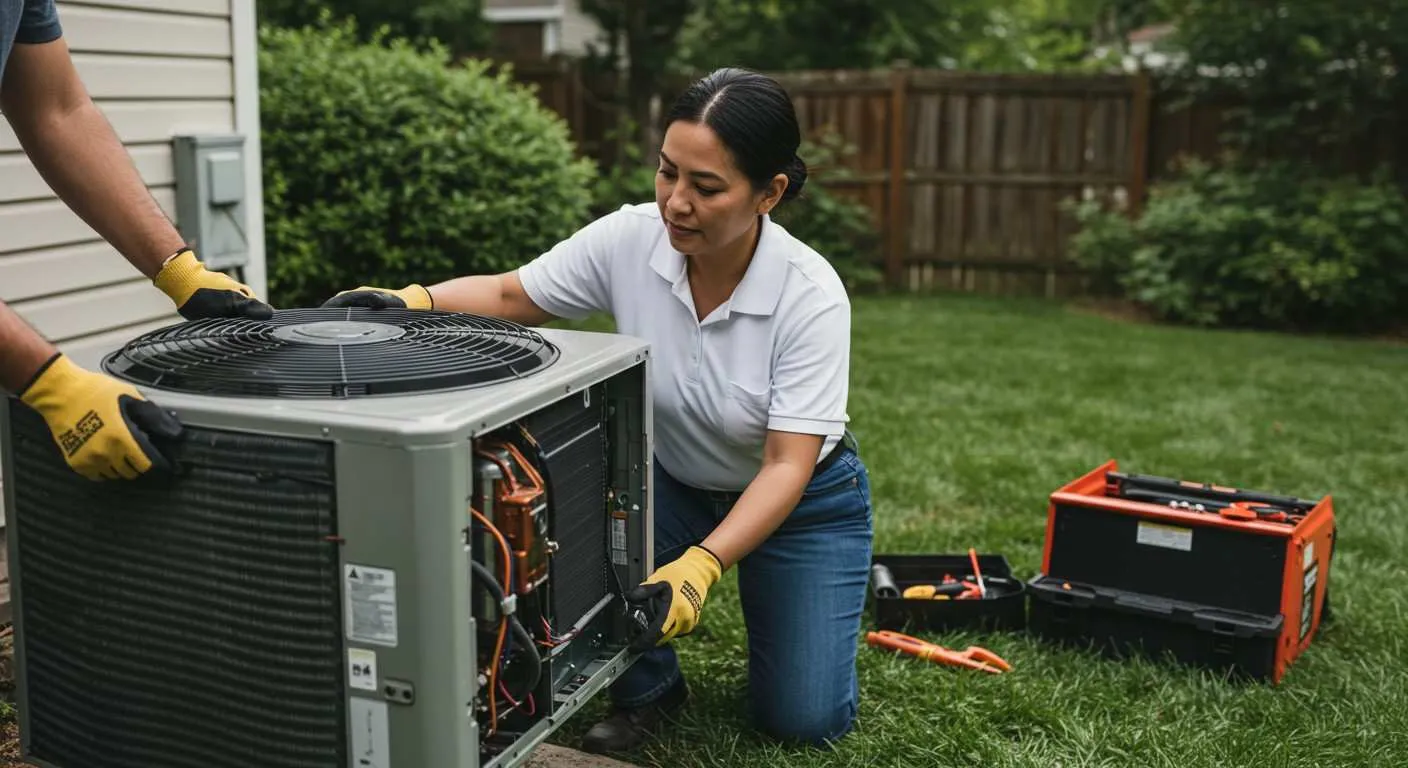
The installation workflow follows a strict protocol to ensure quality and cleanliness:
- Site Assessment and Sizing: Before any equipment is ordered, a load calculation is performed. This manual J-calculation accounts for square footage, window placement, insulation levels, and local climate data. This ensures the new unit is neither undersized (which fails to heat/cool) nor oversized (which causes short-cycling and humidity issues).
- Area Preparation: Technicians lay down drop cloths and wear shoe covers to protect flooring. The workspace is sealed off to prevent dust and debris from entering the living areas of your home.
- Safe Removal: The old equipment is disconnected from gas, electric, and refrigerant lines safely. Hazardous materials, such as old refrigerant, are recovered according to EPA standards to prevent environmental contamination. The old unit is hauled away for proper recycling.
- System Installation: The new furnace, air handler, heat pump, or air conditioner is set in place. This step includes connecting and sealing ductwork to prevent air leaks, which are a major source of energy loss. Gas lines are pressure-tested, and electrical connections are tightened and verified.
- Calibration and Testing: Once the mechanical installation is complete, the system is not just turned on; it is commissioned. Technicians adjust blower speeds, measure airflow, and verify that the refrigerant charge meets manufacturer specifications.
- Final Walkthrough: You are guided through the operation of the new system. This includes programming the thermostat, understanding filter maintenance schedules, and reviewing warranty documentation.
Deciding Between Repair or Replacement: What You Need to Know
Homeowners often face the difficult decision of whether to invest in repairing an existing unit or capitalising on a new, high-efficiency system. Making the right choice depends on a combination of financial logic and technical reality.
Consider the age of your current equipment. Most furnaces and heat pumps have a lifespan of 15 to 20 years, while air conditioners typically last 10 to 15 years. If your equipment is nearing the end of this range, investing in a major repair is often throwing good money after bad. Components tend to fail in succession; replacing a compressor today does not guarantee the blower motor won’t fail next month.
Evaluate the cost of the repair against the "50% Rule." If the cost of the repair approaches 50% of the value of a new system, replacement is generally the smarter financial move. Stone Heating and Air helps you run these numbers, providing a comparative analysis of repair costs versus the monthly savings generated by a modern, high-efficiency unit.
Frequency of breakdowns is another critical factor. If you have required service calls multiple times in the last two years, the system is likely unreliable. A new system provides peace of mind and often comes with a 10-year parts warranty, eliminating repair bills for the foreseeable future.
Efficiency ratings also play a major role. Older units often operate at 60% to 70% AFUE (Annual Fuel Utilization Efficiency), meaning 30-40 cents of every dollar spent on heating is wasted. Modern systems can reach upwards of 98% efficiency. In a climate like Cave Junction, upgrading to a higher SEER (Seasonal Energy Efficiency Ratio) or HSPF (Heating Seasonal Performance Factor) unit can significantly reduce monthly energy expenditures, eventually offsetting the installation cost.
Navigating Local Climate: Our Localized HVAC Advice
Cave Junction presents specific environmental challenges that dictate how HVAC systems should be configured and maintained. The region experiences a Mediterranean climate characterized by warm, dry summers and cool, wet winters. This specific weather pattern requires equipment that handles humidity and temperature swings effectively.
- Humidity Control in Winter: From November through March, high precipitation and humidity are the norms. Heating systems must be capable of drying the air to prevent mold growth and ensure indoor air quality. Heat pumps, in particular, must be checked for proper defrost cycle operation to handle the damp, near-freezing conditions without icing up.
- Summer Efficiency: While summers are generally dry, temperatures can spike. Air conditioning units need to have properly charged refrigerant levels and clean condenser coils to handle the heat load. A system clogged with pollen or pine needles—common in the Illinois Valley—will struggle to dissipate heat, leading to higher electricity bills and potential compressor failure.
- Wildfire Smoke Considerations: In recent years, smoke from regional wildfires has become a concern in late summer. Homeowners are advised to upgrade to high-efficiency media filters (MERV 13 or higher) or install whole-home air purification systems. These additions integrate with your HVAC system to capture fine particulate matter, ensuring the air inside remains breathable even when outdoor air quality is poor.
- Permitting and Compliance: Any significant HVAC work, including furnace replacements and new circuit installations, requires adherence to local building codes. Proper permitting ensures that the installation meets safety standards for gas piping, electrical grounding, and venting. Professional installers handle the permit application and inspection coordination, ensuring your home remains compliant and safe.
Enhancing System Longevity Through Maintenance
The most effective way to avoid emergency breakdowns is through a disciplined maintenance schedule. Just as a vehicle requires oil changes, an HVAC system requires seasonal tuning to operate safely and efficiently. Neglect is the leading cause of premature system failure.
A comprehensive tune-up involves more than just changing a filter. For heating systems, technicians inspect the heat exchanger for cracks that could leak carbon monoxide. They clean the burners to ensure proper ignition and check the flue draft for safe venting. Safety limits and flame sensors are tested to verify they will shut the system down in the event of a malfunction.
For cooling systems, maintenance focuses on the refrigeration cycle and airflow. Technicians clean the condenser coils to maximize heat rejection. They check the condensate drain line to prevent water damage from clogs. Electrical components, such as capacitors and relays, are tested for wear. Tightening electrical connections prevents overheating and potential fire hazards.
Regular maintenance also validates manufacturer warranties. Most HVAC manufacturers require proof of annual service to keep the parts warranty active. Skipping these check-ups can leave you liable for expensive parts replacements that would otherwise be covered.
Why Professional Certification Matters
The HVAC industry is technically complex, involving high-voltage electricity, combustible gases, and high-pressure refrigerants. Entrusting this work to uncertified individuals poses significant safety risks to your home and family.
Professional technicians undergo rigorous training to understand the thermodynamics of heating and cooling. They are certified to handle refrigerants in compliance with EPA Section 608, ensuring environmental safety. They understand the intricacies of airflow dynamics, ensuring that every room in your house receives the correct amount of conditioned air.
Furthermore, professional service providers carry liability insurance and workers' compensation coverage. This protects you as the homeowner from financial liability in the event of an accident or property damage during the service call. Working with a reputable company ensures that the technicians entering your home have been background-checked and drug-tested, providing an added layer of security.
Optimizing Energy Efficiency with Rebates
Upgrading to a high-efficiency HVAC system is an investment that often qualifies for financial incentives. In Oregon, various programs, including those from the Energy Trust of Oregon, offer cash rebates for installing qualifying heat pumps, furnaces, and smart thermostats.
These incentives are designed to lower the upfront cost of energy-efficient equipment. To qualify, equipment must meet specific efficiency criteria (such as SEER2 and HSPF2 ratings) and must be installed by a participating contractor. Navigating these rebate applications can be complex, but professional installers assist in identifying eligible equipment and submitting the necessary paperwork.
By leveraging these rebates, homeowners in Cave Junction can install top-tier equipment for a cost comparable to standard-efficiency units. This results in immediate savings on the installation and long-term savings on monthly utility bills.
Secure Your Comfort Today
Don't let a failing HVAC system compromise your comfort or safety. Whether you are dealing with a sudden breakdown, looking to upgrade an inefficient unit, or simply need a seasonal tune-up, professional assistance is available. Stone Heating and Air is ready to provide the expertise and reliable service required to keep your home comfortable year-round.
Take action now to ensure your heating and cooling systems are performing at their best. Contact us today to schedule your service or request a free estimate on a new system installation.
- Book Expert Service Or Contact Us