

Professional Heating Fixes to Ensure Your Cozy Comfort
When the temperature in Eagle Point drops and the wet winter weather settles in, a malfunctioning heater can quickly turn a minor inconvenience into a full-blown household crisis. You do not have time to wait for days when your home is freezing; contact us immediately to restore warmth and safety to your property.
We understand that heating issues rarely happen at a convenient time. Whether you are dealing with a furnace that refuses to ignite or a heat pump that is blowing cold air, you need a solution that is fast, effective, and transparent. We prioritize getting your system back online so you can return to comfort without unnecessary delays.
- Rapid response times for urgent heating repair needs.
- Clear, upfront pricing with absolutely no hidden fees.
- Comprehensive diagnostics to identify the root cause, not just the symptom.
- Licensed professionals equipped to handle all major heating brands and models.
At Stone Heating and Air, all services are fully licensed, insured, and backed by a satisfaction guarantee.
Immediate Heating Restoration Services
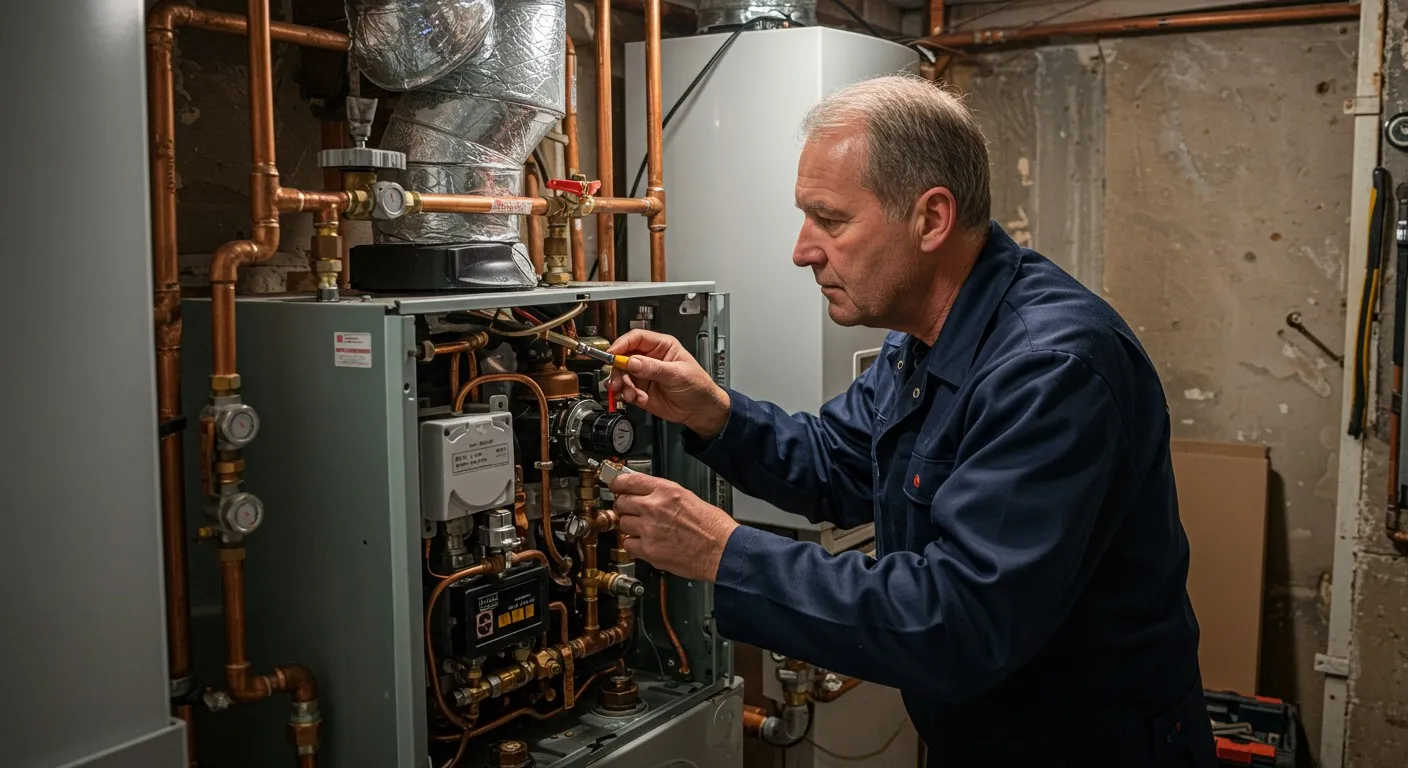
When your heating system fails, the priority is restoring heat to your home efficiently. A broken heater affects more than just comfort; it impacts the safety of your plumbing pipes and the health of your family. Our approach to heating repair in Eagle Point focuses on accuracy and speed. We do not guess at the problem; we use advanced diagnostic tools to pinpoint exactly why your system has failed.
Upon arrival, we conduct a thorough evaluation of the entire heating envelope. This includes checking the thermostat calibration, inspecting the ignition system, testing safety switches, and examining the heat exchanger for any signs of cracks or wear. Once the issue is identified, we provide a clear explanation of the failure and the necessary steps to fix it.
Our service trucks are stocked with a wide inventory of common parts, including flame sensors, pressure switches, capacitors, and blower motors. This preparation allows us to complete many repairs on the very first visit, eliminating the need for you to wait for parts to be ordered. If a specialized part is required, we have established relationships with local suppliers to expedite the process.
We service a variety of heating systems, including:
- Gas and Electric Furnaces: Addressing issues with pilot lights, thermocouples, gas valves, and electrical connections.
- Heat Pumps: Resolving refrigerant leaks, reversing valve failures, and defrost board malfunctions.
- Ductless Mini-Splits: Fixing communication errors, drainage issues, and compressor problems.
The Heating Repair Process
We have streamlined our repair protocol to ensure minimal disruption to your daily routine. From the moment you notice an issue to the final system test, every step is designed to be logical and transparent.
- Initial Assessment: The technician arrives at your property and listens to your description of the problem. We assess the age of the unit, its maintenance history, and current symptoms.
- System Diagnostics: We use multimeters, manometers, and combustion analyzers to test the electrical and mechanical components of your heater. This scientific approach ensures we are fixing the right part.
- Upfront Estimate: Before any wrench is turned, you receive a detailed quote. This outlines the cost of labor and parts. You will never face a surprise bill at the end of the service.
- Execution of Repair: Once you approve the work, the technician proceeds with the repair. We use OEM or high-quality equivalent parts to ensure longevity and performance.
- Safety Inspection: After the repair is complete, we run a full safety cycle. This includes checking for carbon monoxide leaks, verifying proper venting, and ensuring the system shuts off correctly.
- Site Cleanup: We treat your home with respect. Drop cloths are used to protect flooring, and we remove all old parts and packaging materials when we leave.
Common Heating Failures and Solutions
Understanding what has gone wrong with your heater can help alleviate the stress of the situation. Heating systems are complex machines with many moving parts, and failure in one area can trigger a system-wide shutdown.
Ignition Control Issues
Modern furnaces rely on electronic ignition systems or hot surface igniters rather than standing pilot lights. If these components crack or fail, the furnace will not start. We test the resistance in the igniter and the voltage arriving at the control board to determine if a part needs replacement.
Airflow Restrictions
If your system is running but the air coming out of the vents is weak, the issue often lies with the blower motor or the filtration system. A strained blower motor can overheat and shut down. We inspect the motor capacitor, the belt tension (if applicable), and the motor windings to determine if a repair or replacement is necessary.
Thermostat Malfunctions
Sometimes the heater is fine, but the "brain" of the system is confused. A malfunctioning thermostat may fail to signal the furnace to turn on, or it may read the room temperature incorrectly, causing the system to short cycle. We recalibrate or replace thermostats to ensure accurate temperature control.
Heat Exchanger Cracks
This is a critical safety issue. The heat exchanger separates the combustion gases from the breathable air in your home. Over time, the metal can expand and contract, leading to cracks. If we detect a crack, the unit must be shut down immediately to prevent carbon monoxide poisoning. In this scenario, we will discuss the specific options for heat exchanger replacement or system replacement.
When to Repair vs. When to Replace
Deciding between repairing an existing unit and investing in a new system is a significant financial decision. While our primary goal is to repair your current system, there are mathematical and practical tipping points where replacement becomes the more prudent choice.
- The 50% Rule: If the cost of the repair approaches 50% of the value of a new system, replacement is generally recommended. Putting half the cost of a new unit into an old one is rarely a good investment.
- System Age: The average lifespan of a furnace is 15 to 20 years, while heat pumps typically last 10 to 15 years. If your unit is nearing the end of this window and requires a major repair, such as a compressor or heat exchanger, it is often better to replace it.
- Frequency of Breakdowns: If you have needed repairs multiple times in the last two years, the system is likely entering a phase of rapid decline. Continued repairs will become a "money pit."
- Efficiency Ratings: Older systems often operate at 60% to 70% AFUE (Annual Fuel Utilization Efficiency). Modern systems operate at 95% or higher. Replacing a very old unit can result in immediate savings on your monthly utility bills, which helps offset the installation cost.
- Comfort Consistency: If some rooms in your house are always cold while others are hot, or if the system runs constantly without reaching the set temperature, the unit may be undersized or losing compression. Repairing a specific part won't fix an underlying capacity issue.
Stone Heating and Air provides honest assessments regarding the condition of your unit. We will never pressure you into a replacement if a repair is a viable, safe, and cost-effective option.
Local Considerations for Eagle Point Heating
Operating a heating system in Southern Oregon requires specific attention to our unique climate and regulatory environment. The heating season here is defined by wet, cool winters where temperatures frequently dip near freezing.
- Humidity Control: Because Eagle Point receives 20 to 30 inches of precipitation annually, largely in the winter, your heating system plays a role in managing indoor humidity. A properly functioning system helps prevent mold growth and keeps the indoor air dry and comfortable.
- Heat Pump Performance: Heat pumps are popular in this region due to the mild shoulder seasons. However, when temperatures drop significantly, the heat pump relies on a defrost cycle and auxiliary heat strips. We ensure these backup systems are functioning correctly so you aren't left cold during a hard freeze.
- Permitting and Codes: Any significant repair involving gas lines, electrical circuit modifications, or system replacements requires adherence to local building codes. We handle all necessary compliance aspects, ensuring your system meets current safety standards.
- Utility Coordination: Whether you are on natural gas, propane, or rely strictly on electricity, we understand the local utility infrastructure. We can assist in coordinating with providers if a service line issue is suspected to be the cause of your heating failure.
Technical Expertise and Differentiators
Choosing a service provider goes beyond just finding someone with a wrench. You need a partner who understands the science of thermodynamics and the intricacies of modern HVAC circuitry. Our technicians undergo continuous training to stay ahead of industry advancements.
Advanced Diagnostic Equipment
We do not rely on guesswork. Our team utilizes industrial-grade diagnostic tools that provide precise readings on gas pressure, static pressure in ductwork, and refrigerant levels. This ensures that when we fix a problem, it stays fixed.
Safety-First Approach
Heating repair involves working with high-voltage electricity, combustible gases, and carbon monoxide. Safety is our non-negotiable priority. We test for gas leaks after every intervention involving fuel piping and verify the integrity of safety switches before finishing a job.
Respect for Property
We treat your home as if it were our own. Our technicians wear shoe covers, use drop cloths, and maintain a tidy workspace. We understand that inviting a service provider into your home requires trust, and we honor that trust by leaving your space cleaner than we found it.
Comprehensive Warranty Support
We stand behind our work. Repairs are backed by warranties on both parts and labor. If the same component fails within the warranty period, we return to fix it at no cost to you. We also assist in processing manufacturer warranties for parts that are still under coverage.
Maintaining Your System After Repair
Once your heating system is operational, the goal is to keep it running smoothly for the remainder of the season. Small maintenance habits can prevent the need for future emergency calls.
- Filter Changes: The most common cause of heating failure is a dirty filter. A clogged filter restricts airflow, causing the system to overheat and shut down. specialized high-efficiency filters should be checked monthly.
- Vent Clearance: Ensure that all return and supply vents are open and unblocked by furniture or curtains. Blocking vents increases pressure in the ductwork, which can strain the blower motor.
- Exterior Maintenance: If you have a heat pump, keep the outdoor unit clear of leaves, debris, and snow drifts. Airflow is essential for the heat exchange process.
- Programmable Thermostats: utilizing a programmable thermostat reduces the workload on your system by lowering the temperature when you are away or sleeping. This reduces wear and tear on mechanical components.
Secure Your Comfort Today
A reliable heating system is not a luxury; it is a necessity for navigating the winters in Eagle Point. Delaying a repair can lead to more extensive damage to your system and higher costs down the road. You deserve a home that is warm, safe, and energy-efficient.
We are ready to diagnose your issue, explain your options, and provide a lasting solution. Do not let the cold dictate your comfort level this season. Let Stone Heating and Air restore the warmth to your home with professional, efficient service.
Contact us now to schedule your heating repair service.
- Book Expert Service Or Contact Us