

Is Your Current HVAC System Failing to Keep Up?
Dealing with inconsistent temperatures at home in Eagle Point can be frustrating, especially when utility bills continue to rise despite poor performance. It may be time to consider a reliable HVAC installation to restore comfort and efficiency to your property. Contact us today to discuss your replacement options or click here to view our available financing plans.
You need a solution that addresses the specific climate challenges of the region, from the dry heat of summer to the damp chill of winter. Our approach focuses on technical precision and equipment longevity.
- Experience swift installation timelines, often within 24 hours of finalizing your system choice.
- Enjoy transparent up-front pricing with no hidden fees or surprise costs on the final invoice.
- Gain peace of mind with industry-leading warranties on both parts and labor.
We are fully licensed and ensure all work complies with the latest local codes and regulations for your safety and satisfaction.
Comprehensive HVAC Installation Services
Investing in a new heating and cooling system is about more than just swapping out a box. It involves a complete assessment of your home’s thermal characteristics and existing infrastructure. When you choose a professional installation, you receive a turnkey solution designed to last for the next 15 to 20 years.
The scope of a standard installation includes a detailed load calculation. This technical step, known as a Manual J calculation, determines exactly how much heating and cooling power your square footage requires. Oversized units cycle on and off too frequently, leading to premature wear, while undersized units run constantly without ever reaching the set temperature. Stone Heating and Air ensures the sizing is mathematically precise for your specific floor plan.
In addition to the main equipment, a complete installation covers the peripheral components that dictate system performance. This includes inspecting and sealing connections to existing ductwork to prevent air loss. We also verify the integrity of the refrigerant lines, ensuring they are free of leaks and contaminants. The installation package includes the removal and environmentally responsible disposal of your old unit, protecting you from potential fines or landfill fees associated with hazardous materials like refrigerant.
New systems also come with updated control interfaces. We install modern, programmable, or smart thermostats that communicate effectively with high-efficiency equipment. This allows for better humidity control and creates a seamless user experience. Finally, we register all equipment with the manufacturer to activate your warranty coverage immediately.
The Installation Process: Step-by-Step
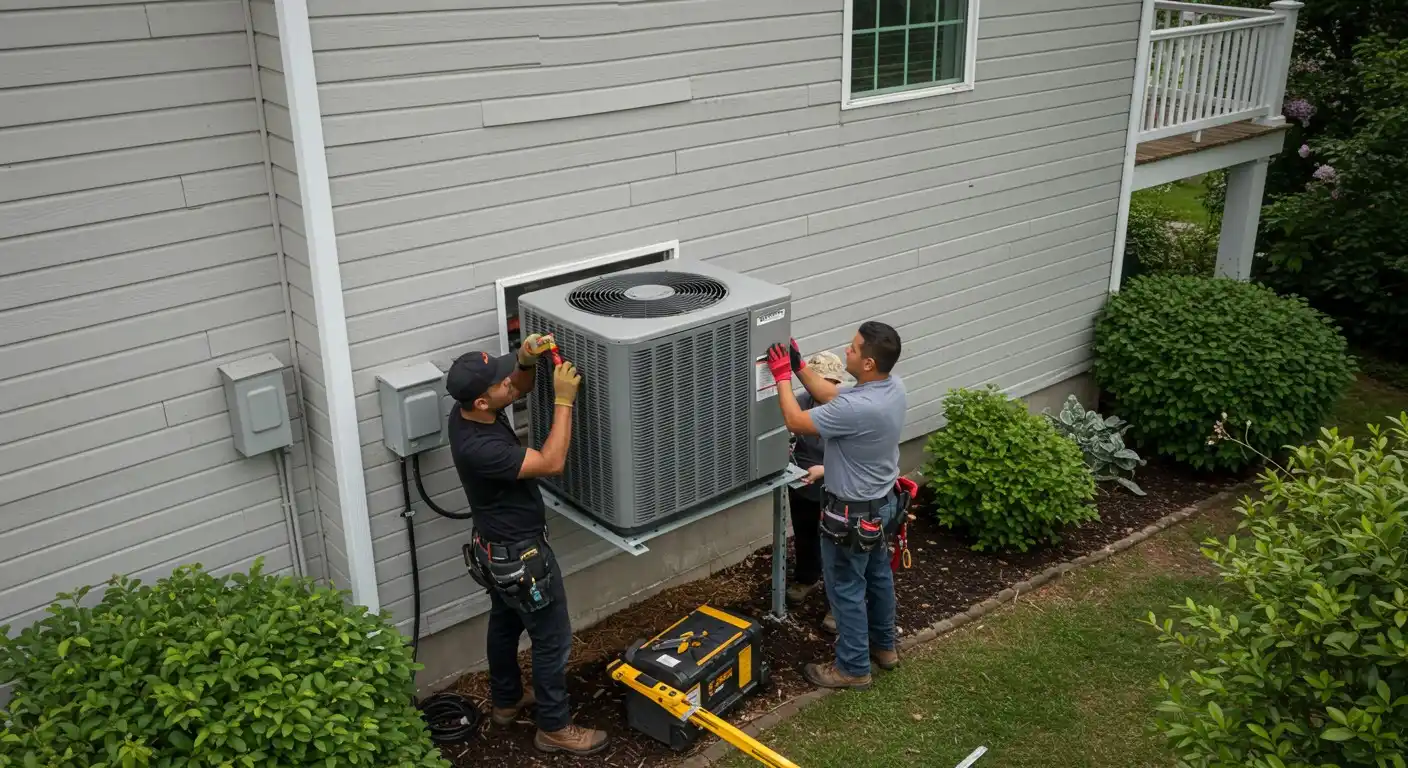
A systematic approach ensures that nothing is overlooked during the replacement of your heating and air conditioning equipment. Our technicians follow a strict protocol to maintain safety and efficiency from arrival to departure.
Site Preparation and Safety Assessment
The team arrives and establishes a safe work zone. This involves laying down drop cloths to protect flooring and ensuring the electrical circuit serving the HVAC equipment is locked out and tagged out to prevent accidental energization.
Refrigerant Recovery
Before removing an AC or heat pump, the existing refrigerant must be pumped out of the system according to EPA guidelines. This prevents venting harmful chemicals into the atmosphere and is a legal requirement for all HVAC work.
Disconnection and Removal
Technicians disconnect the high-voltage electrical wiring and low-voltage control wires. The old plenum connections are carefully severed, and the obsolete equipment is removed from the pad or attic space.
Equipment Placement and Leveling
The new unit is positioned on a composite pad or hanging brackets. Leveling is critical; if a unit is not level, the compressor lubrication may fail, and condensation drainage may back up, leading to water damage.
Brazing and Sealed Connections
New copper refrigerant lines are connected using high-temperature brazing or press fittings. During brazing, nitrogen is flowed through the lines to prevent oxidation buildup inside the pipes, which safeguards the new compressor.
Vacuum and Charge
A deep vacuum is pulled on the system to remove all moisture and non-condensable gases. Once the vacuum holds, the precise amount of refrigerant is weighed into the system based on manufacturer specifications and the length of the line set.
Electrical and Airflow Setup
High-voltage connections are re-established with new disconnect boxes if necessary. The blower motor speed is adjusted to match the static pressure of your ductwork, ensuring the system moves the correct volume of air (CFM).
Testing and Commissioning
The system is powered on and tested in all modes. Technicians measure temperature splits (the difference between supply and return air) and check amperage draws to confirm the unit is operating within design parameters.
When to Replace vs. Repair Your System
Deciding between another repair bill and a full system replacement is a common dilemma for homeowners. While repairs can extend the life of a unit, there is a financial tipping point where replacement becomes the more logical investment.
Consider the "50% Rule." If the cost of the repair approaches 50% of the value of a new system, replacement is generally the smarter choice. Additionally, if you multiply the age of your equipment by the cost of the repair and the number exceeds $5,000, it is financially safer to invest that money into a new asset rather than a depreciating one.
Age is a primary factor. Most heat pumps and air conditioners in Eagle Point have a service life of 10 to 15 years. As systems age, their energy efficiency ratio (SEER) drops significantly relative to modern standards. A 15-year-old unit likely operates at 10 SEER or lower, while new models start at 14.3 SEER2 and go much higher. Replacing an old unit can reduce monthly energy consumption by 20% to 40%, meaning the system helps pay for itself over time through utility savings.
Frequency of breakdown is another indicator. If you have required repairs more than twice in the last two years, the system has become unreliable. "Open now" emergency calls are expensive and stressful. Replacing the unit eliminates the anxiety of sudden failures during a heat wave or a freeze.
Finally, consider comfort and air quality. If your current system struggles to dehumidify the air in summer or leaves certain rooms cold in winter, the internal components are likely failing or the technology is obsolete. New variable-speed systems run longer at lower capacities to provide consistent, even comfort throughout the home.
Local Considerations: Climate, Permits, and Codes
Operating an HVAC system in Southern Oregon requires specific configurations to handle the regional climate. We experience hot, dry summers with highs consistently in the 90s, demanding robust cooling capacity. Conversely, our winters are cool and wet. This moisture poses a challenge for heat pumps, which must have functional defrost boards and sensors to prevent ice buildup on the outdoor coil during near-freezing, damp days.
Installation in this area must adhere to local building codes enforced by the city and county.
- Permitting: A mechanical permit is required for the installation of new HVAC equipment. This ensures that the installation meets safety standards regarding gas piping, electrical connections, and venting.
- Venting Requirements: For gas furnaces, proper venting is crucial. Local codes dictate the type of venting material (PVC vs. metal) and the clearance required from windows and overhangs to prevent carbon monoxide re-entry.
- Electrical Upgrades: Modern high-efficiency systems often have different amperage requirements than older units. Local electrical codes may mandate an upgrade to the breaker or the disconnect box outside near the unit.
- Rebate Eligibility: Several programs exist to offset the cost of high-efficiency installations. The Energy Trust of Oregon and federal tax credits offer incentives for installing heat pumps and furnaces that meet specific efficiency tiers. Navigating these requirements ensures you maximize your return on investment.
Why Technical Precision Matters in Installation
The most important day in the life of your heating and cooling system is the day it is installed. Industry studies suggest that a significant percentage of HVAC equipment is installed incorrectly, reducing efficiency and shortening lifespan.
Improper airflow is a common issue. If the ductwork cannot support the size of the new unit, the system will "suffocate," causing the blower motor to overheat and fail prematurely. We measure static pressure to ensure your ducts are compatible with the new equipment.
Refrigerant charge is equally critical. A system that is undercharged or overcharged by just 10% can lose a significant portion of its efficiency and cooling capacity. We use digital gauges and temperature clamps to dial in the subcooling and superheat to the exact manufacturer specifications.
Proper drainage design prevents water damage. In our climate, condensation is heavy during the cooling season. We install primary and secondary drain lines, along with float switches that shut the system down if water is detected, preventing ceiling leaks or floor damage.
Choosing the Right System for Your Home
Selecting the right equipment involves balancing budget, efficiency, and comfort goals. There are three main categories of technology available today.
- Single-Stage Systems: These are the traditional units that operate at 100% capacity whenever they are on. They are the most affordable upfront but can be louder and less precise in temperature control.
- Two-Stage Systems: These units have a "high" and "low" setting. The system runs on low for the majority of the time, saving energy and operating more quietly. It kicks into high gear only during extreme weather days.
- Variable-Speed (Inverter) Systems: This is the premium option. The compressor can adjust its speed in tiny increments, much like a car on cruise control. This provides the most consistent temperature, the best humidity removal, and the highest energy efficiency ratings.
For homes without existing ductwork, ductless mini-split systems are an excellent option. They allow for zoned temperature control, meaning you can cool the living room without wasting energy on an empty guest room. These are particularly popular for additions, garages, or older homes in the region.
Post-Installation Support and Maintenance
Once your new system is running, maintaining that "day one" efficiency requires diligence. A new installation is an investment that requires protection. Manufacturer warranties almost always require proof of annual maintenance to remain valid. Neglecting this can void the coverage for expensive parts like compressors.
Maintenance involves more than just changing the filter, though that is the most critical task for a homeowner. Professional maintenance includes cleaning the coils, checking the electrical connections for tightness (loose wires cause heat and failure), and clearing the condensate drains.
We provide a comprehensive walkthrough after every installation. You will learn how to operate your new thermostat, how to change your specific filter type, and what sounds or behaviors are normal for your new system. Stone Heating and Air prioritizes education so you feel confident in operating your new equipment.
Secure Your Comfort with Professional Installation
A failing HVAC system compromises your comfort and inflates your monthly expenses. You do not have to settle for unreliable heating or cooling. By choosing a professional provider, you ensure that your home is equipped with a system correctly sized, safely installed, and compliant with all local regulations.
At Stone Heating and Air, we focus on delivering high-quality installations that stand the test of time, backed by clear warranties and transparent processes. From the initial load calculation to the final thermometer reading, every step is executed with precision.
Upgrade your home’s efficiency and reliability today. Contact our team to schedule your estimate and take the first step toward a comfortable, worry-free indoor environment.
- Book Expert Service Or Contact Us