

Is Your Business Too Hot or Too Cold? Find Quick Relief with Professional HVAC Design-Build Services
Struggling with inadequate or outdated HVAC systems in your commercial space in Medford? Inconsistent temperatures, skyrocketing utility bills, and frequent equipment failures disrupt your workflow and negatively impact your bottom line. Commercial facilities require precise, engineered climate control strategies to handle the distinct seasonal shifts of the Rogue Valley. Discover rapid, reliable solutions tailored to your unique business needs by contacting us today for a consultation or to discuss financing options for your project.
- Experience faster installation timelines with advanced engineering solutions that integrate design and construction.
- Ensure full compliance with Medford local regulations, environmental standards, and building codes.
- Receive top-tier system maintenance and commissioning for sustained performance and energy efficiency.
We handle all necessary permits and offer robust warranties and financing options to streamline your project from concept to completion.
Effective Commercial HVAC Design and Installation
In the commercial sector, a "one-size-fits-all" approach to heating and cooling inevitably leads to inefficiency and discomfort. The design-build model streamlines the entire process of upgrading or installing a new mechanical system. Unlike traditional methods where you must hire a separate engineer and contractor, the design-build approach places the responsibility for both the design and the construction under a single contract. This unified workflow eliminates communication gaps, reduces project delivery times, and ensures that the system installed is exactly the system that was engineered for your specific building load.
Stone Heating and Air utilizes this integrated method to provide accountability and speed. When the design team works directly with the installation team, potential conflicts are identified and resolved during the planning phase, not while the ceiling is open. This proactive approach is essential for commercial properties where downtime translates directly to lost revenue. Whether you are constructing a new facility or retrofitting an existing plant, the goal is to create a seamless transition from the drawing board to full operation.
Commercial HVAC requires a deep understanding of thermodynamics, airflow dynamics, and structural limitations. An improperly sized system—whether too large or too small—will struggle to maintain humidity levels and temperature setpoints. By focusing on a comprehensive design phase, we ensure that every square foot of your commercial space receives adequate airflow. This attention to detail results in a mechanical system that operates quietly, maintains consistent pressure, and utilizes energy resources responsibly.
Our Comprehensive Service Package: From Design to Installation
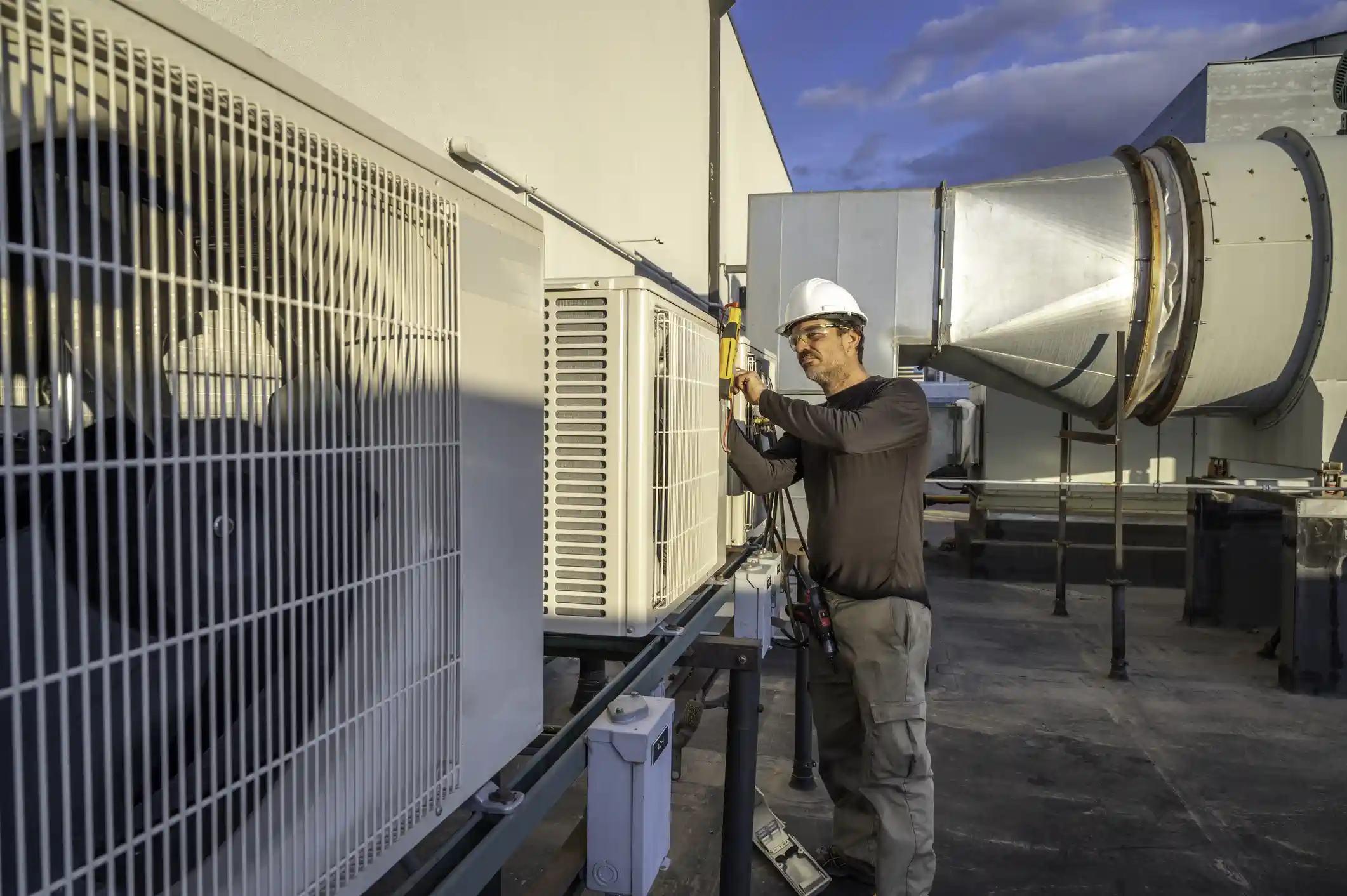
A successful commercial HVAC project involves much more than simply placing a rooftop unit and connecting power. It requires a holistic view of the building's envelope, usage patterns, and occupancy levels. We provide a complete mechanical engineering solution that covers every aspect of the climate control infrastructure. This comprehensive scope ensures that there are no surprises regarding costs or capabilities once the project is underway.
- Load Calculations and Energy Modeling: We perform rigorous load calculations using industry-standard protocols. This accounts for heat gain from windows, lighting, machinery, and occupants to determine the precise tonnage required for your facility.
- Custom Ductwork Fabrication: Efficient airflow relies on properly sized and sealed ductwork. We design and often fabricate custom ductwork layouts that minimize static pressure and prevent energy loss through leaks or poor connections.
- Equipment Selection: Depending on your building's architecture, we select the optimal equipment type. This includes Packaged Rooftop Units (RTUs) for single-story retail, Variable Refrigerant Flow (VRF) systems for office buildings requiring zoned control, or split systems for smaller commercial applications.
- Building Automation Systems (BAS): Modern commercial efficiency relies on intelligent controls. We integrate thermostats and sensors into a centralized system, allowing facility managers to monitor and adjust climates remotely or set automated schedules.
- Ventilation and Indoor Air Quality: Commercial codes require specific rates of fresh air intake. We implement dedicated outdoor air systems (DOAS) and advanced filtration to remove contaminants and ensure a healthy environment for employees and customers.
Step-by-Step Guide to Your New HVAC System
Understanding the workflow of a design-build project helps facility managers plan for logistics and minimize operational disruption. We prioritize transparency and communication at every phase. By keeping the design and installation under one roof, the transition between steps is fluid and efficient.
- Site Assessment and Feasibility: First, we conduct a thorough site walkthrough. For existing buildings, this involves auditing current equipment, structural supports, and electrical capacity. For new construction, we review architectural blueprints to identify mechanical chases and roof load capabilities.
- Engineering and Design: Next, our engineering team creates the mechanical drawings. This phase includes selecting specific equipment, laying out ductwork paths to avoid structural beams, and calculating the necessary electrical loads. We verify that the design meets all specific heating and cooling load requirements for Medford's climate.
- Permitting and Compliance: Once the design is finalized, we submit all necessary documentation to the local building department. We handle the bureaucratic process of securing mechanical and electrical permits so that the project moves forward legally and safely without burdening your administrative staff.
- Procurement and Fabrication: While permits are processing, we order the major equipment and begin fabricating ductwork and transition pieces. This parallel processing helps shorten the overall timeline.
- Installation and Integration: The installation team executes the plan. This involves rigging equipment to the roof, running refrigerant piping, hanging ductwork, and making electrical connections. We coordinate closely with your team to schedule disruptive work during off-hours when possible.
- Commissioning and Handoff: Finally, the system undergoes rigorous testing. We check refrigerant charges, verify airflow at every register, and calibrate controls. We then train your facility staff on how to operate the new interface and hand over all warranty documentation.
Deciding Between HVAC Repair or Full System Replacement
One of the most difficult decisions for a commercial property owner is determining when a system has reached the end of its viable life. While repairs can extend the function of a unit, there is a tipping point where the cost of operation and repeated service calls outweighs the investment in a new system. Making the right choice requires analyzing the long-term financial impact of the equipment on your business.
- The 50% Rule: A general guideline in commercial facility management is the 50% rule. If the cost of a necessary repair approaches or exceeds 50% of the value of a new system, replacement is generally the wiser financial choice. Investing heavily in an old asset rarely yields a return.
- System Age and R-22 Refrigerant: Commercial units typically last 15 to 20 years. If your system is nearing this age, reliability will degrade rapidly. Furthermore, older systems utilizing phased-out R-22 refrigerant are becoming prohibitively expensive to service due to the scarcity of the chemical.
- Frequency of Breakdown: If your maintenance logs show an increasing frequency of failures—compressors one month, blower motors the next—it indicates that the system is fatigued. This unreliability poses a risk to inventory, data centers, or customer comfort.
- Energy Efficiency Ratings: Modern commercial HVAC units have significantly higher IEER (Integrated Energy Efficiency Ratio) ratings than units manufactured a decade ago. Replacing a low-efficiency unit with a modern, high-efficiency system can often reduce monthly energy expenditures by 20% to 30%, helping the new system pay for itself over time.
Understanding Medford’s HVAC Regulations and Seasonal Considerations
Operating in the Rogue Valley presents specific challenges that must be addressed during the design phase. The local climate is characterized by hot, dry summers where temperatures frequently exceed 90°F, and mild, wet winters. A commercial system here must be robust enough to handle high cooling loads in July and August without faltering. The intense solar gain requires systems with high sensible cooling capacities to keep interiors comfortable.
Conversely, the damp winters require heating systems that can manage humidity. While snow is minimal, the moisture levels can affect indoor air quality if the HVAC system does not have adequate dehumidification capabilities. Stone Heating and Air ensures that all designs account for these specific psychrometric conditions. We size equipment not just for temperature control, but for total environmental control.
Navigating local bureaucracy is also a critical component of the project. Medford has specific building codes regarding rooftop equipment screening, noise ordinances, and seismic bracing for mechanical units. Compliance is not optional; failure to adhere to these codes can result in fines or work stoppages. We maintain active knowledge of current Oregon Structural Specialty Code (OSSC) and local municipal amendments to ensure every installation passes inspection on the first attempt. We also assist clients in identifying potential utility rebates available for upgrading to high-efficiency commercial equipment.
Why Choose Us: Engineering Expertise and Reliability
In the commercial sector, the contractor you choose is a partner in your building’s long-term operational health. You need a team that demonstrates technical proficiency, financial stability, and a commitment to safety. The design-build model we employ places the burden of performance squarely on our shoulders, providing you with a single point of accountability for the entire mechanical scope — read our reviews to verify our reliability.
- Integrated Project Delivery: We eliminate the friction between engineers and installers. This cohesion leads to fewer change orders, accurate budgeting, and faster project completion.
- Safety and Certification: Our teams are trained in commercial safety protocols, ensuring that work performed on your property minimizes risk and liability. We carry the necessary licenses and insurance to handle large-scale commercial infrastructure.
- Customized Solutions: We do not rely on generic templates. Every building has a unique thermal footprint. We engineer solutions that address your specific pain points, whether that is zone control for executive offices or heavy ventilation for warehouse floors.
- Long-Term Partnership: Our relationship does not end when the installation is complete. We provide ongoing support to ensure the system continues to operate at the design specifications for years to come.
Call Now
Ready to transform your commercial space with reliable, efficient HVAC solutions? Schedule your consultation with Stone Heating and Air today and experience comfort, performance, and peace of mind from start to finish.
- Book Expert Service Or Contact Us