

Immediate Commercial HVAC Services for Reliable Comfort
Dealing with a malfunctioning HVAC system during a Medford heatwave or a damp winter creates immediate operational liabilities for your business, from lost revenue to uncomfortable employees. You need a dedicated partner who can diagnose airflow issues, repair failing compressors, or execute a full system replacement without disrupting your daily operations. Contact us today to schedule a site assessment or request emergency service.
Commercial spaces in Southern Oregon face unique challenges due to the Mediterranean climate, where summer highs frequently hit the 90s and winter brings persistent moisture. A standard residential fix does not apply to complex rooftop units (RTUs) or industrial chillers. Stone Heating and Air provides the technical expertise required to handle high-demand commercial loads.
- Rapid response times ensure your business remains uninterrupted and productive.
- Experienced technicians are available 24/7 for emergency repairs and critical system failures.
- Full-service HVAC solutions cover everything from initial load calculation and installation to preventative maintenance.
- Licensed, bonded, and insured—offering efficient solutions tailored specifically for Southern Oregon’s climate.
Comprehensive Commercial HVAC Solutions for Your Facility
Business owners and facility managers require more than just a quick fix; they need a comprehensive strategy to manage indoor air quality and temperature control. The scope of commercial services extends beyond simple filter changes. It involves the management of complex mechanical systems designed to condition large volumes of air.
Rooftop Units (RTUs) and Packaged Systems
Most commercial buildings in Medford utilize packaged rooftop units due to their space-saving design and ease of access for maintenance. Service covers the entire lifecycle of these units.
- Technicians perform diagnostic testing on heat exchangers to detect cracks that could lead to carbon monoxide leaks.
- Cleaning and straightening of condenser coils ensure maximum heat rejection during peak summer temperatures.
- Belt replacement and tensioning prevent unexpected failures that stop airflow completely.
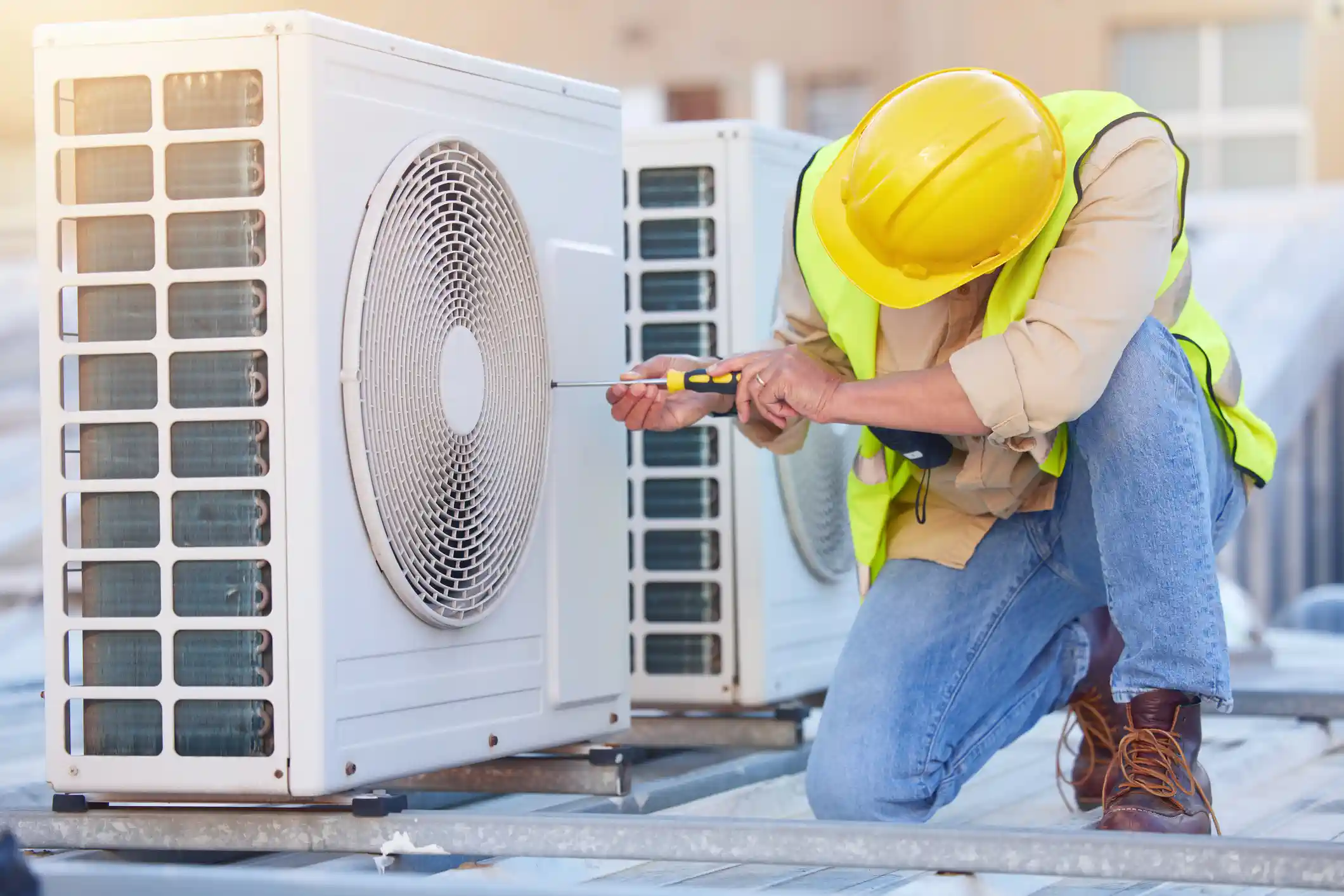
Split Systems and Ductless VRF
For buildings with unique zoning requirements or limited ductwork space, split systems and Variable Refrigerant Flow (VRF) technology offer precise control.
- Installation includes refrigerant piping design to ensure proper pressure across long distances.
- Inverter-driven compressor maintenance maximizes energy efficiency by modulating output based on real-time demand.
- Zone controller programming allows different areas of the building to maintain different temperatures, reducing energy waste in unoccupied rooms.
Commercial Boilers and Hydronic Heating
Heating large spaces often requires the power of hydronic systems.
- Services include combustion analysis to ensure boilers are burning fuel safely and efficiently.
- Pump and valve inspections guarantee that hot water circulates effectively to all radiators or air handlers.
- System flushing removes sediment and scale buildup that reduces heat transfer and shortens equipment life.
Ventilation and Indoor Air Quality (IAQ)
Commercial codes require specific amounts of fresh air intake.
- Economizer calibration allows your system to use cool outdoor air for conditioning, lowering mechanical cooling costs.
- High-efficiency filtration system installation traps particulate matter, allergens, and pathogens.
- Demand-controlled ventilation sensors are installed to adjust air intake based on building occupancy levels.
The Commercial Installation and Replacement Process
Replacing a commercial HVAC system is a major capital project that requires logistical precision. The process is designed to minimize downtime so your business can continue operating or return to normal quickly.
- First, a comprehensive site evaluation and load calculation occur. This step is critical because replacing a unit with the exact same size is not always the correct choice if the building envelope or usage has changed. Engineers analyze square footage, insulation levels, window orientation, and internal heat loads from equipment and people.
- Next, a detailed proposal and logistics plan are generated. This includes selecting the equipment that matches your efficiency goals and budget. The plan outlines the crane lift schedule, safety protocols for pedestrian traffic, and any necessary temporary cooling solutions to bridge the gap during the swap-out — view our project gallery to see examples.
- Then, the physical installation begins. Old equipment is disconnected and removed in accordance with environmental regulations regarding refrigerant disposal. New curbs or adapters are installed if the new unit footprint differs from the old one. The new unit is lifted into place, and connections for electrical, gas, and condensate lines are secured.
- Finally, the system undergoes a rigorous commissioning process. Technicians do not just turn it on and leave. They measure airflow at registers, verify refrigerant charge, test safety controls, and balance the system to ensure even temperatures throughout the facility. A final walkthrough with the facility manager explains the operation of the new thermostat or building automation system.
Deciding Between Commercial Repair and Replacement
Determining whether to inject more capital into an aging asset or invest in a new system is a financial decision as much as a mechanical one. There is a specific threshold where repair costs no longer yield a positive return on investment (ROI).
The 50% Rule
A common metric used in commercial HVAC is the 50% rule. If the cost of a necessary repair approaches or exceeds 50% of the value of the equipment—or the cost of a new unit—replacement is generally the smarter financial move. This is particularly true if the unit is out of warranty, as parts for older commercial units can be expensive and difficult to source.
Equipment Age and Efficiency Trends
Commercial HVAC systems typically have a lifespan of 15 to 20 years.
- If your system is over 15 years old, it likely operates at a significantly lower SEER (Seasonal Energy Efficiency Ratio) than modern units.
- Replacing an older unit can result in immediate energy savings, often reducing monthly utility bills by 20% to 40%.
- Newer units often come with utility rebates that can offset the upfront capital expenditure.
Frequency of Breakdowns
Reliability is a key factor for business continuity.
- If your maintenance log shows repeated service calls for different components (e.g., a compressor failure followed by a blower motor failure), the system is likely reaching the end of its useful life.
- "Nickel and diming" repairs on a failing system results in higher long-term costs and increased risk of catastrophic failure during extreme weather.
Refrigerant Phase-Outs
Older systems may still rely on R-22 refrigerant, which has been phased out due to environmental regulations.
- Sourcing R-22 is becoming prohibitively expensive.
- A major leak in an R-22 system often forces a replacement because the cost to recharge the system is unjustifiable compared to upgrading to a system using R-410A or newer eco-friendly refrigerants.
Navigating Local Requirements in Southern Oregon
Operating in Medford requires adherence to specific local codes and an understanding of regional infrastructure. Stone Heating and Air incorporates these local factors into every service call and installation project.
Permitting and Compliance
Commercial HVAC work often requires permits from the City of Medford Building Department, particularly for replacements, structural modifications, or gas line work.
- Knowledge of local zoning and noise ordinances is essential when placing outdoor condensing units.
- Compliance with Oregon Energy Code requirements ensures that new installations meet minimum efficiency standards, avoiding potential fines or inspection failures.
- Proper handling of hazardous materials during the removal of old units is strictly enforced.
Utility Coordination
Projects often involve coordination with local utility providers like Pacific Power or Avista Utilities.
- Upgrading to high-capacity systems may require verification of electrical panel capacity.
- Rebate programs offered by local utilities often require specific documentation and installation by certified contractors. Assistance with this paperwork helps businesses maximize their financial incentives.
Regional Climate Impact
The local climate dictates specific maintenance needs.
- Dry Summers: The low humidity and high heat of Medford summers put immense strain on condenser coils. Dust and pollen accumulation can rapidly degrade efficiency. Frequent coil cleaning is a mandatory maintenance step in this region.
- Wet Winters: While winters are mild compared to other regions, the persistent moisture creates a risk for mold growth in ductwork and rust on outdoor cabinets. Systems must be checked for proper drainage and watertight seals to prevent water intrusion into the building envelope.
- Wildfire Smoke: Southern Oregon is prone to wildfire smoke intrusion during late summer. Commercial buildings require upgraded filtration strategies, such as MERV-13 filters or specialized scrubbers, to maintain breathable indoor air quality for employees and customers.
Why Specialized Commercial Service Matters
Commercial HVAC systems are fundamentally different from residential units. They utilize 3-phase power, complex control circuits, and economizers that require specialized training to troubleshoot. A general handyman or a residential-only technician lacks the diagnostic tools and experience to handle 20-ton rooftop units or industrial make-up air units.
Minimized Downtime
Commercial technicians understand that time is money. Trucks are stocked with universal parts common to commercial units, such as contactors, belts, and transformers, to facilitate same-day repairs whenever possible. The goal is always to restore comfort and safety immediately to prevent business closure.
Asset Protection
Your HVAC system is one of the most expensive assets in your building. Professional maintenance extends the life of this asset, deferring expensive capital replacement costs. Detailed service records provided by professional contractors are also vital for warranty claims and property valuation if the building is sold — see our customer reviews for verification.
Safety and Liability
Commercial systems involve high-voltage electricity and combustible fuels. Professional service ensures that all safety limits, pressure switches, and flame sensors are operating correctly. This reduces the liability risk for building owners regarding fire hazards or carbon monoxide exposure.
Why Choose Us
Choosing the right commercial HVAC partner can make the difference between costly downtime and reliable, efficient operations. Stone Heating and Air stands out for its experience, technical expertise, and commitment to Southern Oregon businesses.
- Extensive Experience: Decades of combined experience in commercial HVAC systems, including rooftop units, chillers, boilers, and VRF technology.
- 24/7 Availability: Emergency service and rapid response ensure minimal disruption to your operations.
- Certified Technicians: Licensed, bonded, and insured professionals trained in the latest commercial HVAC technologies.
- Comprehensive Solutions: From installation and replacement to preventative maintenance and indoor air quality management, we cover all aspects of commercial HVAC care.
- Local Expertise: Deep understanding of Medford’s climate, regional codes, utility coordination, and permitting requirements.
- Energy Efficiency Focus: Equipment selection and system optimization designed to lower operating costs and reduce energy waste.
- Customer-Centric Approach: Transparent communication, detailed service records, and walkthroughs ensure facility managers are fully informed.
With Stone Heating and Air, you gain a partner dedicated to protecting your assets, maximizing efficiency, and maintaining a safe, comfortable environment for employees and customers alike.
Secure Your Business Environment Today
Maintaining a comfortable and safe environment for your customers and employees is not optional; it is a business necessity. Whether you are facing an emergency breakdown, planning a capital replacement, or seeking a preventative maintenance plan to protect your investment, professional intervention is required.
Do not let equipment failure disrupt your revenue stream or damage your inventory. Trust Stone Heating and Air for the technical precision and rapid response required in the commercial sector. Secure your facility’s comfort and efficiency now.
Contact our team immediately to schedule your commercial HVAC service or consultation.
- Book Expert Service Or Contact Us