

Unreliable Air Conditioning Risks Your Safety in Extreme Heat
The relentless sun in Phoenix pushes cooling systems to their breaking point, and a sudden breakdown during a heatwave is more than just an inconvenience; it is a safety hazard for your family and home. Stone Heating and Air provides comprehensive maintenance services designed to detect hidden failures before they leave you without cooling in triple-digit temperatures. If your system is underperforming or making strange noises, contact us immediately to schedule a priority inspection.
- Restore system efficiency and lower monthly energy consumption instantly.
- Prevent catastrophic component failure with proactive diagnostic checks.
- Extend the operational lifespan of your existing HVAC equipment.
Our technicians are fully licensed and insured, providing upfront assessments without hidden diagnostic fees.
Comprehensive System Inspection and Performance Tuning
Effective maintenance is not simply changing a filter; it is a rigorous technical audit of the thermodynamic and electrical functions of your air conditioner. In the Valley, air conditioners run for extended cycles under heavy thermal loads. This constant operation causes mechanical wear that goes unnoticed until the system fails completely. A professional tune-up addresses the specific stressors placed on equipment operating in arid, high-heat environments.
Critical Electrical Component Testing
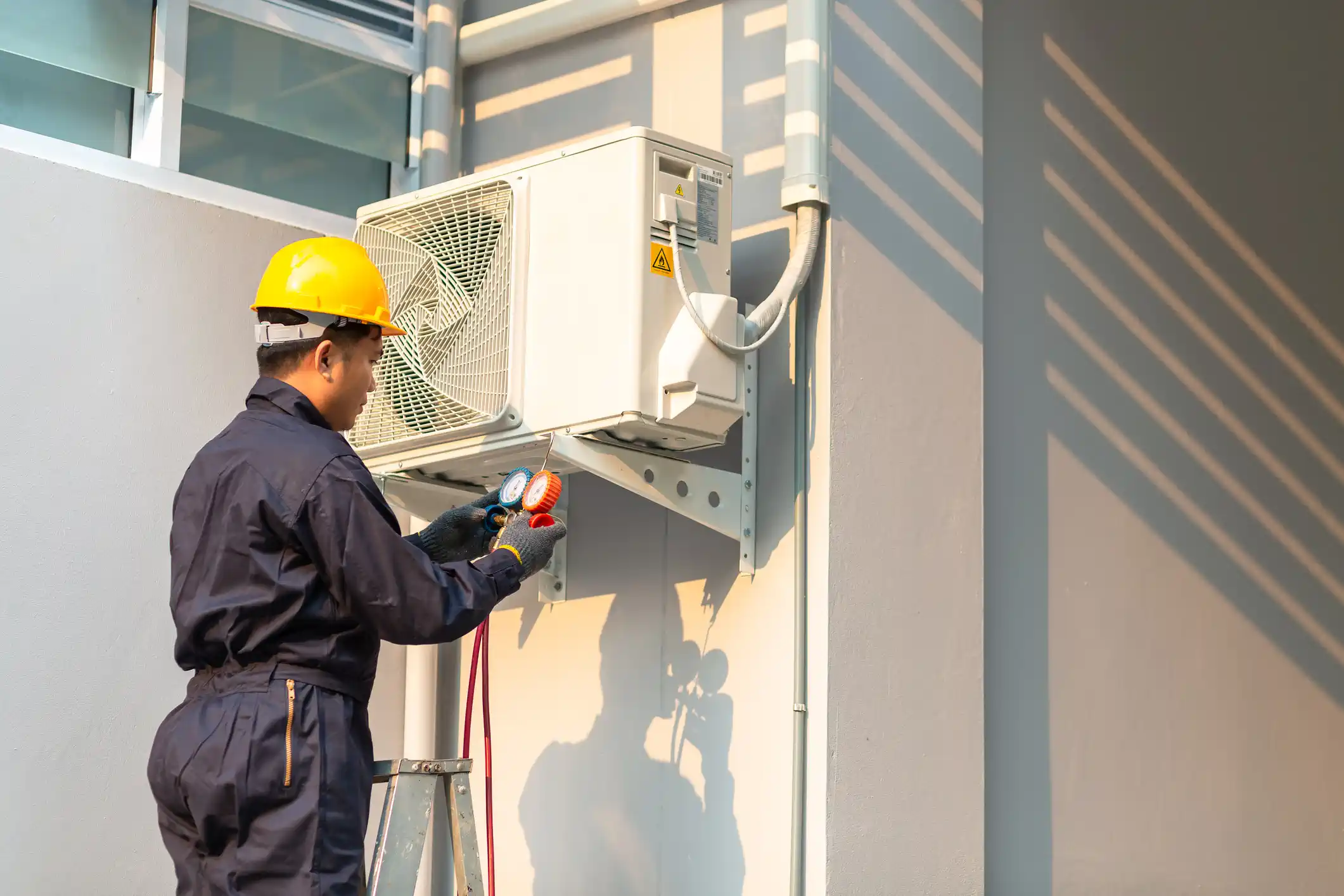
The most common cause of AC failure during the summer is electrical burnout. Heat degrades electrical components over time. During a maintenance visit, technicians examine the internal wiring and control systems.
- Capacitor Testing: Technicians measure the microfarads of run and start capacitors. If a capacitor falls below the manufacturer’s specified tolerance, it stresses the compressor and fan motors, leading to expensive repairs.
- Contactor Inspection: The contactor controls the flow of electricity to the compressor. Pitted or burnt contacts can cause voltage drops or fusing, which may permanently damage the compressor.
- Amp Draw Analysis: Measuring the amperage draw on motors ensures they are not working harder than designed. High amp draw usually indicates friction, failing bearings, or electrical resistance that must be addressed immediately.
Coil Cleaning and Heat Transfer Optimization
Efficiency in an air conditioning system relies on heat transfer. The system absorbs heat from inside your home via the evaporator coil and releases it outside via the condenser coil.
- Condenser Coil Cleaning: In Phoenix, dust storms and general debris coat the outdoor unit. A dirty condenser coil cannot release heat effectively, causing the compressor to overheat and the system to consume excess electricity. Chemical cleaning removes baked-on grime to restore heat rejection capabilities.
- Evaporator Coil Inspection: If the indoor coil is impacted by dust or microbial growth, airflow is restricted. This restricts the phase change of the refrigerant, potentially leading to a frozen coil and water damage.
Refrigerant Level Verification
Incorrect refrigerant levels are a primary driver of high utility bills and poor cooling performance.
- Subcooling and Superheat Measurements: Technicians do not just "top off" Freon. They measure subcooling and superheat to ensure the refrigerant cycle is balanced according to the manufacturer’s specifications.
- Leak Detection: If levels are low, it indicates a leak. A maintenance visit identifies these leaks early, preventing the environmental hazard of venting refrigerant and the cost of constant refills.
Airflow and Ductwork Assessment
Even a mechanically sound unit cannot cool a home if the airflow is compromised.
- Static Pressure Testing: This diagnostic measures the resistance within your ductwork. High static pressure acts like high blood pressure for your HVAC system, straining the blower motor.
- Drain Line Flushing: The condensate drain removes moisture pulled from the air. Algae and sediment often block these lines. Clearing them prevents water from backing up and triggering the safety float switch, which shuts down the entire system.
The Maintenance Process From Arrival to Completion
Homeowners often delay maintenance because they are unsure of what the service entails or fear prolonged disruption. The process is streamlined to be thorough yet efficient, ensuring your day is not wasted waiting for a technician.
- Arrival and Site Assessment: The technician arrives with a fully stocked truck, ready to address common issues immediately. They begin by discussing any specific comfort issues you have noticed, such as hot spots in certain rooms or unusual humidity levels.
- System Shutdown and Safety Check: Power is safely disconnected to inspect high-voltage connections. The technician examines the disconnect box and breakers to ensure the power supply is stable and safe.
- The Technical Audit: The technician moves through a multi-point inspection list, checking motors, belts, pulleys, and safety controls. This is where minor wear-and-tear issues are identified before they become major breakdown causes.
- Cleaning and Calibration: Components are cleaned, moving parts are lubricated to reduce friction, and the thermostat is calibrated to ensure the temperature reading matches the actual room temperature.
- Performance Report: You receive a detailed status report of the system. This includes photos of any damaged parts, readings of electrical measurements, and a clear explanation of the system's health.
Distinguishing Between Routine Maintenance and Necessary Repairs
It is vital to understand the difference between a system that needs a tune-up and a system that requires repair. Maintenance is preventative; repair is corrective. Booking a maintenance service when a repair is actually needed can delay the solution.
- Strange Noises: Grinding, screeching, or banging sounds indicate mechanical failure, such as a loose part or a failing motor bearing. This requires immediate repair, not just a tune-up.
- Warm Air Blowing: If the system is running but blowing warm air, the compressor may not be engaging, or you may be out of refrigerant. This is a repair scenario.
- Short Cycling: If the AC turns on and off every few minutes, it is "short cycling." This destroys the compressor and requires diagnostic repair to identify the root cause, which could be an oversized unit or a safety switch malfunction.
- Ice Formation: Ice on the outdoor unit or the copper lines indicates a refrigerant leak or severe airflow restriction. A standard maintenance cleaning will not solve a leak; specific repair protocols are required.
Determining When to Replace an Aging Unit
There comes a tipping point where maintenance is no longer cost-effective. Investing money into a failing asset often yields diminishing returns. Stone Heating and Air helps homeowners navigate this decision with data, not sales pressure.
- The 50% Rule: If the cost of a necessary repair approaches 50% of the value of a new system, replacement is generally the smarter financial move.
- System Age: Air conditioners in this region typically last 10 to 15 years due to the extreme workload. If your unit is over 12 years old and requires a major component like a compressor or motor, replacement offers better long-term value.
- Refrigerant Type: Older systems use R-22 refrigerant (Freon), which has been phased out and is exponentially expensive to replace. Upgrading to a system that uses R-410A or newer eco-friendly refrigerants eliminates this liability.
- SEER Ratings: Older units often have SEER (Seasonal Energy Efficiency Ratio) ratings of 10 or 12. Modern standards require higher efficiency. upgrading to a 16+ SEER unit can reduce cooling costs significantly, offsetting the monthly cost of financing a new installation.
Regional Factors Affecting HVAC Systems in the Valley
Operating an air conditioner in the desert presents unique challenges that generic maintenance guidelines do not address. The environment here is hostile to mechanical equipment, and local expertise is required to mitigate these factors.
- Dust and Haboobs: The fine particulate matter from dust storms infiltrates condenser coils and motors. This acts as an insulator, trapping heat inside the unit. Frequent, deep cleaning is mandatory here, whereas other climates might get away with surface rinsing.
- Thermal Load: The temperature differential (Delta T) between the outdoor air and the desired indoor temperature is extreme. Systems run longer and harder here than almost anywhere else in the country. This accelerates the degradation of lubrication in motors and causes capacitors to swell and fail.
- Low Humidity: While "dry heat" feels better for humans, it increases the evaporation rate. This impacts how condensate drains function. While mold is less of an issue than in the south, the dry dust turns to mud in the drain lines, creating concrete-like clogs that are difficult to clear without high-pressure gas or specialized tools.
- Local Utility Incentives: Arizona Public Service (APS) and Salt River Project (SRP) often have specific requirements for system efficiency to qualify for rebates. Proper maintenance ensures your system continues to run within the efficiency bands required to keep your utility bills manageable.
Why Professional Care Outperforms DIY Efforts
Many homeowners attempt to clean their own AC units to save money, but DIY maintenance often results in damage or overlooked safety hazards. Professional service provides assurances that a garden hose and a screwdriver cannot matching.
- Warranty Preservation: Most manufacturer warranties strictly require proof of professional maintenance by a licensed HVAC contractor. DIY work often voids these warranties, leaving you liable for the full cost of future parts replacements.
- Electrical Safety: AC units run on high-voltage electricity (240V). Mishandling the disconnect box or capacitors can result in severe injury or electrocution. Professionals have the training and personal protective equipment to handle high voltage safely.
- Chemical Handling: The chemicals required to properly strip oxidation and grime from coils are caustic. If not diluted and rinsed correctly, they can corrode the aluminum fins of the coil, destroying the unit. Professionals use the correct chemical balance for your specific coil type.
- Diagnostic Tools: You cannot see a refrigerant leak or hear a capacitor that is 10% out of tolerance. Professional digital gauges and multimeters provide data that the naked eye cannot perceive.
Effective cooling is a necessity, not a luxury. By ensuring your system is inspected, cleaned, and calibrated by experts, you protect your home from the dangers of summer heat and the burden of unexpected repair bills.
Protect Your Home from Extreme Heat: Schedule Professional Maintenance Today
Reliable cooling is essential for surviving Phoenix’s harsh summers, and keeping your AC properly maintained is the most effective way to avoid breakdowns when you need cooling the most. By choosing Stone Heating and Air, you ensure your system receives expert care, precise diagnostics, and performance optimization tailored to the demands of our desert climate. Secure your comfort and verify your system’s reliability today.
- Book Expert Service Or Contact Us