

Emergency Help for Your HVAC Issues
Struggling with a broken AC during the peak of a Phoenix heatwave or a furnace failure during a desert chill can quickly turn from an inconvenience into a health risk. Our certified technicians are ready to provide rapid, emergency repairs to restore safety and comfort to your home immediately. Contact us now for urgent dispatch or inquire about our financing options to handle unexpected breakdown costs.
- Quick response time with 24/7 availability across the Greater Phoenix area.
- Professional repairs handled by fully licensed and insured HVAC technicians.
- Competitive pricing with clear, upfront cost estimates before work begins.
All services are city-approved with comprehensive warranties to ensure your peace of mind.
Identifying a True HVAC Emergency
In the extreme climate of Arizona, the definition of an HVAC emergency differs significantly from more temperate regions. While a noisy fan is a nuisance, a complete system failure when outside temperatures exceed 100°F poses immediate danger to pets, the elderly, and the structural integrity of your home. Stone Heating and Air prioritizes service calls based on safety and the severity of the malfunction.
Understanding what constitutes a critical failure helps homeowners act decisive when minutes count. You require immediate professional attention if you experience the following scenarios:
- Total Cooling Loss in Extreme Heat: If the interior temperature rises rapidly and the thermostat is unresponsive, this is a safety hazard. Internal home temperatures can reach dangerous levels within hours during the summer months.
- Burning Smells or Smoke: An electrical burning odor or visible smoke coming from vents or the outdoor unit indicates a serious wiring fault or motor burnout. This requires an immediate system shutdown to prevent fire hazards.
- Water Leaks from Attic Units: Clogged condensate lines or rusted drain pans can cause water to overflow. If your air handler is located in the attic, this can lead to ceiling collapse and significant water damage if not addressed immediately.
- Loud Screeching or Grinding: High-pitched noises often indicate high-pressure refrigerant leaks or seized bearings. Continuing to run the unit in this state will likely result in catastrophic compressor failure.
- Gas Smells: If you rely on a gas furnace for winter heating and detect the scent of sulfur or rotten eggs, evacuate the home and call for service immediately. This indicates a gas leak or cracked heat exchanger.
What to Expect From Emergency Service
When you request emergency service, the objective is to stabilize the home environment as quickly as possible. The process is streamlined to reduce downtime and eliminate the guesswork regarding costs and timelines.
Upon contacting the dispatch team, the nearest available technician is routed to your location. Trucks are stocked with universal parts, including capacitors, contactors, fan motors, and control boards, which allows for the completion of most repairs in a single visit. The goal is to restore airflow and temperature control during the initial appointment.
The on-site protocol includes:
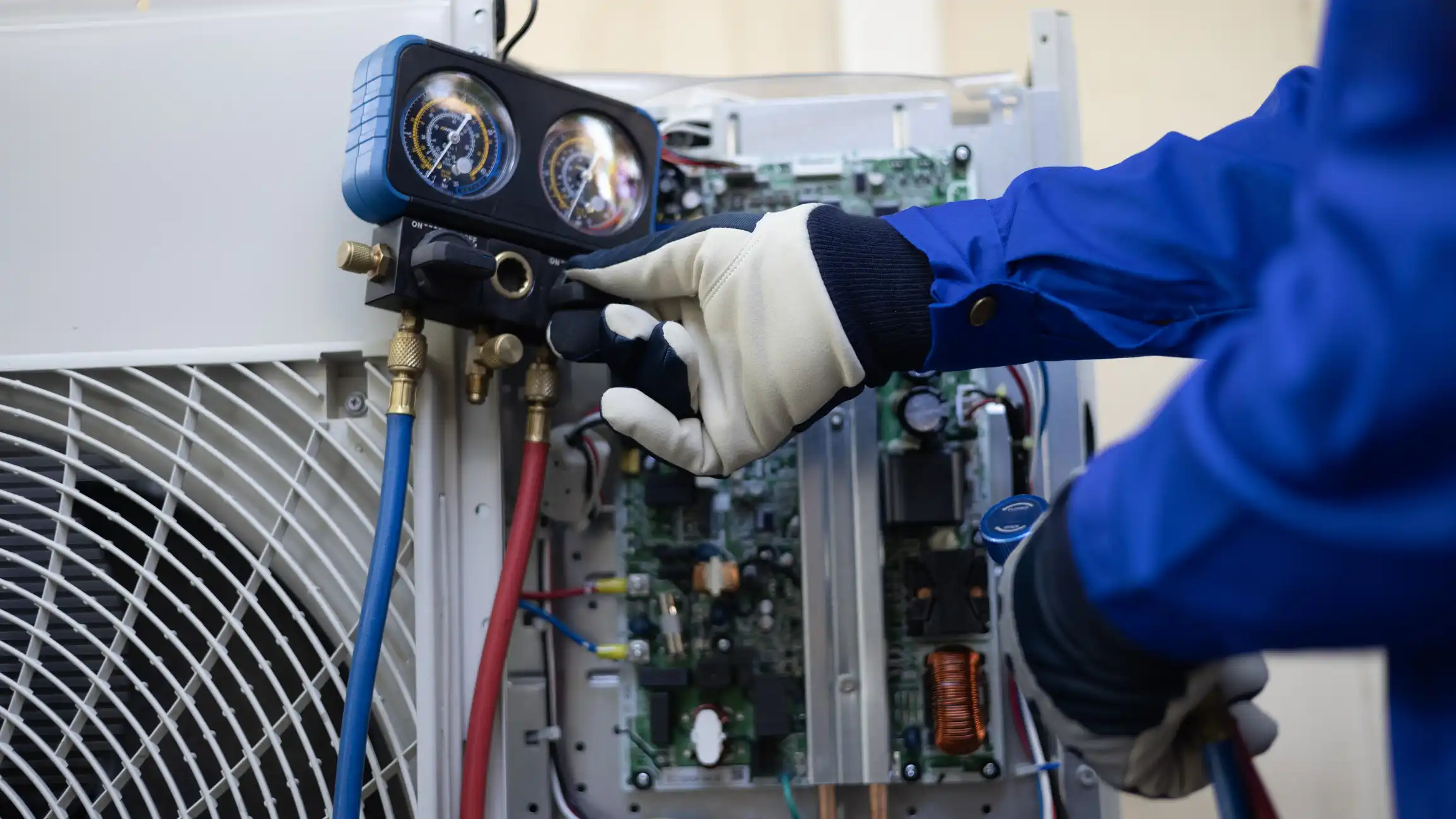
- System Diagnostics: The technician performs a comprehensive check of electrical components, refrigerant levels, and airflow restrictions to pinpoint the root cause of the failure.
- Upfront Explanations: You receive a clear explanation of the issue, including photos or physical evidence of the failed part.
- Flat-Rate Quotes: Repair costs are presented for approval before any work is performed. There are no hidden hourly fees or surprise charges after the fact — read our customer reviews.
- Immediate Repair or Stabilization: If a specific proprietary part must be ordered, the technician will explore temporary solutions to keep the system running or offer portable cooling options if available.
Repair vs. Replacement: Making the Decision Under Pressure
Facing a major breakdown during a heatwave forces homeowners to make quick decisions regarding their HVAC investment. It is not always financially prudent to pour money into an aging system, even in an emergency. We help you evaluate the condition of your unit objectively so you can decide whether to authorize a repair or opt for a system replacement.
Consider the following factors when determining the best course of action:
- The 50% Rule: If the cost of the emergency repair approaches 50% of the value of a new system, replacement is generally the better financial move.
- System Age: Air conditioners in the desert typically last 10 to 14 years due to the extreme workload. If your unit is over 12 years old and suffers a major component failure (like a compressor), replacement offers better long-term value.
- Refrigerant Type: Older systems utilizing R-22 (Freon) are becoming prohibitively expensive to repair due to the phase-out of this refrigerant. Upgrading to a system that uses R-410A or newer refrigerants ensures future serviceability.
- Frequency of Breakdowns: If this is the second or third emergency call in the last two years, the system has likely reached the end of its reliable lifespan. Continued repairs are often just "band-aids" on a dying unit.
- Efficiency Gains: Modern SEER2-compliant units can significantly reduce monthly utility bills compared to units installed a decade ago. In some cases, the energy savings alone can offset the monthly cost of financing a new system.
The Process of Emergency Restoration
Restoring your home’s comfort follows a strict procedure designed to ensure safety and code compliance. We do not skip steps, even when moving quickly.
- Isolation of the Issue: The technician first disconnects power to ensure safe handling of high-voltage components.
- Component Replacement: Failed parts are removed and replaced with OEM or high-quality aftermarket equivalents.
- System Testing: Once the repair is complete, the system is run through a full cycle. The technician measures temperature splits (the difference between supply and return air) to verify cooling capacity.
- Electrical Verification: Amp draws on motors and compressors are measured to ensure the system is running within manufacturer specifications.
- Clean Up: The workspace is left clean, and all old parts are removed from the premises — view our project gallery.
Local Factors Affecting Phoenix HVAC Systems
Operating an HVAC system in the Sonoran Desert presents unique challenges that influence how emergency repairs are handled. Local environmental factors and city regulations play a significant role in the longevity and service requirements of your equipment.
Impact of Monsoon Season
The summer monsoon season brings humidity, intense dust storms (haboobs), and lightning strikes. Dust accumulation on condenser coils acts as an insulator, preventing the unit from releasing heat effectively. This forces the compressor to work harder, often leading to mid-summer burnouts. Additionally, power surges from lightning can fry control boards. Emergency services often involve deep cleaning of coils and electrical surge diagnostics during these months.
High-Load Capacitors
Due to the sheer number of hours AC units run in this region, start capacitors fail frequently. These components provide the torque needed to start the compressor. In cooler climates, these might last the life of the unit; locally, they are a common consumable part that leads to sudden system failure.
Permitting and Code Compliance
For repairs that evolve into full system replacements, adherence to local building codes is mandatory. This includes ensuring proper breaker sizing, disconnect box accessibility, and plenum sealing. Major work requires a permit to ensure the installation meets safety standards. Professional services handle the permitting process on your behalf, ensuring that your home remains compliant with city regulations and manufacturer warranty requirements.
Insulation and Ductwork
In many local homes, ductwork runs through unconditioned attics where temperatures can reach 150°F. If an emergency call reveals that the AC is running but the house isn't cooling, the issue is often a disconnected duct or poor insulation. Emergency diagnostics include inspecting the distribution system to ensure you aren't paying to cool the attic.
Ensuring Long-Term Reliability
Once the immediate crisis is resolved, the focus shifts to preventing future emergencies. Neglected maintenance is the leading cause of premature failure. After an emergency repair, it is vital to establish a routine inspection schedule.
Regular maintenance helps identify weak components before they fail under the stress of summer heat. This includes checking refrigerant pressures, tightening electrical connections, and clearing condensate drains. A proactive approach transforms potential emergency calls into scheduled, manageable repairs.
Why Professional Service Matters
Attempting DIY repairs on high-voltage HVAC equipment is dangerous and often voids manufacturer warranties. Modern systems rely on complex electronics and precise refrigerant charges.
- Safety: Professionals have the training to handle high-voltage electricity and pressurized gases safely.
- Warranty Preservation: Most manufacturers require proof of professional service to honor parts warranties.
- Proper Tooling: diagnosing modern systems requires specific gauges, multimeters, and temperature probes that average homeowners do not possess.
- Code Adherence: Licensed technicians ensure all repairs meet current electrical and mechanical codes.
Stone Heating and Air is committed to restoring your comfort with speed and integrity. When your system fails, you need a partner who understands the urgency of the local climate and possesses the technical expertise to resolve the issue correctly the first time. We provide the expertise required to navigate repair-vs-replace decisions and the technical skill to get your system back online immediately.
Regain Control Fast: Schedule Your Emergency HVAC Service Now
When an HVAC system fails in Phoenix’s extreme climate, every minute matters. The emergency repair specialists at Stone Heating and Air are equipped to stabilize your home quickly, ensure code-compliant repairs, and guide you through repair-or-replace decisions with clarity and professionalism.
Don't let a broken HVAC system endanger your home or family. Secure your comfort and safety today by scheduling your emergency service with our expert team.
- Book Expert Service Or Contact Us