

Restore Comfort to Your Home When Cooling Systems Fail
Experiencing sudden AC failures or inefficiencies can be dreadfully uncomfortable, especially during the hot, dry summers common to the Rogue Valley. You need fast, reliable service that restores your environment to a cool, consistent temperature without unnecessary delays or hidden fees. For immediate assistance with your air conditioning needs, contact us today at [Phone Number] or inquire about our financing options to get started.
When your cooling system malfunctions, Stone Heating and Air provides the technical expertise required to diagnose and resolve the issue correctly on the first visit. Homeowners in Grants Pass rely on functional air conditioning not just for comfort, but for safety during peak heat waves.
- Immediate response and same-day service availability: We prioritize restoring your cooling quickly to minimize downtime in your home.
- Expert diagnostics and repairs by certified technicians: Our team identifies the root cause of the failure, rather than just treating symptoms.
- Clear, upfront pricing and service warranties: You receive a detailed quote before work begins, ensuring total transparency.
All services comply with local regulations and come with a satisfaction guarantee to ensure your system operates efficiently for the long haul.
Comprehensive Air Conditioning Services for Optimal Performance
Effective air conditioning service involves more than just swapping out a filter. It requires a deep understanding of thermodynamics, electrical circuits, and airflow dynamics. When you request a service call, you are securing a comprehensive evaluation of your HVAC system’s health. A professional technician evaluates the entire cooling loop to ensure that the system is not only running but running at peak efficiency.
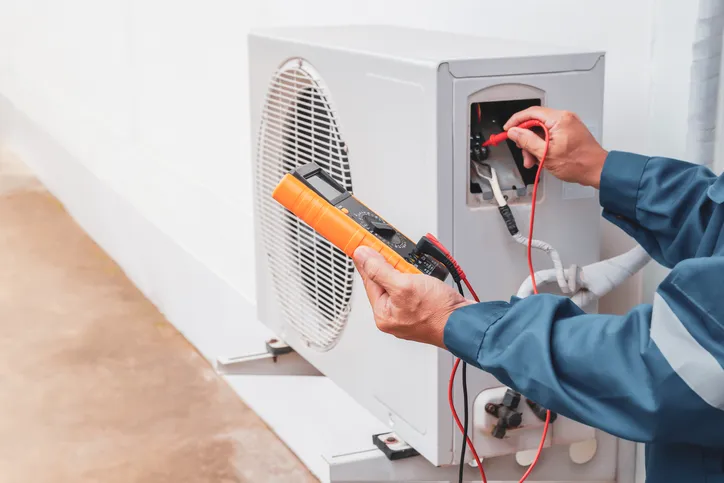
The scope of a standard AC service call typically addresses the most common failure points in modern cooling systems. This includes checking refrigerant levels, inspecting electrical connections, and verifying proper airflow. In Southern Oregon, where systems often run for extended periods during the summer, wear and tear on capacitors and contactors is common. These electrical components are responsible for starting the compressor and the fan motor. If they fail, the entire system shuts down. A service visit identifies these weak points before they result in a total system collapse.
Critical Component Inspections
During a service visit, technicians focus on several high-priority areas.
- Refrigerant Charge Verification: Incorrect refrigerant levels—whether too high or too low—can drastically reduce efficiency and damage the compressor. Technicians measure superheat and subcooling to ensure the charge is precise.
- Condenser Coil Cleaning: The outdoor unit is exposed to dirt, pollen, and debris. A dirty coil cannot release heat effectively, causing the system to run longer and use more electricity. Chemical cleaning restores the coil’s heat transfer capabilities.
- Electrical System Tightening: loose connections cause voltage drops and overheating wires. Technicians tighten all connections and measure the amperage draw of the compressor and fan motors to ensure they are within manufacturer specifications.
- Condensate Drain Clearing: A clogged drain line can cause water damage to your home and trigger safety switches that shut off the AC. Clearing and treating the line prevents backups and biological growth.
Addressing these issues proactively restores the cooling capacity of the unit and lowers monthly energy bills. A system that can breathe easily and has the correct electrical flow does not have to work as hard to maintain the set temperature on the thermostat.
How the Diagnostics and Repair Process Works
Understanding what happens during a service appointment helps homeowners feel more confident in the work being performed. The process is designed to be systematic and thorough, moving from symptom analysis to root cause identification and finally to repair and verification.
- Initial Assessment and Data Collection: The technician begins by discussing the specific issues you are noticing, such as strange noises, warm air blowing from vents, or short cycling. They will then turn the thermostat to call for cooling and observe the startup sequence of the equipment.
- System Diagnostics: Using specialized gauges and multimeters, the technician tests the pressures in the refrigerant lines and the voltage at the electrical components. This step isolates the problem, whether it is a failed part, a leak, or an airflow restriction.
- Detailed Reporting and Quotation: Once the problem is identified, the technician provides a clear explanation of what failed and why. You receive a written quote outlining the cost of parts and labor required to fix the issue. There is no guesswork; you know exactly what is needed to get the system running again.
- Execution of Repairs: Upon approval, the technician performs the necessary repairs using high-quality parts. This may involve brazing a leak, replacing a capacitor, changing a fan motor, or recalibrating the thermostat.
- Performance Testing: The job is not complete until the system is tested. The technician measures the temperature difference (delta T) between the supply and return air to ensure the unit is cooling effectively. They also check that the unit cycles off properly when the target temperature is reached.
This structured approach ensures that no steps are skipped and that the repair solves the problem permanently.
Deciding Between Air Conditioner Repair and Replacement
One of the most difficult decisions a homeowner faces is knowing when to stop repairing an aging unit and when to invest in a replacement. While repairs are often the most immediate and cost-effective solution for minor issues, there comes a tipping point where a new system becomes the smarter financial choice.
This decision usually revolves around three main factors: the age of the equipment, the cost of the repair, and the frequency of breakdowns.
The 50% Rule and Equipment Age
Industry standards suggest that if the cost of the repair approaches 50% of the value of the system, replacement is the better option. This is particularly true if the system is over 10 years old. Air conditioners in Grants Pass typically have a lifespan of 12 to 15 years, depending on maintenance history and usage intensity.
- Units Under 10 Years Old: If the system has been well-maintained and is under a decade old, repair is almost always the right choice unless the compressor has failed. Most parts are still under warranty, and the unit likely has many years of service life remaining.
- Units Over 15 Years Old: Once a system passes the 15-year mark, efficiency drops significantly. Even if a repair gets it running, it will likely consume more electricity than a modern, high-efficiency unit. In this bracket, replacement offers a better return on investment through lower energy bills.
Frequency of Repairs
A "money pit" scenario occurs when a homeowner pays for multiple small repairs in a short period. If you have required service more than twice in the last two years, the system is likely reaching the end of its useful life. Continually patching a dying system is often more expensive over a two-year period than the monthly cost of financing a new, energy-efficient installation.
Efficiency and SEER Ratings
Older units often have SEER (Seasonal Energy Efficiency Ratio) ratings of 10 or less. Modern units are required to have a minimum SEER rating of 13 or 14, with many high-efficiency models reaching 20 or higher. Moving from a SEER 10 to a SEER 16 unit can reduce cooling costs by nearly 40%. Stone Heating and Air can help calculate these potential savings to see if they offset the cost of a new installation.
Regional Considerations for HVAC Efficiency
Operating an air conditioner in Grants Pass presents specific challenges due to the local climate and environmental factors. The region experiences hot, dry summers that put a heavy thermal load on cooling equipment. Unlike humid climates where dehumidification is the primary battle, here the focus is on sensible cooling—lowering the actual temperature of the air.
Dealing with Dry Heat and Peak Loads
During July and August, temperatures can consistently stay in the 90s or exceed 100 degrees. This requires the AC compressor to work at maximum capacity for hours at a time. Systems that are slightly undercharged or have dirty coils will struggle to keep up, often running continuously without ever satisfying the thermostat setting.
- Insulation and Ductwork: In this climate, heat gain through the attic is significant. Ensuring that ductwork is properly sealed and insulated is just as important as the AC unit itself. Leaky ducts can pull in hot attic air, negating the cooling effect of the system.
- Wildfire Smoke and Air Quality: The region is frequently impacted by wildfire smoke in late summer. This smoke can clog outdoor condenser coils and indoor air filters much faster than normal dust. During smoke events, it is crucial to check filters monthly rather than quarterly to maintain airflow and protect indoor air quality — visit our blog for maintenance tips.
Permits and Local Codes
Any major repair involving the refrigerant circuit or a full system replacement requires adherence to local building codes and Environmental Protection Agency (EPA) regulations.
- Refrigerant Handling: EPA Section 608 mandates that technicians must be certified to handle refrigerants. Venting refrigerant into the atmosphere is illegal and harmful to the environment. Professional service ensures that all refrigerant is recovered, recycled, or reclaimed properly.
- Permitting: Major installations often require a permit from the city or county to ensure the electrical work and mechanical installation meet safety standards. Professional contractors handle the permitting process, scheduling inspections to ensure the work is code-compliant.
Utility Rebates
Local utility providers often offer rebates for upgrading to high-efficiency heat pumps or air conditioners. These incentives can significantly lower the net cost of a new system or a tune-up. Professional service providers can assist in identifying which rebates are currently active and provide the necessary documentation to claim them.
Why Homeowners Rely on Professional Diagnostics
While DIY solutions are popular for many home repairs, air conditioning service requires specialized tools and training that the average homeowner does not possess. Attempting to fix an AC unit without the proper knowledge can lead to personal injury, further damage to the system, and voided warranties.
The Danger of DIY Electrical Work
Air conditioners operate on high-voltage electricity (240 volts). Mishandling a capacitor or contactor can result in severe electrical shock. Furthermore, modern systems use complex electronic control boards. Crossing the wrong wires can instantly fry a board that costs hundreds of dollars to replace.
Accurate Refrigerant Charging
You cannot judge refrigerant levels by "feel" or by simply adding fluid until the air feels cold. Overcharging a system is one of the most common causes of compressor failure. Liquid refrigerant entering the compressor (slugging) can destroy the valves and internal mechanics. Professional technicians use digital manifolds to measure superheat and subcooling within a fraction of a degree, ensuring the charge is perfect for the current outdoor conditions.
Warranty Preservation
Most manufacturer warranties explicitly state that the equipment must be serviced by a licensed HVAC professional. If a part fails and you cannot provide proof of professional maintenance, the manufacturer may deny the warranty claim, leaving you responsible for the full cost of the replacement part.
Securing Your Home Comfort
A reliable air conditioning system is essential for navigating the summer months in Oregon. Whether you are dealing with a complete system breakdown, a minor cooling issue, or simply want to ensure your unit is ready for the heat, professional intervention is the fastest path to comfort. Ignoring strange noises or rising energy bills usually leads to more expensive repairs down the line.
By choosing professional service, you ensure that your system is diagnosing correctly, repaired safely, and optimized for efficiency. This approach protects your investment, lowers your monthly utility costs, and extends the lifespan of your equipment.
Don't let a malfunctioning AC unit disrupt your life. Secure your comfort and peace of mind today — schedule your service now.
- Book Expert Service Or Contact Us